Book

Zingg J-M., Principles of
Nutritional Assessment:
Vitamin E

3rd Edition      December 2025

Abstract

Vitamin E is essential for life and is present in the diet in the form of eight vitamin E analogues produced solely by photosynthetic organisms including algae and higher plants. Of the eight analogues, only α‑toco­pherol is preferentially retained in the human body and has been shown to be essential. The other vitamin E analogues are not retained and become metabolized and secreted. The uptake, retention, distri­bution and meta­bolism of vitamin E is mediated by several proteins, that when mutated can lead to vitamin E deficiency. A rare disease, ataxia with vitamin E deficiency (AVED), is the result of mutations in the α‑toco­pherol transfer protein that is expressed in the liver and enriches preferentially α‑toco­pherol in the circulation. In the body, vitamin E and its metab­olites can act as chemical anti­oxidant, scavenging reactive oxygen species and protecting lipids in lipoproteins and cellular membranes. Further, it can modulate signaling and gene expression through both anti­oxidant and non-anti­oxidant manners relevant for cellular survival (apoptosis, ferroptosis), lipid homeostasis, and the production of cytokines by immune cells. The bioavailability of vitamin E is influenced by several factors including the type of diet, age, race, smoking, lipids, drugs, and genetic polymorphisms of vitamin E related genes. Several assays have been developed to determine whether adequate amounts of vitamin E are present in the circulation. In supplements and cosmetics, stabilized analogues of synthetic or natural α‑toco­pherol are often used that are converted by the body to the active form of vitamin E. To date, the best evidence for preventive effects of vitamin E is reported for cardiovascular disease, metabolic dysfunction- associated steatohepatitis (MASH), and chronic inflammatory diseases involving deregulated immune cells.

CITE AS: Zingg J-M,A, Principles of Nutritional Assessment. Vitamin E https://nutritionalassessment.org/vitamine/
Email: jaz42@miami.edu
Licensed under CC-BY-4.0
( PDF ) ( epub )

18c.1 Introduction

The cellular and molecular functions of vitamin E are much better characterized now, 100 years since the vitamin was discovered. Initial studies focused mainly on its properties as a fat-soluble dietary constituent essential for reproduction in vitamin E deficient rodents and on charac­terizing its structure and action as a chemical anti­oxidant in membranes (Evans and Bishop, 1922). Recent research has highlighted its function as a molecule that interacts and modulates the activity of specific genes and proteins affecting physio­logical and pathophysio­logical cellular functions relevant for the prevention and therapy of diseases. Clear evidence for the essential function of vitamin E in humans came after the seminal discovery of a rare genetic disease with very low plasma levels of vitamin E, ataxia with vitamin E deficiency (AVED), and the subsequent identification of the mutated gene coding for the α‑toco­pherol transfer protein that selectively enriches vitamin E in the circulation (reviewed in Arai and Kono, 2021; Niki and Traber, 2012; Zingg, 2007b). AVED patients have similar neuro/muscular symptoms as those observed in experimentally induced vitamin E deficient animals; symptons that can be prevented by supple­men­tation with high doses of vitamin E. Ensuring sufficient levels in the body is therefore key for the essential function of vitamin E. As outlined in this chapter, assessing the nutritional bioavailability of vitamin E and determining biomarkers of its molecular action may help in the identification, treatment and prevention of diseases associated with low levels of vitamin E.

18c.2 Vitamin E and vitamin E analogues

18c.2.1 Chemical structures of vitamin E analogues

The chemical structure of the natural vitamin E molecules can be divided into a redox active hydroxy group, a chroman ring methylated at different locations, and a hydrophobic side chain that can contain saturated or unsat­urated carbon bonds and occurs naturally in the RRR conformation (Figure 18c.1).
Figure18c.1
Figure 18c.1. Chemical structures of natural vitamin E analogues
The chromanol hydroxy group is responsible for the chemical anti­oxidant action of vitamin E analogues as free radical chain breaking molecules. The hydrophobic side chain is responsible for the preferential location of the vitamin E analogues in cellular mem­branes, lipid vesicles and lipoproteins protecting the mem­brane components (unsat­urated lipids, choles­terol) from oxidation. The different chemical structures and the consequent differential interactions with mem­branes, organelles, and proteins (enzymes, transcription factors, trans­porters, structural proteins) of vitamin E analogues are thought to be responsible for their differential uptake, distri­bution, and cellular effects. Preferential recognition by α‑toco­pherol transfer protein in the liver and enrichment of plasma with one analogue, α‑toco­pherol, is believed to be the main reason for its much higher biological potency (α >> γ > δ > β) (Azzi, 2018).

18c.2.2 Natural vitamin E

Vitamin E is essential for life under oxygen and is present in the diet in the form of eight vitamin E analogues produced solely by photosynthetic organisms including algae and higher plants. Cyclization and differential methylation of precursors, leading to the eight vitamin E analogues (the α‑, β‑, γ‑, δ‑toco­pherols) and (the α‑, β‑, γ‑, δ‑toco­trienols) (Figure 18c.1) (Mene-Saffrane, 2017). These eight natural vitamin E analogues are present in plants in different proportions and cannot be inter­converted in humans. As result of their different chemical structures, they interact differ­en­tially with mem­branes, organelles, and proteins (enzymes, transcription factors, trans­porters, receptors, structural proteins). Exchange of vitamin E in membranes and lipid droplets and intra­cellular distri­bution requires lipid exchange reactions mediated by lipid transport proteins (e.g., α‑toco­pherol transfer protein, hTAP‑1/2/2 or SEC14L2/3/4, NPCL1, NPC1, NPC2) (Kono and Arai, 2015), or possibly is facilitated by meta­bolism and enzymatic modification with polar residues (e.g., with hydroxy, carboxy, phosphate, sulphate, glucuronide). These interactions are responsible for the uptake, distri­bution, meta­bolism and cellular effects of the specific vitamin E analogues. Of the eight natural vitamin E analogues, only RRR-α‑toco­pherol has all the necessary require­ments to prevent human diseases that result from vitamin E deficiency and to date it is the only analogue considered to be essential (Azzi, 2018, 2019a; Azzi et al., 2023; Food and Nutrition Board, 2000; Traber, 2024a,b). However, as demon­strated in numerous in vitro and animal experiments, all natural vitamin E analogues can have vitamin E associated regulatory effects on cells and their role in the prevention of diseases is under investigation. Whereas in vivo, the increased bioavailability of RRR‑α‑toco­pherol as result of selective retention by α‑toco­pherol transfer protein may explain to a large degree the essentiality of this analogue, the function of the non-RRR‑α‑toco­pherol analogues may be in part the result of their more rapid conversion into metab­olites with elevated concentrations required for their action (Figure 18c.2).
Figure18c.2
Figure 18c.2. Chemical structures of natural vitamin E metab­olites

18c.2.3 Foods sources and dietary intakes of vitamin E

Major food sources of natural vitamin E in the diets of populations in industrialized countries are olive and vegetable seed oils (e.g., corn, soybean, safflower, palm) that contain different relative amounts of each vitamin E analogue (Chen et al., 2011; Jiang, 2014; Shahidi and de Camargo, 2016; Wagner et al., 2004). Hence, low-fat diets may result in reduced intakes of vitamin E (Velthuis-te Wierik et al., 1996). The vitamin E content and the proportion of the different toco­pherols vary widely in different oils, with olive, sunflower, canola and corn oil being a good food source of toco­pherols (Grilo et al., 2014). Sunflower seed and corn oil are excellent sources of α‑toco­pherol, whereas high amounts of γ‑toco­pherol and δ‑toco­pherol can be found in corn and soybean oil (Jiang, 2014; Jiang et al., 2001). Toco­trienols are mainly present in oils from palm, wheat germ, barely, grape, and rice bran (Siger and Gornas, 2023). Grape seed oils contain α‑toco­trienol and γ‑toco­trienol (Zhao et al., 2015), annatto/achiote seeds contain predominantly δ‑toco­trienols (Yong et al., 2014), whereas palm oil also contains α‑toco­monoenol. Some marine organisms (e.g., salmon, microalgae, cyanobacteria) contain marine derived toco­pherol (MDT) which has a single unsat­urated bond at the end of the phytyl side chain as a possible adaption to maintain mem­brane fluidity in cold water (Irias-Mata et al., 2017; Montoya-Arroyo et al., 2022; Yamamoto et al., 2001). Other sources of toco­pherols are nuts, seeds, whole grain and wheat germ (200-1000mg/kg) and, to a lesser extent, vegetables and fruits (although abundant in olives, a stone fruit). Animal products are generally a relatively poor source of vitamin E. For a comprehensive list of α‑toco­pherol amounts in foods, see https://fdc.nal.usda.gov/, or www.nal.usda.gov/sites/default/files/page-files/Vitamin%20E.pdf.

Adherence to certain diets and cooking habits (e.g., Western, Mediterranean, Asian) are thought to influence the relative intake of vitamin E analogues with possible consequences for human health. The type and quantity of dietary oils used varies in different cultures so the total and relative intake of RRR‑α‑toco­pherol and of the other vitamin E analogues differs in a population (Bellizzi et al., 1994). For example, preferential intake of corn oil leads to higher intakes of γ‑toco­pherol in the USA, high intake of soybean oil leads to greater intake of γ‑toco­pherol and δ‑toco­pherol in Asia, whereas preferential intakes of olive and sunflower oils in Europe leads to a higher intake of α‑toco­pherol (Wagner et al., 2004; Zingg and Azzi, 2004). Likewise, preferential higher intakes of soybean oil in northern Europe, a relatively poor source of α‑toco­pherol, compared to sunflower seed and olive oils, rich sources of α‑toco­pherol in southern Europe explains the differences in total intake of α‑toco­pherol (e.g., 8 to 10mg/capita per day in Iceland and Finland versus 20‑25mg/capita per day in France, Greece, and Spain) (Bellizzi et al., 1994).

18c.2.4 Synthetic vitamin E

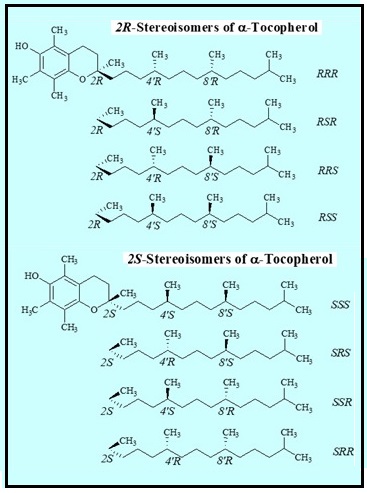
In commercially available synthetic α‑toco­pherol, commonly used for fortification and in dietary supplements, the side chain occurs as a racemic mixture of eight different conformations (all‑racemic‑toco­pherol, or all-rac-α‑toco­pherol, formerly called dl‑α‑toco­pherol), of which only the 2R‑α‑toco­pherol (RRR‑, RSR‑, RRS‑, and RSS‑) are forms of vitamin E that are more efficiently retained in the body and considered when assessing nutrient require­ments (Traber, 2024b) (Figure 18c.3).
Figure18c.3
Figure 18c.3. Chemical structures of synthetic vitamin E analogues (all-rac-α-toco­pheral)
The other 2S‑α‑toco­pherol stereoisomers of vitamin E (SSS‑, SRS‑, SRR‑, SSR‑) are equally well absorbed from the diet across the intestinal epithelium but are later not efficiently released from the liver and not enriched in lipoproteins. Instead they are metabolized and eliminated. The current consensus is that only α‑toco­pherol (natural RRR‑α‑toco­pherol or synthetic 2R‑α‑toco­pherol ) should be classified as "vitamin E" because it carries all the essential functions known to date. 2R‑α‑toco­pherol is here referred to as vitamin E (Azzi, 2018; Azzi et al., 2023, 2025; Eggersdorfer et al., 2024; Montoya-Arroyo and Frank, 2024; Mykhalkiv et al., 2024; Noguchi and Niki, 2024; Tian et al., 2024; Traber, 2024a,b; Zingg, 2024).

18c.2.5 Stabilized vitamin E

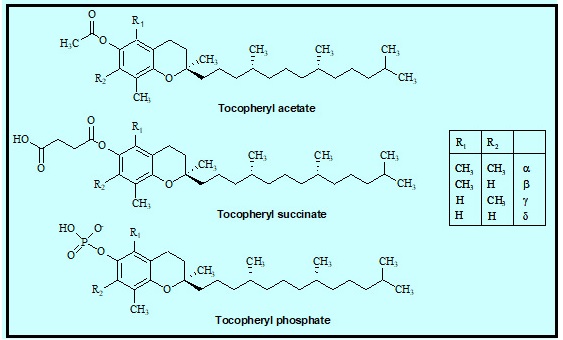
For commercial use in supplements and cosmetics, both natural and1111 synthetic vitamin E are further modified at the chromanol hydroxy group mainly with acetate (α‑toco­pherol acetate) (or less common with succinate (α‑toco­pherol succinate), phosphate (α‑toco­pherol phosphate), or nicotinate (α‑toco­pherol nicotinate)) to improve water solubility, shelf life and absorption (Figure 18c.4).
Figure18c.4
Figure 18c.4. Chemical structures of stabilized vitamin E analogues
Depending on the application, these stabilized vitamin E analogues may have different solubility, transport and meta­bolism. During oral uptake, stabilized esters of α‑toco­pherol are mostly converted to the natural forms by pancreatic, intestinal, or epidermal esterases and are considered to be pro-vitamins because they ultimately perform the same function in the body as the natural vitamin E (Burton and Traber, 1990).

Incomplete conversion may affect the bioavailability of the stabilized vitamin E analogues. Synthetic allrac‑α‑toco­pherol is more bioavailable than allrac‑α‑toco­pherol acetate in broilers, suggesting that incomplete removal of the acetate group can lower the efficiency of intestinal uptake (van Kempen et al., 2022). The digestion, hydrolysis and uptake of α‑toco­pherol acetate is reduced in the absence of fat and when present in matrices rather than as mixed micelles (Borel et al., 2013b; Bruno et al., 2006; Cheeseman et al., 1995; Cuerq et al., 2020; Desmarchelier et al., 2013; Leonard et al., 2004). Further, after treating cows with natural and synthetic α‑toco­pherol acetate, natural vitamin E reached higher levels in plasma, colostrum, milk and blood than synthetic vitamin E (Vagni et al., 2011; Weiss et al., 2009). Conversion of α‑toco­pherol acetate to α‑toco­pherol was not observed on the surface or in the horny layers of human skin, while up to 50% was converted in the underlying skin (Baschong et al., 2001; Beijersbergen van Henegouwen et al., 1995). Insufficient conversion can be used to improve the bioavailability of vitamin E as observed with D-α-toco­pheryl polyethylene glycol succinate (TPGS), a stabilized analogue of α‑toco­pherol able to self-micellarize for use in patients with cystic fibrosis or liver diseases not able to produce sufficient bile such as cholestasis (Cuerq et al., 2020; Paddon-Jones, 2022; Traber and Head, 2021). As α‑toco­pherol P is relatively stable it can be used as nanocarriers to enhance the delivery of molecules across the skin, such as drugs (e.g. oxycodone, caffeine) and other molecules (vitamins, including α‑toco­pherol and α‑toco­pherol phophate itself, vitamin D3, the omega-3 fatty acid docosahexaenoic acid (DHA), carnosine, insulin) and cofactors such as coenzyme Q10 (Gavin et al., 2016; Saleh et al., 2021; Smith et al., 2015).

18c.2.6 Activity of intact stabilized vitamin E

Stabilized vitamin E analogues may perform additional cellular functions (e.g., anti­cancer, anti-inflammation) and they can act as components for the formation of nanoparticles (e.g., polylactic-co-glycolic acid (PLGA) nanoparticles) (Mohd Zaffarin et al., 2020; Tamura et al., 2019; Zhang et al., 2012). In situations where ester hydrolysis is inefficient, the stabilized α‑toco­pherol derivatives may modulate cellular signaling and gene expression as result of their different chemical and physical properties (Halliwell et al., 2005). Some of these derivatives, such as α‑toco­pherol succinate, may exert dual functions, first as anti­cancer pro-vitamin E in the non-hydrolyzed form, and second, as vitamin E, in the hydrolyzed form (Neuzil, 2002). The phosphorylated vitamin E analogue, α‑toco­pherol phosphate, is used as a nanocarrier for drug delivery (Gavin et al., 2016; Saleh et al., 2021; Smith et al., 2015) and by itself can act as a signaling molecule and lipid mediator similar to other phosphorylated lipids (Azzi, 2019b; Zingg, 2018; Zingg et al., 2017). Intact α‑toco­pherol acetate was reported to maintain mesenchymal stem and progenitor cells in their primitive state and to attenuate mitochondrial oxygen consumption by mimicking hypoxia (Loncaric et al., 2021). Recent findings indicate that conversion of α‑toco­pherol acetate to α‑toco­pherol may occur less in lungs upon inhaling vapors from e-cigarettes containing α‑toco­pherol acetate as a vape-cartridge additive. Increased levels of intact α‑toco­pherol acetate are reportedly detected in electronic-cigarette or vaping product use-associated lung injury (EVALI). However, the molecular mech­anisms by which α‑toco­pherol acetate may contribute to the disease are still under investigation (Blount et al., 2019; Maddock et al., 2019; Matsumoto et al., 2020; Matsumoto et al., 2022).

18c.2.7 Safety considerations of natural and synthetic vitamin E

Self-supple­men­tation with vitamins including vitamin E is increasingly common in many industrialized countries because of their assumed beneficial effect on the prevention of chronic diseases (Azzi and Zingg, 2006; Galli et al., 2016). Research has established that both natural and synthetic forms of vitamin E are compounds that are generally regarded as safe (GRAS), in that there is no overt toxicity or other adverse effects associated with either form when consumed at levels within the U.S. Food and Nutrition Board Recommended Dietary Allowance (RDA) (i.e., 15mg/day for adults). The Tolerable Upper Intake Level (ULs) for all adults >19y, defined as the highest usual daily intake level likely to pose no risk of adverse health effects for almost all adults, was set by the U.S. Food and Nutrition Board (IOM, 2000) at 1000mg/d for any form of supplementary α‑toco­pherol; recommendations for children and adolescents are given in the Institute of Medicine guidelines (IOM, 2000). Supplements are usually between 200 and 400mg/day. In a recent report by the Scientific Committee on Food for the European Commission, the Tolerable Upper Intake Levels (ULs) for α‑toco­pherol in adults were lowered (European Food Safety Authority (EFSA) (EFSA Panel on Nutrition et al., 2024) (Table 18c.1). Details are available at: http://www.europa.eu.int/comm/food/indexen.html
Table 18c.1. Tolerable Upper Intake Levels (ULs) for vitamin E (α-toco­pherol). The ULs apply to all stereoisomeric forms of α-toco­pherol for males and females, but do not apply to individuals receiving anti­coagulant or anti­platelet medi­cations (e.g. asprin) to patients on secondary prevention for CVD, or to patients with vitamin K malabsorption syndromes.
Age Group IOM2000
(mg/day)
EFSA2024
(mg/day)
0-6 months nd nd
7-12 months nd nd
4-6 months nd 50
7-11 months nd 60
1-3 years 200 100
4-6 years nd 120
7-10 years 300 160
11-14 years 600 220
15-17 years 800 260
≥18 years 1000 300
Pregnant women 800-1000 300
Lactating women 800-1000 300

Symptoms of hypervitaminosis E in rats and mice include increased lipids in the liver (Abdo et al., 1986; Jack Yang and Desai, 1977; Yasunaga et al., 1982). Similarly, highly proliferative liver lesions and a reduction in the survival rate have been reported in rats after long-term intake of a 2% toco­trienol mixture (Jiang, 2017). Fortunately, in humans excessive doses of vitamin E do not appear to produce deleterious effects (EFSA Panel on Nutrition et al., 2024; Farrell and Bieri, 1975; IOM, 2000). Some adverse effects of too high vitamin E supplements such as increased risk for bleeding, heart failure, and hemorrhagic stroke may be dependent. on other factors such as levels of vitamin K and treatments with anti­coagulants (Booth et al., 2004; Schmolz et al., 2016; Traber, 2008). As outlined, further research is needed before it can be concluded that long-term self-supple­men­tation with higher doses of vitamin E is without risk.

18c.3 Health benefits of vitamin E

In addition to acting as an essential molecule for the prevention of symptoms caused by vitamin E deficiency seen in AVED patients, animal models as well as human studies have assessed the possible preventive effects of supple­men­tation with vitamin E and its analogues against several diseases. Whereas in animal studies the preventive function of vitamin E on atherosclerosis has been confirmed many times, in humans several prospective, randomized, placebo-controlled trials and clinical intervention studies have often shown mixed outcomes and the situation is less clear (Brigelius-Flohe et al., 2002a; Galli et al., 2016). Further, nutritional epidemiological studies indicating preventive effects of vitamin E against cardiovascular events, neurodegenerative disease such as Alzheimer's and Parkinson's disease, allergy, fibrotic diseases, diseases of the eye such as macular degeneration, and certain types of cancer have not generally been confirmed in larger clinical interventions. Factors that may explain the often mixed outcomes of these studies include the various doses and duration of supple­men­tation with vitamin E, high levels of vitamin E already present at baseline, the composition of the diet, the presence of other phytochemicals, micro­nutrients and vitamin E analogues, environmental and patho-physio­logical circumstances that affect the level and action of vitamin E such as inflammation, infection, smoking or UV irradiation, and the presence of specific vitamin E related polymorphisms within the analyzed population (Borel and Desmarchelier, 2016; Borel et al., 2013b; Roberts et al., 2007; Robinson et al., 2006; Schmolz et al., 2016; Zingg et al., 2008a).

To date, the best evidence of health benefits is reported for a lower risk for diseases such as non-alcoholic steatohepatitis (NASH, now called metabolic dysfunction-associated steatohepatitis (MASH)), cardiovascular disease (CVD) and inflammation (reviewed in Asbaghi et al., 2020; Azzi et al., 2003; Borel et al., 2015; Constantinou et al., 2008; Coulter et al., 2006; Hathcock et al., 2005; Jiang, 2017; Klein et al., 2011; Lonn et al., 2005; Mocchegiani et al., 2014; Munteanu and Zingg, 2007; Nagashimada and Ota, 2019; Regner-Nelke et al., 2021; Ricciarelli et al., 2007; Song et al., 2025; Zingg, 2012; Zingg and Azzi, 2004). An inverse association of vitamin E intake with all-cause mortality among individuals with rheumatoid arthritis was detected in subjects with low levels of intake of vitamin E (cohort from the National Health and Nutrition Examination Survey, NHANES 1999-2018) (Yin et al., 2024). In some meta-analyses of clinical studies, increased all-cause mortality was observed with higher doses of vitamin E supplementation (Bjelakovic et al., 2007; Miller et al., 2005) although this was not confirmed in later studies (Abner et al., 2011; Gerss and Kopcke, 2009).

No reduction in risk of prostate cancer with either selenium or vitamin E supplements was reported in the initial report of the Selenium and Vitamin E Cancer Prevention Trial (SELECT) but a statistically nonsignificant increase in prostate cancer risk with vitamin E was observed (Jiang, 2024; Lippman et al., 2009). Several molecular mech­anisms have been proposed which may contribute to an elevated risk for prostate cancer including the activation of cytochrome P450 enzymes by vitamin E leading to co-carcinogenic effects with polycyclic aromatic hydrocarbons (PAHs) (Vivarelli et al., 2019), the prevention of oxidative cell death of pre-cancer cells by anti­oxidant activity of vitamin E (Swamynathan et al., 2024), and possibly increased prostate cancer cell proliferation as observed with premalignant organoids (Njoroge et al., 2017). Further, polymorphisms in vitamin E transport genes have been suggested to lead to differences in prostate cancer risk (Bauer et al., 2013; Wright et al., 2009; Zingg and Azzi, 2009). The toco­pherol associated protein 1 (hTAP1/SEC14L2) reduces prostate cancer cell proliferation by interfering with PI3K, but this appears to be independent of vitamin E (Ni et al., 2007; Ni et al., 2005; Zingg et al., 2015). However, at least in vitro, hTAP1 facilitates cellular vitamin E uptake and vitamin E re-activates PI3Kγ and PI3Kα after inhibition by hTAP1 by mediating lipid/vitamin E exchange. Further research is required to evaluate the impact of hTAP1 on prostate cancer (Jiang, 2024; Ni et al., 2007; Ni et al., 2005; Zingg et al., 2015).

18c.4 Absorption, transport, and distri­bution of vitamin E

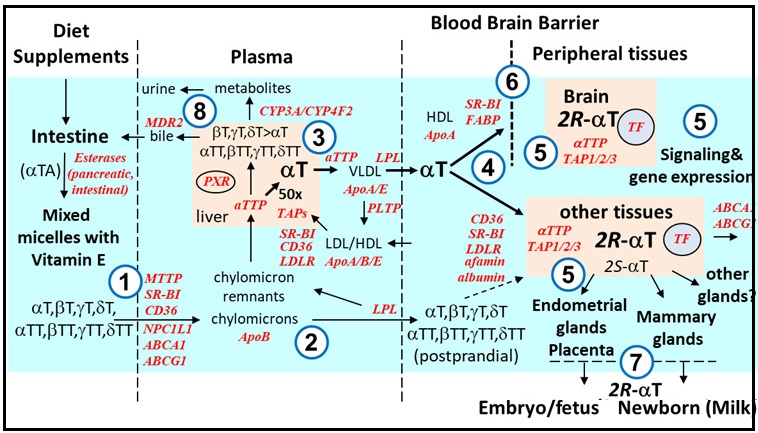
The discovery in humans of the rare genetic disease with very low plasma levels of vitamin E, ataxia with vitamin E deficiency (AVED), has accelerated insight into the mech­anisms involved in the absorption, transport, distri­bution and meta­bolism of vitamin E (Traber and Cross, 2023). Several key steps important for vitamin E transport and distri­bution can be distinguished and the responsible genes/proteins have been charac­terized (Figure 18c.5).
Figure18c.5
Figure 18c.5. Uptake and distri­bution of different vitamin E analogues and stereosisomers (adopted from Zingg, 2022)

(1) Transport across the intestinal epithelium and incorporation of all natural vitamin E analogues into chylomicrons. Absorption from the intestine into the intestinal epithelial cells depends on pancreatic function, biliary secretion, emulsification, and micelle formation. The uptake into and transport across enterocytes and chylomicron secretion into lymph or portal vein is mediated by specific proteins (e.g., SR-B1, CD36, NPC1L1, ABCA1/G1) (Reboul, 2018). In diseases where severe and chronic malabsorption of fat exists (e.g., cystic fibrosis, celiac disease, and chronic cholestatic liver disease), vitamin E absorption is compromised. A rare genetic disorder, abetalipoproteinemia, involving a defect in chylomicron synthesis as result of a deficiency in the microsomal triglyceride transfer protein (MTP), also causes malabsorption of vitamin E and of other lipid-soluble vitamins (vitamins A, D, and K) (Borel et al., 2013b).

(2) Transport of vitamin E in chylomicrons in the portal vein to the liver and to the circulation via the lymphatic system. Chylomicrons are hydrolyzed by lipoprotein lipase in the systemic circulation, during which some vitamin E may be released to the muscle and adipose tissues or transferred to high-density lipoproteins (HDLs). The vitamin E acquired by HDLs can also be transferred to other circulating lipoproteins, such as low-density lipoproteins (LDLs) and the very low-density lipoproteins (VLDLs) (Traber et al., 1990b). Vitamin E is incorporated into HDL either by exchange from LDL by the phospholipid transfer protein (PL-TP) and choles­terol ester transfer proteins (CE-TP), or to a lower degree by transport from cells via ABC trans­porters A1 and G1 (ABCA1/G1).

(3) Retention of mainly natural RRR-α-toco­pherol by the α-toco­pherol transfer protein (αTTP) in liver and incorporation into VLDL; meta­bolism of all the other vitamin E analogues by the liver and secretion by the kidney. The RRR-α-toco­pherol is preferentially incorporated into VLDL by the action of αTTP. As a result, VLDL secreted from the liver is enriched with RRR-α-toco­pherol The other forms of toco­pherol (i.e., βT, γT, δT), the toco­trienols (αTT, βTT, γTT, δTT and non-natural stereoisomers are not or less recognized and excreted in the bile. VLDL are also taken up in non-hepatic tissues, especially at sites where free radical production is greatest.

(4) Distri­bution of α-toco­pherol in lipoproteins and albumin/afamin in the body, uptake by endothelial cells. During the conversion of VLDL to LDL in the circulation, some α-toco­pherol remains within the core lipids and thus is present in LDL. Most α-toco­pherol then enters the cells of the peripheral tissues within the intact lipoprotein through the LDL receptor pathway. Recent research has also identified a binding site for vitamin E on albumin/afamin possibly relevant for its distri­bution in tissues. Interestingly, interaction of albumin with CD36/FAT mediates the uptake of long-chain fatty acids into cardiac cells and thus may also facilitate the uptake of vitamin E (Glatz et al., 2012).

(5) Interaction of α-toco­pherol with binding sites in transport proteins and enzymes mediating its cellular action. Several proteins have been identified that can bind vitamin E in a more or less stereospecific manner, possibly explaining some of the differential effects of natural and synthetic vitamin E. Most relevant is the α-toco­pherol transfer protein (αTTP) that is mainly expressed in the liver, but also in brain and placenta, and binds and enriches natural vitamin E 50-fold in a stereo specific manner (natural α-toco­pherol has 10-fold higher affinity that synthetic) (Panagabko et al., 2003). A number of other proteins are either involved in transport of vitamin E (e.g., hTAP1/2/2 or SEC14L2/3/4, NPCL1, NPC1, NPC2, albumin/afamin, CD36, SR-B1), gene expression (PXR), or signaling (PKCα, 67kDa laminin receptor, CD36, SR-B1), but their ability to differentially binding of natural and synthetic vitamin E has not yet been determined (Fanali et al., 2013; Hayashi et al., 2022; Kono and Arai, 2015; McCary et al., 2012; Nakatomi et al., 2023).

(6) Transport of α-toco­pherol from HDL across the blood-brain-barrier. The scavenger receptor BI (SR-B1) plays an important role during neurodevelopment, neural tube closing, and in transport of vitamin E from HDL across the blood-brain-barrier (Lee and Ulatowski, 2019; Santander et al., 2018; Santander et al., 2017; Santander et al., 2013). In hippocampi of weaning mice, all-rac-α-toco­pherol or RRR-α-toco­pherol in the dam diet differently affected a network of genes involved in transcription regulation and synapse formation, suggesting differences of transport and efficacy of these analogues to the brain (Rhodes et al., 2020).

(7) Secretion of α-toco­pherol by glands. For glands (e.g., mammary, endometrial, sebaceous, adrenal, lacrimar, and salivary glands) similar selective transport mech­anisms may be relevant to ensure the adequate level of vitamin E in the secreted substances (Takasaki et al., 2010).

(8) Meta­bolism of vitamin E analogues. Meta­bolism of vitamin E occurs mainly in the liver in an analogue and stereoisomer specific manner. Water-soluble metab­olites are secreted in urine.

18c.4.1 Differential uptake and distri­bution of natural and synthetic vitamin E

It is well known that the bioavailability of natural and synthetic vitamin E is different, mostly as result of differential binding to α‑toco­pherol transfer protein and consequent differential transport, distri­bution and meta­bolism {Traber, 1990; Traber, 1993; Borel, 2013}. The initial absorption across the intestinal epithelium, incorporation into chylomicrons, and transport by the lymphatic system and portal vein are similar for natural and synthetic vitamin E (Traber et al., 1990a). The subsequent distri­bution to peripheral cells of these vitamin E analogues coming from the intestine is mediated by chylomicrons (and in part also by high density lipoproteins (HDL)), and chylomicron remnants bring the remainder to the liver. When in the liver, α‑toco­pherol preferentially RRR, but to a lesser degree RSR, RRS and RSS‑side chain isomers, (the so-called 2R‑α‑toco­pherol-stereoisomers) (Figure 18c.3 and Figure 18c.5) are recognized by α‑toco­pherol transfer protein with higher affinity, retained, incorporated and secreted in VLDL, leading to an up to 50‑fold enrichment of α‑toco­pherol in plasma (Panagabko et al., 2003). After a postprandial peak, the other seven vitamin E analogues, excess α‑toco­pherol, and the so-called 2S‑α‑toco­pherol‑stereoisomers (Figure 18c.2) are metabolized and excreted, explaining their differential efficiency of cellular uptake, transport, intra­cellular distri­bution, and conversion to different metab­olites (Traber et al., 1998; Wallert et al., 2014; Weiser et al., 1996).

Once in the circulation, vitamin E can be incorporated into HDL either by exchange from LDL by the phospholipid transfer protein (PL-TP) and choles­terol ester transfer protein (CE-TP), or to a lesser degree by transport from cells via ATP binding cassette (ABC) trans­porters A1 and G1 (ABCA1/G1). For transport into the brain, HDL is recognized by the scavenger receptor B1 (SR-B1) expressed by microvascular endothelial cells of the blood-brain-barrier (BBB) (Figure 18c.5). Similar to LDL, in HDL the level of the α‑toco­pherol analogue is higher than the other analogues, so that the preference of the blood-brain-barrier for HDL may limit the access of the non‑α‑toco­pherol analogues and non-natural stereoisomers to the brain. Accordingly, in infant rhesus macaques, rats as well as humans, and during mouse neurodevelopment, the brain preferentially acquires the 2R‑α‑toco­pherol over 2S‑α‑toco­pherol stereoisomers (Kuchan et al., 2016; Kuchan et al., 2020; Rhodes et al., 2020; Traber, 2020; Weiser et al., 1996).

Proper development of the embryo and fetus is dependent on transplacental transport of vitamin E and on secretion by endometrial glands that may involve selective recognition of RRR‑α‑toco­pherol by α‑toco­pherol transfer protein expressed at the placental interface (Hempstock et al., 2004; Muller-Schmehl et al., 2004; Zingg et al., 2008b). In fact, preferential transport of natural RRR‑α‑toco­pherol or 2R‑α‑toco­pherol over synthetic 2S‑α‑toco­pherol is observed when vitamin E levels are compared in maternal and umbilical cord plasma, albeit measurable levels of 2S‑α‑toco­pherol isomers are also detected (Kuchan et al., 2021).

In the endometrium, vitamin E improved the glandular epithelial growth, development of blood vessels, and increased the expression of the vascular endothelial growth factor protein (VEGF) (Takasaki et al., 2010). Thus, vitamin E improves blood flow (radial artery-resistance index (RA-RI) and endometrium thickness (EM)) and may be useful for patients with a thin endometrium.

In bovine as well as human mammary gland tissues, several vitamin E transport and metabolic genes (α‑toco­pherol transfer protein, hTAP1/SEC14L2, CYP4F2) are expressed and possibly mediate selective transport to milk to provide vitamin E to the newborn (Haga et al., 2018; Vries et al., 2018). In fact, in human milk, RRR‑α‑toco­pherol is the predominant stereoisomer indicating selective transport and secretion by epithelial cells of the mammary glands (Kuchan et al., 2018; Kuchan et al., 2020). Accordingly, synthetic allrac‑α‑toco­pherol is less efficiently increased in human colostrum compared to natural RRR‑α‑toco­pherol after maternal supple­men­tation (Clemente et al., 2015; Gaur et al., 2017).

For other glands (e.g., sebaceous, salivary or lacrimar glands), similar selective transport mech­anisms remain to be determined. In skin and sebum, the ratio of α‑toco­pherol to γ‑toco­pherol appears to be about 9 to 1, with the levels closely correlated with the amounts of squalene (Thiele et al., 1999). Interestingly, in several glands, the three toco­pherol-associated proteins (hTAP1/SEC14L, hTAP2/SEC14L3, hTAP3/SEC14L4) are expressed in epithelial ducts cells, and their role in facilitating the secretion of vitamin E remains to be investigated, in particular in skin where vitamin E may be secreted together with polyunsaturated fatty acids via the sebaceous glands for protection against UV radiation (Thiele et al., 1999; Zingg et al., 2008b). The hTAP1/SEC14L2 protein is also known as supernatant protein factor (SPF) and can modulate squalene mono­oxygenase required for the biosynthesis of choles­terol (Shibata et al., 2001). Thus, vitamin E may protect the skin by maintaining its barrier function via modulating choles­terol levels and protecting cells by preventing pore formation, and by increasing mem­brane stability and repair (Boonnoy et al., 2017, 2018; Togo et al., 1999), in addition to its immune-regulatory, anti-inflammatory and anti­allergic functions, and the anti­oxidant protection against free radicals that may arise after UV irradiation (Thiele and Ekanayake-Mudiyanselage, 2007).

18c.4.2 Vitamin E meta­bolism

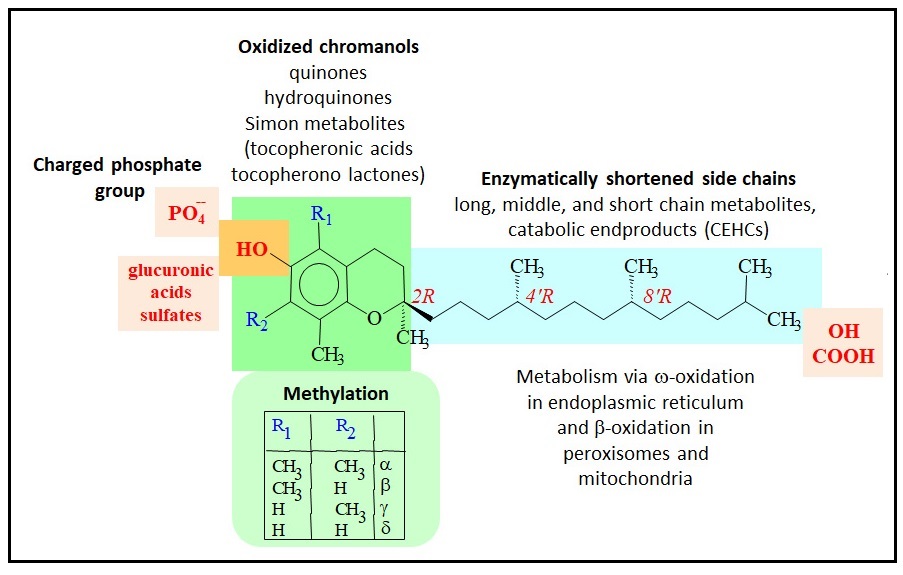
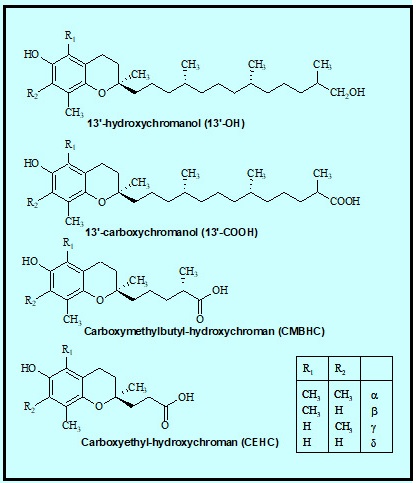
Meta­bolism of vitamin E in the body generates two different types of vitamin E metab­olites, reflecting the mech­anisms by which they are generated (enzymatically and oxidatively) (Figure 18c.2 and Box 18c.1). The details of the biochemical pathways of these two types of vitamin E metabolites and their regulatory function have been recently reviewed (Birringer and Lorkowski, 2019) and are not addressed here. Some of these metab­olites can act as bioactive molecules and modulate mem­brane channels, enzymes and gene expression, even at the low nanomolar concentrations reached in plasma and in the intestine — and even more so at the low micromolar concentrations that can be reached after supplementation.

Enzymatically generated vitamin E metab­olites are produced when the levels of vitamin E analogues exceed the capacity of α‑toco­pherol transfer protein to export them from the liver. Upon enzymatic meta­bolism, the hydrophobic side chains of the vitamin E analogues become hydroxylated and progressively shortened, increasing the solubility of the metab­olites but still maintaining the anti­oxidant activity of the chromanol group known for the intact molecules (Figure 18c.2 and Figure 18c.6) (Schmolz et al., 2016). The proposed pathway of meta­bolism proceeds first via α‑oxidation of the side-chains catalysed by the cytochrome P450 enzymes CYP3A and CYP4F2 in the endoplasmic reticulum leading to 13'-hydroxy­chromanols (13'-OHs) (Birringer et al., 2001b; Parker et al., 2000; Sontag and Parker, 2002), and then β‑oxidation in peroxisomes and mitochondria leading to long chain metab­olites (LCM), e. g., 13'-carboxychromanols (13'-COOHs). These long-chain metabolites are further β‑oxidized to intermediate- and short-chain metab­olites, e.g., the carboxymethylbutyl hydroxychromans (CMBHCs), and finally to the metabolic end products, the carboxyethyl hydroxychromans (CEHC) (Figure 18c.2 and (Figure 18c.6) (Brigelius-Flohe, 2003; Chiku et al., 1984; Pfluger et al., 2004). For α‑toco­pherol, which is selectively recognized by α‑toco­pherol transfer protein and specifically sorted for incorporation into VLDL (Qian et al., 2005), higher micromolar concentrations need to be reached when compared to the other seven vitamin E analogues as well as synthetic α‑toco­pherol are metabolized and excreted already at lower plasma concentrations (nanomolar to low micromolar) (reviewed in Birringer and Lorkowski, 2019; Schmolz et al., 2016; Zingg and Azzi, 2004). However, even in α‑toco­pherol transfer protein knockout mice non‑α‑toco­pherol analogues are preferentially metabolized suggesting increased recognition by metabolic enzymes as mech­anisms for their more efficient elimination (Grebenstein et al., 2014).

For enzymatic meta­bolism of natural and synthetic α‑toco­pherol analogues, the chiral centers of the sidechains are progressively lost. The possible relevance of stereo­chemistry of the side chains in the molecular activity of the long chain metab­olites (e.g., 13'‑OHs, 13'‑COOHs), intermediate- and short-chain metab­olites (e.g., CMBHCs, CEHCs, respectively), remains to be determined (Figure 18c.6).
Figure18c.6
Figure 18c.6. Chemical structures of vitamin E
With increasing intake and after the threshold of plasma α‑toco­pherol has been exceeded, α‑CEHC excretion in urine is augmented. The intact chromane structure of α‑CEHC suggests that it is enzymatically generated and not derived from α‑toco­pherol that has reacted as an anti­oxidant (Betancor-Fernandez et al., 2002; Schultz et al., 1995). The levels in urine can give insight on the vitamin E intake level, because with increasing intake and after a threshold of plasma α‑toco­pherol has been exceeded, α‑CEHC excretion in urine is augmented. Meta­bolism of α‑toco­pherol leads to δ‑CEHC and that of γ‑toco­pherol to γ‑CEHC (Chiku et al., 1984). γ‑CEHC has been identified in human urine and has been proposed to act as a natriuretic factor (Wechter et al., 1996). For improved excretion, these increasingly more water-soluble metab­olites become further conjugated with glucuronide or sulphate. However, for accurate determination of these metab­olites in urine, they must be deconjugated by incubation overnight with a mixture of sulphatase and β‑glucuronidase before extraction and measurement (Schmolz et al., 2016).

Oxidatively generated vitamin E metab­olites are produced upon scavenging free radicals by vitamin E. The so-called "Simon metab­olites" (toco­pheronic acid and toco­pheronolactone) become further conjugated and excreted in the urine as glucuronides or sulphates (Simon, 1956; Simon et al., 1956). These metab­olites have a shortened side chain and an opened, oxidized, chromane structure that is often quoted to demonstrate their anti­oxidant function in vivo. A marked increase of these metab­olites is observed in the urine of healthy volunteers after daily intake of 2‑3g allrac‑α‑toco­pherol. Likewise, in children with type 1 diabetes, the presence of conjugated α‑toco­pheronolactone (sulphate and glucuronide) in urine has been suggested as a biomarker for oxidative stress (Sharma et al., 2013).

Meta­bolism and elimination of vitamin E occurs by induction of cytochrome P450 enzymes via activation of the pregnane X receptor (PXR) (Brigelius-Flohe and Traber, 1999; Traber and Kayden, 1989; Zhou et al., 2004). The strength of activation of PXR depends on the extent by which the chromanol hydroxy group is exposed, with α‑toco­pherol the weakest, and β‑toco­pherol, γ‑toco­pherol, δ‑toco­pherol and the toco­trienols stronger (Zhou et al., 2004). Interestingly, only a few of the vitamin E metab­olites activate PXR by themselves (e.g., 13'‑COOH, α‑toco­trienol, δ‑toco­trienol, and garcinoic acid, a plant metabolite from δ‑toco­trienol) (Bartolini et al., 2020; Podszun et al., 2017; Schubert et al., 2018) suggesting that vitamin E transport proteins may be required to facilitate transport of intact vitamin E analogues to PXR in the nucleus and/or to cytochromes P450 enzymes in the endoplasmic reticulum and in mitochondria (Traber, 2004). Likewise, modulation of PPARγ activity may involve intra­cellular transport of vitamin E and its metab­olites by proteins such as FABP5 (El Kharbili et al., 2022; Huang et al., 2019).

As activation of the PXR mediates meta­bolism of many drugs by inducing cytochrome P450 enzymes (e.g., CYP3A) and some ATP-binding cassette (ABC) trans­porters (Landes et al., 2003), the transport and meta­bolism of vitamin E may be influenced by other drugs and nutrients including the different vitamin E analogues themselves. In fact, some inhibitors of the CYP3A family, like sesamin and ketoco­nazole, inhibit the formation of γ‑CEHC, explaining the increased serum γ‑toco­pherol levels in humans after dietary intervention with sesame oils (Lemcke-Norojarvi et al., 2001; Parker et al., 2000). On the other hand, activators of CYP3A such as rifampicin can lead to higher formation of α‑CEHC in HepG2 cells (Birringer et al., 2001b).
Box 18c.1. Vitamin E metab­olites and their main functions

Enzymatically generated vitamin E metab­olites Oxidatively generated vitamin E metab­olites Other vitamin E metab­olites

18c.5 Molecular and cellular mech­anisms of vitamin E action

18c.5.1 Functions of vitamin E as a lipid soluble anti­oxidant

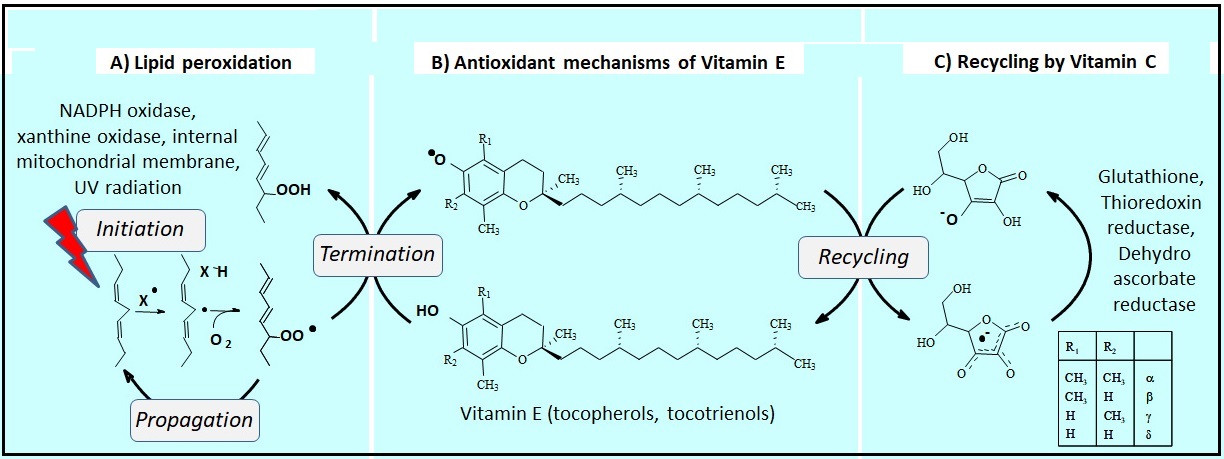
Chemically, vitamin E functions primarily as a hydrophobic chain-breaking anti­oxidant in the lipid phase that can be regenerated by vitamin C and glutathione and dehydroascorbate reductases (Figure 18c.2 and Figure 18c.7)
Figure18c.7
Figure 18c.7. Vitamin E acts chemically as free radical scavenger in the lipid phase (adapted from (Villacorta et al., 2007)
(Zhou et al., 2012). In mem­branes, one molecule of vitamin E is present for about 2000 phospholipids (Behl, 1999; Rizvi et al., 2014). In mem­branes, vitamin E prevents mem­brane destabilization, pore formation and cellular dysfunction either by itself as a structural lipid or by inhibiting the peroxidation of mem­brane lipids such as mono- and polyunsat­urated fatty acids (MUFA and PUFA, respectively) (Boonnoy et al., 2017, 2018; Leng et al., 2015). By acting as a chemical anti­oxidant in the mem­brane, vitamin E can prevent ferroptosis, a lipid-hydroperoxide- and iron-dependent type of cell death that has been implicated in the pathophysio­logical processes of many diseases, including ischemia-reperfusion injury, nervous system diseases, kidney injury, tumors, and blood diseases (Li et al., 2020; Zhang et al., 2024; Zhang et al., 2022). Further, the molecular mech­anisms of ferroptosis can also be affected by vitamin E and its metab­olites by acting as an inhibitor of lipoxygenases that increase the peroxidation of lipids (Azzi et al., 2025; Hinman et al., 2018; Jiang et al., 2011; Tavakol and Seifalian, 2022; Zhang et al., 2024; Zingg, 2015).

When present in lipoproteins (VLDL, LDL, HDL), vitamin E prevents the formation of oxidized lipoproteins (e.g., oxLDL) that are elevated in a number of diseases. Increased levels of oxLDL and low plasma levels of α‑toco­pherol are correlated with an increased risk of atherosclerosis (Terasawa et al., 2000). Endothelial injury and vascular damage resulting from ROS, oxLDL or lipid peroxides can be prevented by vitamin E in lipoproteins (mainly LDL) and in subendothelial compartments (Hennig et al., 1988; Keaney et al., 1996; Kuzuya et al., 1991; Suttorp et al., 1986). The vitamin E content in LDL can be increased by oral vitamin E supplementation leading to increased resistance of LDL to oxidation and decreased cytotoxicity of oxLDL in endothelial cells (Belcher et al., 1993). The reduction of formation of oxLDL by vitamin E may also reduce other signaling events mediated by oxLDL that occur during atherosclerosis such as increased inflammation, apoptosis, adhesion, vascular smooth muscle cell proliferation, and the modulation of lipid homeostasis and foam cells formation (reviewed in (Zingg et al., 2021)).

A neuroprotective role of vitamin E has been documented both in vitro and in vivo. In PC12 neurons, oxidative damage induced by amyloid β25‑35 was prevented by docosahexaenoic acid (DHA) and/or vitamin E via activation of the Nrf2 signaling pathway and regulation of CD36, SR-B1 and fatty acid binding protein 5 (FABP5) (Behl et al., 1992; Huang et al., 2019). In a cohort of 80 elderly people, significantly lower levels of α‑toco­pherol but higher inflammatory cytokines and microRNAs were measured in subjects with Alzheimer's disease when compared to healthy controls (Boccardi et al., 2023). In several animal and in vitro studies, microglia activation is inhibited by α‑toco­pherol involving the orexin system that plays an important role in neuroprotection by inhibiting oxidative stress and the inflammatory response (La Torre et al., 2021).

18c.5.2 Functions of vitamin E as a signaling molecule

The often-unclear outcome of human studies on diseases that are thought to be preventable by lowering oxidative stress has prompted research to investigate functions of vitamin E that go beyond its anti­oxidant action, e.g., as a molecule able to modulate signaling and gene expression. Recent research using transcriptomics and metabolomics has demon­strated genome-wide changes in gene expression in response to vitamin E depletion or supple­men­tation that are thought to contribute to the function of vitamin E in the human body (Kim and Han, 2019). Although still under investigation, these changes in gene expression may be the result of changes of signal transduction events that can occur in both anti­oxidant and non-anti­oxidant manners. Regulatory effects on gene expression independent of lipid peroxidation were detected in a recent study, in which a novel vitamin E analogue, 6‑hydroxymethyl α‑toco­pheraltoco­pherol that cannot act as chemical anti­oxidant, modulated a similar set of genes as α‑toco­pherol in immortalized human hepatocytes (IHH) (Chen et al., 2025). Likewise, α‑TEA (α‑toco­pheryloxyacetic acid, or 2,5,7,8‑tetramethyl‑2R (4R, 8R, 12‑trimethyltridecyl) chroman‑6‑yloxy acetic acid), a nonhydrolyzable ether-linked acetic acid analogue of α‑toco­pherol induces apoptosis of cancer cells and mediates the anti-tumor immune response, without being able to act as a chemical anti­oxidant (Hahn et al., 2011; Kline et al., 2004). Several molecular mech­anisms have been proposed by which vitamin E can modulate signal transduction pathways and gene expression (Dong et al., 2020; Galli et al., 2016; Gohil et al., 2004; Gohil et al., 2003; Hyland et al., 2006; Jiang, 2017, 2018; Mocchegiani et al., 2014; Nier et al., 2006; Pearce et al., 1992; Rimbach et al., 2010; Rota et al., 2005; Sylvester et al., 2014; Zingg, 2007a, 2015, 2019).

Vitamin E has important roles in modulating signal transduction and gene expression pathways relevant for its uptake, distri­bution, meta­bolism and molecular action that when impaired affect physio­logical and patho-physio­logical cellular functions relevant for the prevention of a number of diseases.

As a hydrophobic molecule located mainly in membranes, vitamin E contributes together with other lipids to the physical and structural charac­teristics such as mem­brane stability, curvature, fluidity, and the organization into microdomains (lipid rafts). In membranes and lipoproteins, by protecting and preventing depletion of MUFA and PUFA, vitamin E indirectly enables regulatory effects that are mediated by the numerous lipid mediators derived from these ipids and protects cells from ferroptosis.

In cells, vitamin E and its metab­olites affect signaling in redox- dependent and redox-independent molecular mech­anisms by influencing the activity of enzymes and receptors involved in modulating specific signal transduction and gene expression pathways.

Specific vitamin E binding proteins have been isolated that can modulate intra­cellular transport and signal transduction enzymes. The modulation of the CD36/FAT scavenger receptor/fatty acids transporter by vitamin E may influence many cellular signaling pathways relevant for lipid homeostasis, inflammation, survival/apoptosis, angiogenesis, tumorigenesis, neurodegeneration and senescence.

A mem­brane receptor (67kDa laminin receptor), that binds and mediates the anti-cancer effects of the major bioactive molecule of green tea, epigallocatechin gallate (EGCG), can also bind the four toco­pherol analogues, possibly mediating their anti-cancer effects by activation of diacylglycerol kinase (Hayashi et al., 2022).

Only a few studies address the possible differential gene regulatory activities of natural and synthetic α‑toco­pherol that may reflect differences in bioavailability and in molecular activity (Han et al., 2010). Gene expression microarrays were used with cultured human liver cells exposed to oleic acid, a situation that reflects lipotoxicity and steatosis (Bartolini et al., 2022). In these experiments, vitamin E normalized the expression of genes associated with defects of liver cell meta­bolism, fibrosis and inflammation, liver disease and cancer as well as some lipotoxicity indicators, including ROS production and efflux, and apoptotic and necrotic cell death. Interestingly, pathway analysis revealed that natural vitamin E, vitamin E in wheat germ oil, and synthetic vitamin E modulated these genes differently, in line with a number of other studies surveying genome- wide regulatory effects of natural and synthetic vitamin E (Kim and Han, 2019; Muller et al., 2005; Weiser and Vecchi, 1982). Likewise, in immune cells, natural and synthetic vitamin E showed differential regulatory effects (Han et al., 2010). The neuroinflammatory response is altered in α‑toco­pherol transfer protein mice and natural and synthetic vitamin E differ­en­tially affected the expression of myelin related genes (Ranard and Erdman, 2018; Ranard et al., 2020; Ranard et al., 2019; Ranard et al., 2021). Ex vivo stimulation of T‑cells harvested from mice supplemented with RRR‑α‑toco­pherol acetate and synthetic allrac‑α‑toco­pherol acetate, or RRR‑α‑toco­pherol acetate, and RRR‑γ‑toco­pherol acetate, revealed differential expression of a number of genes in response to these vitamin E analogues using gene expression microarrays (Han et al., 2010; Zingg et al., 2013).

18c.6 Deficiency of vitamin E

In animals, experimentally induced vitamin E deficiency syndromes occur after prolonged depletion of vitamin E in the diet. Symptoms of vitamin E deficiency include fetal resorption in female rats, sterility in male rats, muscular dystrophy in rabbits and guinea pigs, encephalomalacia in chicks, and hematological disorders in monkeys. Vitamin E deficiency in animals has also been linked to increased prostaglandin synthesis, platelet aggregation, impaired cell-mem­brane function, and red cell defects. In mice, knockout of the α‑toco­pherol transfer protein gene causes severe vitamin E deficiency leading to placental failure as result of reduction of labyrinthine trophoblasts and absence of embryonic blood vessels in the trophoblast region (Jishage et al., 2001). Supple­men­tation with excess vitamin E or by a synthetic anti­oxidant (BO‑653) prevented these events suggesting increased reactive oxygen species (ROS) being involved (Jishage et al., 2001).

In humans, dietary vitamin E deficiency is rare. In most diets, there is sufficient vitamin E and severe vitamin E deficiency symptoms in subjects consuming diets low in vitamin E have never been described. However, vitamin E deficiency in humans may be caused by defects in the gene for hepatic α‑toco­pherol transfer protein (Cavalier et al., 1998), leading to the rare genetic disease ataxia with vitamin E deficiency (AVED). Over 25 mutations to α‑toco­pherol transfer protein have been described with varying degree of disease severity (Di Donato et al., 2010). Peripheral neuropathy is the primary symptom of vitamin E deficiency in humans. Depending on the type of mutations, other symptoms may include loss of deep tendon reflexes, spinocerebellar ataxia, skeletal myopathy, and pigmented retinopathy, peripheral neuropathy, dysarthria, vibratory and proprioceptive sensory loss, loss of neurons, retinal atrophy, massive accumulation of lipofuscin in neurons and retinitis pigmentosa (Azzi and Zingg, 2006; Burton et al., 1998; Gotoda et al., 1995; Sokol, 1993; Yokota et al., 2000). Long-term supple­men­tation with high doses of vitamin E (up to 2000mg/day) can prevent the symptoms of AVED if recognized early (one of the first patients remained stable for over 36 years of continuous supplementation) (Kohlschutter et al., 2020; Meydani et al., 2001).

Other causes of vitamin E deficiency in humans may result from protein-energy malnutrition or be secondary to fat-malabsorption syndromes (Ghone et al., 2013; Rader and Brewer, 1993), including cystic fibrosis, abetali­poproteinemia, chronic cholestatic liver diseases, celiac disease, and short bowel syndrome (Kalra et al., 1998). In adults, primary biliary cirrhosis is associated with intestinal malabsorption of vitamin E (Sokol et al., 1989). Premature infants may also be at risk for vitamin E deficiency induced by transient malabsorption of vitamin E and low reserves. In such cases, hemolytic anemia and decreased erythrocytes survival time in vivo may be observed (Farrell et al., 1977; Hassan et al., 1966; Johnson et al., 1974; Oski and Barness, 1967). In some children with chronic cholestasis, neurological dysfunction has been documented, which improves with vitamin E treatment, provided the neurological damage is not advanced (Sokol et al., 1984). For some of these diseases, specific mutations and polymorphisms have been described that could be used as biomarkers to recommend vitamin E supple­men­tation (Blum et al., 2010; Borel and Desmarchelier, 2016; Borel et al., 2015; Brigelius-Flohe et al., 2002b; Civelek and Podszun, 2022; Doring et al., 2004; Huebbe et al., 2010; Jialal and Devaraj, 2003; Milman et al., 2008; Mocchegiani et al., 2014; Zingg, 2012, 2022; Zingg et al., 2008a).

18c.6.1 Require­ments of vitamin E

The daily require­ment for vitamin E is influenced by the dietary bioavailability that ranges from 20% to 80% depending on the form of the vitamin E and the amount and composition of the meal. In the general population, the average vitamin E intake from the diet is reported to be below the U.S Recommended Daily Requirement (RDA) for an individual and can be increased by extra dietary supple­men­tation with no adverse effects (up to a certain level, e.g., 200‑400mg/day) (Borel et al., 2013b; Traber, 2014). Several factors have been discussed which influence the bioavailability of vitamin E, including the food matrix, type and amount of fat/choles­terol in a meal, dietary fibers and a range of host factors such as sex, age, gene polymorphisms, and health disorders that affect lipid absorption and distri­bution in the body (Borel et al., 2013b). To determine the require­ments of vitamin E, an experimental assay was used to test and compare the activity of the natural and synthetic vitamin E analogues in preventing reproductive failure in rats (Evans and Bishop, 1922). Based on this assay, the natural-source RRR‑α‑toco­pherol vitamin E has a 1.36‑fold greater biological potency compared to synthetic allrac‑α‑toco­pherol which is assumed to be mainly the result of the better retention of RRR‑α‑toco­pherol by α‑toco­pherol transfer protein in the liver.

The vitamin E require­ments have also been assessed in a number of studies in which the bioavailability of natural and synthetic vitamin E analogues has been determined by following the uptake and meta­bolism of stable isotope or radioactively labeled forms of vitamin E both in animals and humans (Traber, 2024b; Traber and Head, 2021). From these studies a biokinetic model was derived that overall reflects the bioavailability of vitamin E in serum (Traber and Head, 2021). Several factors were found to play a role in determining the require­ments for vitamin E in humans such as the diet composition and food matrix, the presence of other phytochemicals, micro­nutrients and vitamin E analogues, together with not-controllable environmental and patho-physio­logical circumstances that may affect the level and action of vitamin E to various degree. These may include inflammation, infection, smoking or UV irradiation, and the genetic/hetergenetic background of the analyzed population, e.g., as result of vitamin E related polymorphisms (Civelek and Podszun, 2022; Roberts11 et al., 2007; Robinson et al., 2006; Zingg, 2022).

18c.6.2 The consumption of unsat­urated fatty acids and the require­ment for vitamin E

The require­ments of vitamin E may also be influenced by the recommendation to replace saturated fats with unsat­urated fats such as polyunsat­urated and monosaturated fatty acids (PUFA and MUFA, respectively) (Borel et al., 2013b). The n‑3 and n‑6 PUFA (omega‑3 or omega‑6 PUFA, respectively) cannot be synthesized de novo from 2‑carbon fragments and therefore are nutritionally essential and provide the precursor for the synthesis of various lipid mediators. PUFA incorporated into phospholipids and present in biological membranes not only influence mem­brane fluidity, curvature and the properties of mem­brane microdomains, but akso increase the risk for chain reactions of lipid peroxidation leading to mem­brane destabilization and cellular dysfunction. The relative level of vitamin E and PUFA appears to be particularly important when PUFA are increased in the diet by supple­men­tation and in view of the finding that over 67% of the global population have been estimated to consume insufficient amounts of vitamin E (Passarelli et al., 2024). Generally, a high PUFA/vitamin E ratio is assumed to be disadvantageous because vitamin E is "consumed" by scavenging lipid peroxyl radicals (Raederstorff et al., 2015; Valk and Hornstra, 2000; Zingg and Meydani, 2019). With a typical dietary PUFA intake, the daily vitamin E require­ments have been estimated to range between 12 to 20mg (Raederstorff et al., 2015; Valk and Hornstra, 2000), a level approximating the adult U.S Recommended Daily Allowance for individuals (i.e., 15 mg/day) (IOM,2000).

A protective role of vitamin E supplementation against oxidation of PUFA has been observed in ApoE atherosclerotic mice that have elevated levels of F2‑isoprostane (an inflammatory biomarker for oxidized arachidonic acid, an n-6 PUFA) in urine, plasma, and vascular tissue (Pratico et al., 1998). However, in humans very high doses of vitamin E over a prolonged time have been required to reduce F2‑isoprostane in plasma (Roberts et al., 2007). The anti-inflammatory effects of vitamin E can be enhanced by increasing its uptake into cells and tissues as demon­strated by encapsulating vitamin E into nanoparticles made of sugar-based amphiphilic macromolecules that facilitate uptake via binding to scavenger receptors (Lewis et al., 2016). To date, it is unknown whether scavenging of peroxynitrite by α‑toco­pherol could reduce the formation of nitro-fatty acids from PUFA (e.g., from conjugated linoleic acid (CLA)) that have emerged as important regulators of vascular and inflammatory functions (Villacorta et al., 2018).

18c.6.3 Calculating dietary intakes of vitamin E

In the older literature, the vitamin E contents of foods were calculated based on RRR‑γ‑toco­pherol equivalents that took into account the different bioavailability and bioactivity of each of the eight vitamin E analogues in the rat resorption-gestation assay (Table 18c.2). Compared to RRR‑α‑toco­pherol, RRR‑β‑toco­pherol had only 0.5 times the activity per mg, RRR‑γ‑toco­pherol 0.1 times, RRR‑δ‑toco­pherol 0.01 times, RRR‑α‑toco­trienol 0.3 times, and RRR‑γ‑toco­trienol 0.001 times, (McLaughlin and Weihrauch, 1979). Since α‑toco­pherol is now recognized to be the only analogue that contains all the essential vitamin E activity the inclusion of the other analogues in these calculations is no longer necessary.

In food composition tables and databases in the past, the vitamin E content of foods has been expressed as International Units (IU) or as Tocopherol Equivalents (TEs). Factors have been used to convert both the naturally occurring forms and the synthetic forms of vitamin E in foods to IUs and TEs. (Table 18c.2).
Table 18c.2. Comparison of International Units (IU) and α-toco­pherol equivalents (α-TE).
IU/mg α-TE/mg
Natural Vitamin E and Esters
RRR-α-toco­pheral1.491.00
RRR-α-toco­pheral acetate1.360.91
RRR-α-toco­pheral succinate1.210.81
Synthetic Vitamin E and Esters
All-rac-α-toco­pheral1.100.74
All-rac-α-toco­pheral acetate1.000.67
All-rac-α-toco­pheral succinate0.890.60
One mg of the most commonly used stabilized synthetic form of vitamin E, allrac‑α‑toco­pherol acetate, is regarded as 1 International unit (IU), and the potency of the natural form of α‑toco­pherol is set to be equal to 1.49 IU (Table 18c.2). Based on the rat fetal resorption-gestation assay, the IU definition (United States Pharmacopoeia) of the different α‑toco­pherol analogues has been set as 1 IU of vitamin E = 1mg of allrac‑α‑toco­pherol acetate, or 0.67mg RRR‑α‑toco­pherol or 0.74mg RRR‑α‑toco­pherol acetate.

Currently, the amounts of vitamin E in a food or supplement should be listed in mg of α‑toco­pherol and IU can be converted using
       1 IU of RRR‑α‑toco­pherol × 0.67 = mg of RRR‑α‑toco­pherol
       1 IU of all-rac-α‑toco­pherol × 0.45 = mg of RRR‑α‑toco­pherol
Several calculators to convert IU into mg of vitamin E are available online. These conversions are important for determining contents of vitamin E in foods and supplements as well as values from older food composition tables expressed in terms of international units (IU) or as tocopherol equivalents (TE) and values from food composition databases or previous studies that listed values as IU.

18c.7 Indices of vitamin E status.

Direct measurement of vitamin E levels in plasma or serum is still the best way to assess the vitamin E status (Torquato et al., 2016).

In addition to serum several other samples, such as erythrocytes, platelets or tissue samples have been used to inform on the adequate vitamin E levels (Box 18c.2). However, the levels of vitamin E measured in these samples is more difficult to determine because it requires sample preparation, and it does not necessarily signify adequate vitamin E action by anti­oxidant and non-antioxidant mech­anisms. They are are discussed briefly below.
Box 18c.2. Cells and tissues used for determination of vitamin E levels and activity

18c.7.1 Serum α‑toco­pherol

The con­cen­tra­tion of α‑toco­pherol in serum is the most commonly used biochemical marker of vitamin E status. Most of the vitamin E in human serum is in the LDL fractions; more than 90% is in the form of α‑toco­pherol (Behrens et al., 1982). In a vitamin E depletion-repletion study, a linear increase in plasma α‑toco­pherol concentrations with increasing vitamin E intake up to 17mg/d was reported (Horwitt, 1960). In observational studies, reported correlations between vitamin E intakes and serum α‑toco­pherol concentrations have been variable. They range from about 0.15 to 0.65, the highest being noted in groups of individuals taking vitamin E supplements (Finch et al., 1998; Gascon-Vila et al., 1997; Gregory et al., 1990). Concentrations of serum α‑toco­pherol tend to be lower in people living in low-income countries, where they are often associated with lower toco­pherol intakes. Indeed, in the National Health and Nutrition Examination Survey II (NHANES II), after age standardiz­ation, about 28% of the U.S. population had α‑toco­pherol concentrations lower than 20µmol/L (Ford and Sowell, 1999). In the U.K. national surveys, 20% of British adults and about 6% of persons aged 65y and older had low levels (Finch et al., 1998; Gregory et al., 1990). In the US, more than 90% do not consume sufficient dietary vitamin E to meet vitamin E require­ments (Traber, 2014, 2020). A recent study surveying micronutrient adequacy in 99.3% of the global population, over 67% were estimated to consume insufficient amounts of vitamin E (Passarelli et al., 2024).

Factors affecting serum vitamin E levels

Epidemiological data has revealed a variety of factors affecting the levels of vitamin E in serum. These including sex, age, race, smoking, pregnancy, composition of diets, food matrix, presence of other dietary components such as PUFAs, MUFAs, other vitamin E analogues, and compounds that can interfere or enhance the meta­bolism of vitamin E such as sesamin. Further, polymorphisms and genetic defects in vitamin E related genes involved in transport, distri­bution and meta­bolism have been identified to contribute to the bioavailability of vitamin E (Box 18c.3) (Borel et al., 2013b; Traber, 2014).

Box 18c.3. Factors affecting serum vitamin E levels
Serum vitamin E levels can give relevant information on the nutritional presence of vitamin E and reveal genetic defects that severely affect the bioavailability of vitamin E, but they do not necessarily give information on the vitamin E levels in cells and tissues that are relevant for its molecular activity (Table 18c.3) (Traber, 2014). Factors that are relevant for the molecular activity of vitamin E analogues and stereoisomers depend on their individual ability to be transported into cells, to scavenge free radicals (ROS, RNS), to modulate mem­brane properties (stability, lipid rafts), and to affect signaling and gene expression.
Table 18c.3. Biochemistry of vitamin E — a function of bioavailability + molecular activity
Vitamin E bioavailability Vitamin E molecular activity
  • Presence in diet & supplements
  • Uptake efficiency & retention
  • Tissue distri­bution
  • Subcellular distri­bution
  • Bioactivation (phosphorylation)
  • meta­bolism
  • Excretion

    α > > > γ > δ > β
  • Anti­oxidant
  • Prooxidant (in vitro only)
  • Modulation of mem­brane properties

    α ~ β ~ γ ~ δ

  • Modulation of signal transduction
  • Modulation of gene expression

    α > γ > δ > β depends

As discussed in this chapter, several transport proteins, signal transduction enzymes and transcription factors have been identified that facilitate differential uptake, meta­bolism and secretion of the vitamin E analogues and mediate their intra­cellular transport, meta­bolism and molecular action. Polymorphisms in some of these genes and genetic defects can affect the transport and meta­bolism of vitamin E into cells and may lead to an insufficient presence of vitamin E in mem­branes, lipid domains, and at subcellular sites where they may play a role in determining the bioactivity of vitamin E. To what degree polymorphisms and mutations in these genes can be used as markers for vitamin E status and to recommend vitamin E supple­men­tation remains to be determined.

Interpretive criteria

Observational surveys have been used used to provide data on the serum levels of vitamin E in the general population. Measurements of serum level below 11.6µmol/L in adults usually indicate a biochemical deficiency of vitamin E, but not always a clinical deficiency (Sauberlich, 1999). A level of 12µmol/L may indicate severe malnutrition, or issues that impair the uptake, distri­bution or meta­bolism of vitamin E in the body, such as fat malabsorption, cholestatic liver disease, genetic defects of lipoprotein meta­bolism, with AVED being the most striking. Adults with such low levels often show elevated (>5%) hemolysis of erythrocytes in the peroxide hemolysis test. Many infants and children have serum toco­pherol levels <11.6µmol/L because of lower lipid concentrations, but no evidence of vitamin E deficiency (Farrell et al., 1978). Factors that have been implicated in these low serum tocopherol levels in infants and children include lower lipid concentrations, malnutrition (Ghone et al., 2013), the composition of the diet, and the presence of peroxidized oils (Pignitter et al., 2014).

Measurement of serum tocopherol

HPLC is the preferred method for measuring the toco­pherols in serum/plasma, as well as in erythrocytes, platelets, adipose tissue, and buccal mucosal cells. Several HPLC methods are available, involving detection by fluorescence (Epler et al., 1993), electrochemistry (Vandewoude et al., 1984), or UV light (Bortolotti et al., 1993). Once set up in the laboratory, these techniques are relatively simple, rapid, noninvasive, and suitable for studies of pediatric populations because only small samples (e.g., 100-200mg plasma) are required (Bieri et al., 1979; Driskell et al., 1982).

Special precautions must be taken during both preparation and storage of samples for toco­pherol analyses because vitamin E is subject to oxidation. Exposure to bright light, as well as repetitive freezing and thawing should be avoided. Fasting blood samples are preferred to reduce the influence of dietary lipids on serum toco­pherol levels. Frozen serum samples are stable for at least 16 months if stored at −70°C (Driskell et al., 1982).

Recent improvements of detection of vitamin E include standardized protoco­ls for pre-analytical stabilization of vitamin E and lipids in the sample, with storage at −80°C or liquid nitrogen (Torquato et al., 2021). For standardization, a certified reference material for α‑toco­pherol is available from the National Institute of Sciences and Technology (NIST) (Gaitherburg, MS). The LC-MS/MS method can also determine both α‑toco­pherol and γ‑toco­pherol simultaneously as well as some of their major metabolites (Giusepponi et al., 2017). In a study of participants receiving 800 IU RRR‑α‑toco­pherol for one week, the validated LC‑MS/MS method was used to determine the vitamin‑E metabolome in the participants. Results revealed inter-individual variability, reflecting the complexity of vitamin E uptake and metabolism (Bartolini et‑al., 2021; Schmolz et‑al., 2016).

Overall, these methods are rather labor intensive, requiring specialized laboratory equipment, and they may go beyond what is needed to screen for severe vitamin E deficiency in patients. In view of the estimated non-adequate consumption of vitamin E in the global population (Passarelli et al., 2024), a more rapid diagnostic test to determine inadequate levels of vitamin E and its bioactivity may be advantageous and could provide guidance for supplementation.

18c.7.2 Serum α-toco­pherol : choles­terol ratio

The ratio of α‑toco­pherol:lipids is often used to assess vitamin E status because in adults levels of α‑toco­pherol in serum are highly correlated with total lipid levels consisting mainly of choles­terol, triglycerides, and phospholipids (Horwitt et al., 1972; Vatassery et al., 1983b). Since α‑toco­pherol correlates best with the choles­terol fraction, the α‑toco­pherol:total choles­terol ratio is the preferred measure of vitamin E status. Its use prevents the overestimation of vitamin E deficiency in developing countries, where serum lipid levels are often low, and permits comparisons between different age groups within populations (Gregory et al., 1990). Ratios of α‑toco­pherol:choles­terol that are >2.2µmol α‑toco­pherol/mmol choles­terol are judged to indicate an adequate vitamin E status; lower ratios have been associated with erythrocyte hemolysis after exposure to oxidizing agents.

In surveys in some more developed countries, few people have α‑toco­pherol:choles­terol ratios below the cutoff of 2.25µmol/mmol (Thurnham et al., 1986). In NHANES III, the mean serum α‑toco­pherol:choles­terol ratio for adults >18y was 5.1µmol/mmol , with serum cholesterol as one of the strongest predictors of serum alpha-tocopherol concentrations (Ford and Sowell, 1999). Levels were lower in the U.K. national survey of adults; the mean serum α‑toco­pherol:choles­terol ratios for men and women were 4.65µmol/mmol and 4.58µmol/mmol, respectively. The U.K. surveys provide data on the mean, and selected percentiles by age and sex (Finch et al., 1998; Gregory et al., 1990; Gregory et al., 2000).

18c.7.3 Erythrocyte toco­pherol

Vitamin E in erythrocytes is about 20% compared to plasma and correlates well with the levels in plasma (Lehmann, 1981; Poukka and Bieri, 1970). Low levels of vitamin E in erythrocytes are seen in premature infants, and in hemolytic anemia when decreased erythrocytes survival time in vivo may be observed (Farrell et al., 1977; Hassan et al., 1966; Johnson et al., 1974; Oski and Barness, 1967). For details of the measurement of erythrocyte toco­pherol see section 18c.7.1.

18c.7.4 Platelet toco­pherol

Levels of toco­pherol in platelets are independent of serum lipid concentrations, an advantage when compared to serum (Kaempf et al., 1994; Lehmann et al., 1988; Vatassery et al., 1983a; Vatassery et al., 1983b). Platelets contain significant concentrations of α‑toco­pherol and small amounts of γ‑toco­pherol. Platelets aggregation is inhibited by α‑toco­pherol, and both deficiency and excess of α‑toco­pherol appear to alter platelet function. Platelets have been shown to be more sensitive for measuring dose response than use of plasma, erythrocytes, or lymphocytes. Platelets α‑toco­pherol, γ‑toco­pherol, and total toco­pherol concentrations decline significantly with age. See section 18c.7.1 for details of the measurement.

18c.7.5 Tissue toco­pherol

Adipose tissue or liver samples may be useful to assess body stores and long-term vitamin E status. However, collecting these samples requires an invasive biopsy. A low vitamin E content has been reported in vitamin E-deficient children with chronic cholestasis and adults with abetali­poproteinemia. Relationships between dietary intake of α‑toco­pherol and adipose-tissue toco­pherol concentrations have been noted in healthy adults (Kardinaal et al., 1995; Su et al., 1998), which are independent of the adipose tissue site (Schaefer L, 1990). Weight reduction regimens may affect the levels of adipose α‑toco­pherol due to a rise in the adipose α‑toco­pherol con­cen­tra­tion relative to triglycerides. However, the influence of newer anti-obesity drugs that also influence the appetite on vitamin E levels remains to be investigated (El-Sohemy et al., 2002; Kayden et al., 1983; Kayden and Traber, 1993; Sokol et al., 1983).

As a noninvasive alternative to tissue biopsy, buccal mucosal cells have been used. Cells that adhere to a spatula are extracted and α‑toco­pherol is measured by HPLC in terms of µmol per gram of protein (Erhardt et al., 2002; Kaempf et al., 1994). For measurement details see Section 18c7.1.

18c.7.6 Urinary metab­olites of vitamin E

At present, there are no suitable, practical biomarkers to accurately reflect dietary intakes or body stores of vitamin E and as an alternative, urinary metab­olites of vitamin E have been suggested (Lebold et al., 2012). In vitamin E deficient patients with a mutated α‑toco­pherol transfer protein gene, the urinary α‑CEHC metabolite is elevated, whereas in normal subjects, α‑CEHC only increases after surpassing plasma tocopheral levels of 30‑40µmol/L after supplementation (Schuelke et al., 2000). Thus, elevated urinary α‑CEHC may be suggestive of α‑toco­pherol transfer protein deficiency, but it may not represent a reliable marker in the general population because it is increased after intake of supplements with synthetic vitamin E (Imai et al., 2011; Lebold et al., 2012). Further, in patients with chronic kidney disease, the renal clearance and excretion of CEHCs is decreased, limiting the value of these metab­olites as indicators of vitamin E sufficiency in these subjects (Galli et al., 2004a; Himmelfarb et al., 2003; Schultz et al., 1995). Long chain metab­olites of vitamin E, such as α‑13'‑COH and α‑13'‑COH have been proposed as possible markers for adequate levels of vitamin E in serum (Schmolz et al., 2016).

18c.7.7 Functional tests to determine vitamin E status.

For the anti­oxidant activity of vitamin E in such samples, a few functional tests have been developed (e.g., the erythrocyte hemolysis test, the erythrocytes malondialdehyde release test or the levels of breath pentane and ethane), similar tests for non-antioxidant actions remain to be developed (Box 18c.4).

The erythrocytes hemolysis test is based on the resistance of red cells to oxidant damage and has been used to establish the US Recommended Daily Allowance (RDA) for vitamin E. Hydrogen peroxide (H2O2) is most frequently used as the hemolyzing agent. The level of hemolysis correlates inversely with serum total toco­pherol levels, increasing with vitamin E deficiency. However, the test lacks specificity; changes in the status of other nutrients can also influence the rate of erythrocyte hemolysis (Binder and Spiro, 1967; Cynamon and Isenberg, 1987; Melhorn et al., 1971; Sauberlich, 1999).

The erythrocytes malondialdehyde release test is based on quantifying the formation of malondialdehyde generated from the lipid peroxidation of PUFA of erythrocytes exposed to hydrogen peroxide (H2O2) in vitro. Malondialdehyde is generally measured by using thiobarbituric acid- reactive substances, which are not specific for malondialdehyde. Analysis of malondialdehyde by HPLC could increase the specificity of this test (Cynamon and Isenberg, 1987; Cynamon et al., 1985; Morrissey and Sheehy, 1999).

The breath pentane and ethane test measures the peroxidation products of linolenic and linoleic acids as they negatively correlate with serum vitamin E levels in children and adults (Lemoyne et al., 1987; Refat et al., 1991).

Box 18c.4 Functional tests for determination of vitamin E adequacy based on anti­oxidant activity

18c.7.8 Gene polymorphisms as novel biomarkers for vitamin E status.

As discussed above, fat malabsorption syndromes may benefit from vitamin E supple­men­tation because the bioavailability of vitamin E is impaired. In recent years several genes responsible for uptake, distri­bution and meta­bolism of lipids and vitamin E have been identified and when mutated lead to impaired absorption with consequent deficiency of vitamin E. Further, gene expression arrays have identified genes which are responsive to vitamin E and may serve in the future as biomarkers for vitamin E adequacy. Mutations and polymorphisms in these genes could serve as genetic markers for increased risk for developing insufficient levels of vitamin E and could be used as a basis to recommend vitamin E supple­men­tation (Borel and Desmarchelier, 2016; Schmolz et al., 2016; Zingg, 2022). However, in addition to mutations of α‑toco­pherol transfer protein causing AVED described above, there are only a few genes for which an association of polymorphisms, low levels of vitamin E, and a specific disease has been corroborated (e.g., for haptoglobin and diabetes/CVD, for CD36 and CVD, and SR‑B1 for vitamin E levels in tissues) (Borel and Desmarchelier, 2016; Zingg, 2012; Zingg et al., 2008a).

A polymorphism in the haptoglobin (Hp) gene is important for the bioavailability and bioactivity of vitamin E (Blum et al., 2010; Milman et al., 2008). Haptoglobin (Hp) is relevant for clearing plasma from free hemoglobin (Hb), a toxic oxidant molecule released during intravascular destruction of erythrocytes. Two Hp alleles are present in the population, the Hp1 and Hp2, leading to 3 genotypes, Hp1‑1, Hp1‑2, and Hp2‑2 (estimated occurrence 15‑18%, 46% and 38%, respectively). Diabetic patients with Hp2-2 allele have a risk that is up to five times higher for cardiovascular disease. In these patients increased oxidative stress and reduced plasma vitamin E and C levels have been reported, perhaps because clearance of the Hp2‑2/Hb complex by CD163 receptor on monocytes/macrophages is impaired (Somer and Levy, 2020). Consequently, vitamin E‑supplemented diabetic subjects with Hp2‑2 may have a reduced risk for CVD complications based on retrospective analysis of the HOPE and WHS studies as well as the prospective ICARE study (Somer and Levy, 2020). Thus, at least in the limited number of diabetic patients analyzed in these studies, the Hp2‑2 polymorphism may be an important determinant for the level of vitamin E required and its preventive effects against CVD complications (Blum et al., 2010; Milman et al., 2008).

Specific polymorphisms in CD36 and SR‑B1 are correlated with the plasma levels of vitamin E, mostly resulting from altered bioavailability and cellular uptake of vitamin E and lipids into cells and tissues (Borel et al., 2013a; Lecompte et al., 2011). In human macrophages, foam cell formation, a hallmark of atherosclerosis, is well known to be reduced by vitamin E via inhibition of CD36 expression (Devaraj et al., 2001; Munteanu et al., 2006; Ricciarelli et al., 2000). Likewise, CD36 mRNA expression is increased in rabbits with atherosclerosis fed a high choles­terol diet in both aorta and peripheral blood mononuclear cells (PBMCs), and treatment with vitamin E normalized it (Yazgan et al., 2017; Yazgan et al., 2014). Elevated expression of CD36 has been detected in peripheral blood mononuclear cells in patients with hypercholes­terolemia (Yazgan et al., 2017; Yazgan et al., 2014), with type 2 diabetes (Sun et al., 2010), Alzheimer's disease (Pellicano et al., 2010), chronic inflammation and obesity (Liqiang et al., 2023). Thus, elevated levels of CD36 or SR‑B1 in peripheral blood mononuclear cells may reflect insufficient levels of vitamin E in the circulation, but it remains to be determined whether it can serve as biomarker to determine adequate levels of vitamin E.

Polymorphisms in scavenger receptor SR‑B1 possibly play a role in transport of vitamin E across the blood bain barrier and across the maternal-fetal interface. A developmental role of SR‑B1 has been suggested since mouse embryos lacking SR‑B1 fail to close the neural tube and show cephalic neural tube defects which can be prevented by vitamin E supplementation (Santander et al., 2018). In SR‑B1 deficient mice with and without failure to close the neural tube during embryonic development, over 1000 differ­en­tially expressed genes were identified using transcriptomic profiling (RNAseq) (Santander et al., 2018). In a recent study, developmental abnormalities that occur in SR-B1 deficient mouse embryos receiving an obesogenic diet were prevented by supplementation with vitamin E (Quiroz et al., 2024). Accordingly, in SR‑B1+/- heterozygous mice, developmental abnormalities were observed when receiving an obesogenic diet which could be prevented by improving lipid homeostasis and free radical levels with vitamin E supplementation (Alcala et al., 2021). Likewise, in obese mice with a vitamin E deficient diet increased inflammation, oxidative stress and mitochondrial respiration in brown adipose tissue were observed (Alcala et al., 2017). Vitamin E transport by SR‑B1 into dendritic cells plays a role in boosting the cancer immunity cycle during immune-checkpoint therapy (ICT). Vitamin E increased dendritic cell activation in vitro and in vivo and enhanced immunotherapy efficacy by directly binding to and inhibiting the protein tyrosine phosphatase SHP1, a dendritic cell‑intrinsic checkpoint to increase antigen presentation and prime T‑cell immunity (Yuan et al., 2022).

18c.8 Conclusions

Measurement of vitamin E and its metabolites has provided valuable information about the bioavailability of vitamin E to the human body. However, these measurements require laboratory instruments, and in view of globally inadequate levels of vitamin E, a simple and more rapid diagnostic test would be advantageous. The determination of vitamin E levels in serum may be sufficient to identify patients with severe vitamin E deficiency, but additional approaches are required to understand the essential activity of vitamin E at a molecular level in cells and tissues. Novel omics-techniques such as genome-wide gene expression arrays, RNAseq, proteomic, metabolomics and lipidomics have revealed that entire gene networks are affected in an analogue and stereo­specific manner and have given insights which go beyond a simple action of vitamin E as a chemical anti­oxidant. Molecular dynamics (MD) simulations, molecular modeling, and crystallography suggest that these regulatory effects of vitamin E arise from dynamic interactions with mem­branes, lipid domains, trans­porters, signal transduction enzymes and transcription factors. At this time, it is not clear whether these genome-wide regulatory effects represent secondary events, or whether a primary site for vitamin E signaling can be identified. It is conceivable that these vitamin E-related genes and their polymorphisms will possibly allow to identify biomarkers of its adequate molecular action in the future. This more detailed picture of vitamin E has provided much information on its various activities, but a major molecular target of vitamin E has yet to be identified.

References

Abdo, K.M., Rao, G., Montgomery, C.A., Dinowitz, M., Kanagalingam, K., 1986. Thirteen-week toxicity study of d-alpha-toco­pheryl acetate (vitamin E) in Fischer 344 rats. Food Chem Toxicol 24 (10-11), 1043-1050.

Abner, E.L., Schmitt, F.A., Mendiondo, M.S., Marcum, J.L., Kryscio, R.J., 2011. Vitamin E and all-cause mortality: a meta-analysis. Curr Aging Sci 4 (2), 158-170.

Alcala, M., Bolado, V.E., Sanchez-Vera, I., Clapes, S., Dasi, F., Saez, G., Carrera, E., Alvarez-Gallego, F., Loeken, M.R., Viana, M., 2021. Prevention of Teratogenesis in Pregnancies of Obese Rats by Vitamin E Supplementation. Antioxidants (Basel) 10 (8).

Alcala, M., Calderon-Dominguez, M., Bustos, E., Ramos, P., Casals, N., Serra, D., Viana, M., Herrero, L., 2017. Increased inflammation, oxidative stress and mitochondrial respiration in brown adipose tissue from obese mice. Sci Rep 7 (1), 16082.

Arai, H., Kono, N., 2021. alpha-toco­pherol transfer protein (alpha-TTP). Free Radic Biol Med 176, 162-175.

Asbaghi, O., Sadeghian, M., Nazarian, B., Sarreshtedari, M., Mozaffari-Khosravi, H., Maleki, V., Alizadeh, M., Shokri, A., Sadeghi, O., 2020. The effect of vitamin E supple­men­tation on selected inflammatory biomarkers in adults: a systematic review and meta-analysis of randomized clinical trials. Sci Rep 10 (1), 17234.

Azzi, A., 2018. Many toco­pherols, one vitamin E. Mol Aspects Med 61, 92-103.

Azzi, A., 2019. toco­pherols, toco­trienols and toco­monoenols: Many similar molecules but only one vitamin E. Redox Biol 26, 101259.

Azzi, A., Atkinson, J., Ozer, N.K., Manor, D., Wallert, M., Galli, F., 2023. Vitamin E discussion forum position paper on the revision of the nomenclature of vitamin E. Free Radic Biol Med 207, 178-180.

Azzi, A., Gysin, R., Kempna, P., Ricciarelli, R., Villacorta, L., Visarius, T., Zingg, J.M., 2003. The role of alpha-toco­pherol in preventing disease: from epidemiology to molecular events. Mol Aspects Med 24, 325-336.

Azzi, A., Zingg, J.M., 2006. The role and importance of vitamin E for general health. Clinical Dermatology; Retinoids and other treatments 22, 26-29.

Bartolini, D., Marinelli, R., Giusepponi, D., Galarini, R., Barola, C., Stabile, A.M., Sebastiani, B., Paoletti, F., Betti, M., Rende, M., Galli, F., 2021. Alpha-toco­pherol Metabolites (the Vitamin E Metabolome) and Their Interindividual Variability during Supplementation. Antioxidants (Basel) 10 (2).

Bartolini, D., Marinelli, R., Stabile, A.M., Frammartino, T., Guerrini, A., Garetto, S., Lucci, J., Migni, A., Zatini, L., Marcantonini, G., Rende, M., Galli, F., 2022. Wheat germ oil vitamin E cytoprotective effect and its nutrigenomics signature in human hepatocyte lipotoxicity. Heliyon 8 (9), e10748.

Baschong, W., Artmann, C., Hueglin, D., Roeding, J., 2001. Direct evidence for bioconversion of vitamin E acetate into vitamin E: an ex vivo study in viable human skin. J Cosmet Sci 52 (3), 155-161.

Bauer, S.R., Richman, E.L., Sosa, E., Weinberg, V., Song, X., Witte, J.S., Carroll, P.R., Chan, J.M., 2013. Antioxidant and vitamin E transport genes and risk of high-grade prostate cancer and prostate cancer recurrence. Prostate 73 (16), 1786-1795.

Behrens, W.A., Thompson, J.N., Madere, R., 1982. Distribution of alpha-toco­pherol in human plasma lipoproteins. Am. J. Clin. Nutr. 35, 691-696.

Belcher, J.D., Balla, J., Balla, G., Jacobs, D.R., Jr., Gross, M., Jacob, H.S., Vercellotti, G.M., 1993. Vitamin E, LDL, and endothelium. Brief oral vitamin supple­men­tation prevents oxidized LDL-mediated vascular injury in vitro. Arterioscler Thromb 13, 1779-1789.

Bellizzi, M.C., Franklin, M.F., Duthie, G.G., James, W.P.T., 1994. Vitamin E and coronary heart disease: the European paradox. European Journal of Clinical Nutrition 48, 822-831.

Betancor-Fernandez, A., Sies, H., Stahl, W., Polidori, M.C., 2002. In vitro antioxidant activity of 2,5,7,8-tetramethyl-2-(2'-carboxyethyl)-6-hydroxychroman (alpha-CEHC), a vitamin E metabolite. Free Radic Res 36, 915-921.

Bieri, J.G., Tolliver, T.J., Catignani, G.L., 1979. Simulta- neous determination of α-toco­pherol and retinol in plasma or red cells by high pressure liquid chro- matography. American Journal of Clinical Nutrition 32, 2143-2149.

Binder, H.J., Spiro, H.M., 1967. toco­pherol deficiency in man. Am J Clin Nutr 20, 594-603.

Birringer, M., Drogan, D., Brigelius-Flohe, R., 2001. toco­pherols are metabolized in HepG2 cells by side chain omega-oxidation and consecutive beta-oxidation. Free Radic. Biol. Med. 31, 226-232.

Birringer, M., Lorkowski, S., 2019. Vitamin E: Regulatory role of metabolites. IUBMB Life 71 (4), 479-486.

Bjelakovic, G., Nikolova, D., Gluud, L.L., Simonetti, R.G., Gluud, C., 2007. Mortality in randomized trials of antioxidant supplements for primary and secondary prevention: systematic review and meta-analysis. Jama 297, 842-857.

Blount, B.C., Karwowski, M.P., Shields, P.G., Morel-Espinosa, M., Valentin-Blasini, L., Gardner, M., Braselton, M., Brosius, C.R., Caron, K.T., Chambers, D., Corstvet, J., Cowan, E., De Jesus, V.R., Espinosa, P., Fernandez, C., Holder, C., Kuklenyik, Z., Kusovschi, J.D., Newman, C., Reis, G.B., Rees, J., Reese, C., Silva, L., Seyler, T., Song, M.A., Sosnoff, C., Spitzer, C.R., Tevis, D., Wang, L., Watson, C., Wewers, M.D., Xia, B., Heitkemper, D.T., Ghinai, I., Layden, J., Briss, P., King, B.A., Delaney, L.J., Jones, C.M., Baldwin, G.T., Patel, A., Meaney-Delman, D., Rose, D., Krishnasamy, V., Barr, J.R., Thomas, J., Pirkle, J.L., Lung Injury Response Laboratory Working, G., 2019. Vitamin E Acetate in Bronchoalveolar-Lavage Fluid Associated with EVALI. N Engl J Med.

Blum, S., Vardi, M., Brown, J.B., Russell, A., Milman, U., Shapira, C., Levy, N.S., Miller-Lotan, R., Asleh, R., Levy, A.P., 2010. Vitamin E reduces cardiovascular disease in individuals with diabetes mellitus and the haptoglobin 2-2 genotype. Pharmacogenomics 11 (5), 675-684.

Bolton-Smith, C., Casey, C.E., Gey, K.F., Smith, W.C., Tunstall-Pedoe, H., 1991. Antioxidant vitamin intakes assessed using a food-frequency questionnaire: correlation with biochemical status in smokers and non-smokers. Br J Nutr 65 (3), 337-346.

Boonnoy, P., Karttunen, M., Wong-Ekkabut, J., 2017. Alpha-toco­pherol inhibits pore formation in oxidized bilayers. Phys Chem Chem Phys 19 (8), 5699-5704.

Boonnoy, P., Karttunen, M., Wong-Ekkabut, J., 2018. Does alpha-toco­pherol Flip-Flop Help to Protect Membranes Against Oxidation? J Phys Chem B 122 (45), 10362-10370.

Borel, P., Desmarchelier, C., 2016. Genetic Variations Involved in Vitamin E Status. Int J Mol Sci 17 (12).

Borel, P., Desmarchelier, C., Nowicki, M., Bott, R., Tourniaire, F., 2015. Can genetic variability in alpha-toco­pherol bioavailability explain the heterogeneous response to alpha-toco­pherol supplements? Antioxid Redox Signal.

Borel, P., Lietz, G., Goncalves, A., Szabo de Edelenyi, F., Lecompte, S., Curtis, P., Goumidi, L., Caslake, M.J., Miles, E.A., Packard, C., Calder, P.C., Mathers, J.C., Minihane, A.M., Tourniaire, F., Kesse-Guyot, E., Galan, P., Hercberg, S., Breidenassel, C., Gonzalez Gross, M., Moussa, M., Meirhaeghe, A., Reboul, E., 2013a. CD36 and SR-BI are involved in cellular uptake of provitamin A carotenoids by Caco-2 and HEK cells, and some of their genetic variants are associated with plasma concentrations of these micro­nutrients in humans. J Nutr 143 (4), 448-456.

Borel, P., Preveraud, D., Desmarchelier, C., 2013b. Bioavailability of vitamin E in humans: an update. Nutr Rev 71 (6), 319-331.

Bortolotti, A., Lucchini, G., Barzago, M.M., Stellari, F., Bonati, M., 1993. Simultaneous determination of retinol, α-toco­pherol and retinyl palmitate in plasma of premature newborns by reversed-phase high-per- formance liquid chromatography. Journal of Chro- matography 617, 313-317.

Brigelius-Flohe, R., 2003. Vitamin E and drug metabolism. Biochem. Biophys. Res. Commun. 305, 737-740.

Brigelius-Flohe, R., Kelly, F.J., Salonen, J.T., Neuzil, J., Zingg, J.M., Azzi, A., 2002. The European perspective on vitamin E: current knowledge and future research. Am J Clin Nutr 76 (4), 703-716.

Brigelius-Flohe, R., Traber, M.G., 1999. Vitamin E: function and metabolism. FASEB. J. 13, 1145-1155.

Burton, G.W., Traber, M.G., 1990. Vitamin E: antioxidant activity, biokinetics, and bioavailability. Annu. Rev. Nutr. 10, 357-382.

Burton, G.W., Traber, M.G., Acuff, R.V., Walters, D.N., Kayden, H., Hughes, L., Ingold, K.U., 1998. Human plasma and tissue alpha-toco­pherol concentrations in response to supple­men­tation with deuterated natural and synthetic vitamin E. Am. J. Clin. Nutr. 67, 669-684.

Cavalier, L., Ouahchi, K., Kayden, H.J., Di Donato, S., Reutenauer, L., Mandel, J.L., Koenig, M., 1998. Ataxia with isolated vitamin E deficiency: heterogeneity of mutations and phenotypic variability in a large number of families. Am. J. Hum. Genet. 62, 301-310.

Chen, B., McClements, D.J., Decker, E.A., 2011. Minor components in food oils: a critical review of their roles on lipid oxidation chemistry in bulk oils and emulsions. Crit Rev Food Sci Nutr 51 (10), 901-916.

Chiku, S., Hamamura, K., Nakamura, T., 1984. Novel urinary metabolite of d-delta-toco­pherol in rats. J. Lipid. Res. 25, 40-48.

Clemente, H.A., Ramalho, H.M., Lima, M.S., Grilo, E.C., Dimenstein, R., 2015. Maternal supple­men­tation with natural or synthetic vitamin E and its levels in human colostrum. J Pediatr Gastroenterol Nutr 60 (4), 533-537.

Constantinou, C., Papas, A., Constantinou, A.I., 2008. Vitamin E and cancer: An insight into the anticancer activities of vitamin E isomers and analogs. Int J Cancer 123 (4), 739-752.

Coulter, I.D., Hardy, M.L., Morton, S.C., Hilton, L.G., Tu, W., Valentine, D., Shekelle, P.G., 2006. Antioxidants vitamin C and vitamin e for the prevention and treatment of cancer. J Gen Intern Med 21, 735-744.

Cynamon, H.A., Isenberg, J.N., 1987. Characterization of vitamin E status in cholestatic children by con- ventional laboratory standards and a new functional assay. Journal of Pediatric Gastroenterology and Nutrition 6, 46-50.

Cynamon, H.A., Isenberg, J.N., Nguyen, C., 1985. Eryth- rocyte malondialdehyde release in vitro: a func- tional measure of vitamin E status. Clinica Chimica Acta 151, 169-176.

Devaraj, S., Hugou, I., Jialal, I., 2001. Alpha-toco­pherol decreases CD36 expression in human monocyte-derived macrophages. J. Lipid. Res. 42, 521-527.

Dong, L., Gopalan, V., Holland, O., Neuzil, J., 2020. Mitocans Revisited: Mitochondrial Targeting as Efficient Anti-Cancer Therapy. Int J Mol Sci 21 (21).

Driskell, W.J., Neese, J.W., Bryant, C.C., Bashor, M., 1982. Measurement of vitamin A and vitamin E in human serum by high performance liquid chromatography. Journal of Chromatography 231, 439-444.

Duthie, G.G., Arthur, J.J.R., W.P, 1991. Effects of smoking and vitamin E on blood antioxidant sta- tus. American Journal of Clinical Nutrition 53, 1061-1063.

Efsa Panel on Nutrition, N.F., Food, A., Turck, D., Bohn, T., Castenmiller, J., de Henauw, S., Hirsch-Ernst, K.I., Knutsen, H.K., Maciuk, A., Mangelsdorf, I., McArdle, H.J., Pentieva, K., Siani, A., Thies, F., Tsabouri, S., Vinceti, M., Traber, M.G., Vrolijk, M., Bercovici, C.M., de Sesmaisons Lecarre, A., Fabiani, L., Karavasiloglou, N., Mendes, V., Valtuena Martinez, S., Naska, A., 2024. Scientific opinion on the tolerable upper intake level for vitamin E. EFSA J 22 (8), e8953.

Eggersdorfer, M., Schmidt, K., Peter, S., Richards, J., Winklhofer-Roob, B., Hahn, A., Obermuller-Jevic, U., 2024. Vitamin E: Not only a single stereoisomer. Free Radic Biol Med 215, 106-111.

El-Sohemy, A., Baylin, A., Kabagambe, E., Ascherio, A., Spiegelman, D., Campos, H., 2002. Individual car- otenoid concentrations in adipose tissue and plasma as biomarkers of dietary intake. American Journal of Clinical Nutrition 76, 172-179.

Epler, K.S., Ziegler, R.G., Craft, N.E., 1993. Liquid chromatographic method for the determination of carotenoids, retinoids and toco­pherols in human serum and in food. Journal of Chromatography 619, 37-48.

Erhardt, J.G., Mack, H., Sobeck, U., Biesalski, H.K., 2002. β-carotene and α-toco­pherol concentration and anti- oxidant status in buccal mucosal cells and plasma after oral supplementation. British Journal of Nutri- tion 87, 471-475.

Evans, H.M., Bishop, K.S., 1922. On the existence of a hitherto unrecognized dietary factor essential for reproduction. Science 56, 650-651.

Fanali, G., Fasano, M., Ascenzi, P., Zingg, J.-M., Azzi, A., 2013. α-toco­pherol binding to human serum albumin.

Farrell, P.M., Bieri, J.G., 1975. Megavitamin E supple- mentation in man. American Journal of Clinical Nutrition 28, 1381-1386.

Farrell, P.M., Bieri, J.G., Fraantoni, J.F., Wood, R.E., Sant’Agnese, P.A., 1977. The occurrence and ef- fects of human vitamin E deficiency: a study in patients with cystic fibrosis. Journal of Clinical In vestigation 6, 233-241.

Farrell, P.M., Levine, S.L., Murphy, M.D., Adams, A., 1978. Plasma toco­pherol levels and toco­pherol-lipid re- lationships in a normal population of children as compared to healthy adults. American Journal of Clinical Nutrition 31, 1720-1726.

Finch, S., Doyle, W., Lowe, C., Bates, C.J., Prentice, A., Smithers, G., Clarke, P.C., 1998. National Diet and Nutrition Survey: People Aged 65 Years or Over, Report of the Diet and Nutrition Survey. The Stationery Office, London.

Food and Nutrition Board, I.o.M., 2000. Vitamin E, in: PRESS, N.A. (Ed.), Dietary Reference Intakes for Vitamin C, Vitamin E, Selenium, and Carotenoids (2000). Institute of Medicine (IOM), Washington, D.C., pp. 186-283.

Ford, E.S., Sowell, A., 1999. Serum α-toco­pherol sta- tus in the United States population: findings from the Third National Health and Nutrition Examina- tion Survey. American Journal of Epidemiology 1, 290-300.

Galli, F., Azzi, A., Birringer, M., Cook-Mills, J.M., Eggersdorfer, M., Frank, J., Cruciani, G., Lorkowski, S., Ozer, N.K., 2016. Vitamin E: Emerging aspects and new directions. Free Radic Biol Med 102, 16-36.

Gascon-Vila, P., Garcia-Closas, R., Serra-Majem, L., Pastor, M.C., Ribas, L., Ramon, J.M., Marine-Font, A., Salleras, L., 1997. Determinants of the nutritional status of vitamin E in a non-smoking Mediterranean population. Analysis of the effect of vitamin E intake, alcohol consumption and body mass index on the serum alpha-toco­pherol concentration. Eur J Clin Nutr 51 (11), 723-728.

Gaur, S., Kuchan, M.J., Lai, C.S., Jensen, S.K., Sherry, C.L., 2017. supple­men­tation with RRR- or all-rac-alpha-toco­pherol differ­en­tially Affects the alpha-toco­pherol Stereoisomer Profile in the Milk and Plasma of Lactating Women. J Nutr 147 (7), 1301-1307.

Gavin, P.D., El-Tamimy, M., Keah, H.H., Boyd, B.J., 2016. toco­pheryl phosphate mixture (TPM) as a novel lipid-based transdermal drug delivery carrier: formulation and evaluation. Drug Deliv Transl Res.

Gerss, J., Kopcke, W., 2009. The questionable association of vitamin E supple­men­tation and mortality--inconsistent results of different meta-analytic approaches. Cell Mol Biol (Noisy-le-grand) 55 Suppl, OL1111-1120.

Ghone, R.A., Suryakar, A.N., Kulhalli, P.M., Bhagat, S.S., Padalkar, R.K., Karnik, A.C., Hundekar, P.S., Sangle, D.A., 2013. A study of oxidative stress biomarkers and effect of oral antioxidant supple­men­tation in severe acute malnutrition. J Clin Diagn Res 7 (10), 2146-2148.

Giusepponi, D., Galarini, R., Barola, C., Torquato, P., Bartolini, D., Moretti, S., Saluti, G., Gioiello, A., Libetta, C., Galli, F., 2019. LC-MS/MS assay for the simultaneous determination of toco­pherols, polyunsaturated fatty acids and their metabolites in human plasma and serum. Free Radic Biol Med 144, 134-143.

Giusepponi, D., Torquato, P., Bartolini, D., Piroddi, M., Birringer, M., Lorkowski, S., Libetta, C., Cruciani, G., Moretti, S., Saluti, G., Galli, F., Galarini, R., 2017. Determination of toco­pherols and their metabolites by liquid-chromatography coupled with tandem mass spectrometry in human plasma and serum. Talanta 170, 552-561.

Glatz, J.F., Angin, Y., Steinbusch, L.K., Schwenk, R.W., Luiken, J.J., 2012. CD36 as a target to prevent cardiac lipotoxicity and insulin resistance. Prostaglandins Leukot Essent Fatty Acids.

Gohil, K., Godzdanker, R., O'Roark, E., Schock, B.C., Kaini, R.R., Packer, L., Cross, C.E., Traber, M.G., 2004. Alpha-toco­pherol transfer protein deficiency in mice causes multi-organ deregulation of gene networks and behavioral deficits with age. Ann N Y Acad Sci 1031, 109-126.

Gohil, K., Schock, B.C., Chakraborty, A.A., Terasawa, Y., Raber, J., Farese, R.V., Jr., Packer, L., Cross, C.E., Traber, M.G., 2003. Gene expression profile of oxidant stress and neurodegeneration in transgenic mice deficient in alpha-toco­pherol transfer protein. Free Radic Biol Med 35, 1343-1354.

Gotoda, T., Arita, M., Arai, H., Inoue, K., Yokota, T., Fukuo, Y., Yazaki, Y., Yamada, N., 1995. Adult-onset spino- cerebellar dysfunction caused by a mutation in the gene for alpha-toco­pherol-transfer protein. New England Journal of Medicine 333, 1313-1318.

Grebenstein, N., Schumacher, M., Graeve, L., Frank, J., 2014. alpha-toco­pherol transfer protein is not required for the discrimination against gamma-toco­pherol in vivo but protects it from side-chain degradation in vitro. Mol Nutr Food Res 58 (5), 1052-1060.

Gregory, J., Foster, K., Tyler, H., Wiseman, M., 1990. The Dietary and Nutritional Survey of British Adults. Her Majesty’s Stationery Office, London.

Gregory, J., Lowe, S., Bates, C.J., Prentice, A., Jackson, L.V., Smithers, G., Wenlock, R., Farron, M., 2000. National Diet and Nutrition Survey: Young People Aged 4 to 18 Years, Report of the Diet and Nutrition Survey. The Stationery Office, London.

Grilo, E.C., Costa, P.N., Gurgel, C.S.S., Beserra, A.F., Almeida, F.N., Dimenstein, R., 2014. Alpha-toco­pherol and gamma-toco­pherol concentration in vegatable oils. Food Science and Technology 34 (2), 379-385.

Haga, S., Miyaji, M., Nakano, M., Ishizaki, H., Matsuyama, H., Katoh, K., Roh, S.G., 2018. Changes in the expression of alpha-toco­pherol-related genes in liver and mammary gland biopsy specimens of peripartum dairy cows. J Dairy Sci 101 (6), 5277-5293.

Halliwell, B., Rafter, J., Jenner, A., 2005. Health promotion by flavonoids, toco­pherols, toco­trienols, and other phenols: direct or indirect effects? Antioxidant or not? Am J Clin Nutr 81, 268S-276S.

Han, S.N., Pang, E., Zingg, J.M., Meydani, S.N., Meydani, M., Azzi, A., 2010. Differential effects of natural and synthetic vitamin E on gene transcription in murine T lymphocytes. Arch Biochem Biophys 495 (1), 49-55.

Hassan, H., Hashim, S.A., Itallie, T.B., Sebrell, W.H., 1966. Syndrome in premature infants associated with low plasma vitamin E levels and high polyun- saturated fatty acid diet. American Journal of Clini- cal Nutrition 19, 147-157.

Hathcock, J.N., Azzi, A., Blumberg, J., Bray, T., Dickinson, A., Frei, B., Jialal, I., Johnston, C.S., Kelly, F.J., Kraemer, K., Packer, L., Parthasarathy, S., Sies, H., Traber, M.G., 2005. Vitamins E and C are safe across a broad range of intakes. Am J Clin Nutr 81, 736-745.

Hayashi, D., Mouchlis, V.D., Okamoto, S., Namba, T., Wang, L., Li, S., Ueda, S., Yamanoue, M., Tachibana, H., Arai, H., Ashida, H., Dennis, E.A., Shirai, Y., 2022. Vitamin E functions by association with a novel binding site on the 67 kDa laminin receptor activating diacylglycerol kinase. J Nutr Biochem 110, 109129.

Hempstock, J., Cindrova-Davies, T., Jauniaux, E., Burton, G.J., 2004. Endometrial glands as a source of nutrients, growth factors and cytokines during the first trimester of human pregnancy: a morphological and immunohistochemical study. Reprod Biol Endocrinol 2, 58.

Hennig, B., Boissonneault, G.A., Fiscus, L.J., Marra, M.E., 1988. Effect of vitamin E on oxysterol- and fatty acid hydroperoxide-induced changes of repair and permeability properties of cultured endothelial cell monolayers. Int J Vitam Nutr Res 58, 41-47.

Herbeth, B., Chavance, M., Musse, N., Mejean, L., Vernhes, G., 1989. Dietary intake and other determinants of blood vitamins in an elderly population. Euro- pean Journal of Clinical Nutrition 43, 175-186.

Horwitt, M.K., 1960. Vitamin E and lipid metabolism in man. American Journal of Clinical Nutrition 8, 451-461.

Horwitt, M.K., Harvey, C.C., Ch, D., Jr., Searcy, M.T., 1972. Relationship between toco­pherol and serum lipid levels for determination of nutritional ade- quacy. Annals of New York Academy of Sciences 203, 223-236.

Hyland, S., Muller, D., Hayton, S., Stoecklin, E., Barella, L., 2006. Cortical gene expression in the vitamin E-deficient rat: possible mechanisms for the electrophysiological abnormalities of visual and neural function. Ann Nutr Metab 50 (5), 433-441.

Imai, E., Tsuji, T., Sano, M., Fukuwatari, T., Shibata, K., 2011. Association between 24 hour urinary alpha-toco­pherol catabolite, 2,5,7,8-tetramethyl-2(2'-carboxyethyl)-6-hydroxychroman (alpha-CEHC) and alpha-toco­pherol intake in intervention and cross-sectional studies. Asia Pac J Clin Nutr 20 (4), 507-513.

IOS, 2000. Dietary Reference Intakes for Vitamin C, Vitamin E, Selenium, and Carotenoids. National Academy Press, Washington, DC, 186-283.

Jack Yang, N.Y., Desai, I.D., 1977. Effect of high levels of dietary vitamin E on hematological indices and biochemical parameters in rats. J Nutr 107 (8), 1410-1417.

Jiang, Q., 2014. Natural forms of vitamin E: metabolism, antioxidant, and anti-inflammatory activities and their role in disease prevention and therapy. Free Radic Biol Med 72, 76-90.

Jiang, Q., 2017. Natural Forms of Vitamin E as Effective Agents for Cancer Prevention and Therapy. Adv Nutr 8 (6), 850-867.

Jiang, Q., 2018. Natural forms of vitamin E and metabolites-regulation of cancer cell death and underlying mechanisms. IUBMB Life.

Jiang, Q., Christen, S., Shigenaga, M.K., Ames, B.N., 2001. gamma-toco­pherol, the major form of vitamin E in the US diet, deserves more attention. Am. J. Clin. Nutr. 74, 714-722.

Jishage, K., Arita, M., Igarashi, K., Iwata, T., Watanabe, M., Ogawa, M., Ueda, O., Kamada, N., Inoue, K., Arai, H., Suzuki, H., 2001. Alpha-toco­pherol transfer protein is important for the normal development of placental labyrinthine trophoblasts in mice. J. Biol. Chem. 276, 1669-1672.

Johnson, L., Schaffer, D., Boggs, T.R., Jr., 1974. The premature infant, vitamin E deficiency and retrolental fibroplasia. Am J Clin Nutr 27 (10), 1158-1173.

Kaempf, D.E., Miki, M., Ogihara, T., Okamoto, R., K, K., Mino, M., 1994. Assessment of vitamin E nutritional status in neonates, infants and children on the basis of α-toco­pherol levels in blood com- ponents and buccal mucosal cells. International Journal for Vitamin and Nutrition Research 64, 185-191.

Kalra, V., Grover, J., Ahuja, G.K., Rathi, S., Khurana, D.S., 1998. Vitamin E deficiency and associated neu- rological deficits in children with protein-energy malnutrition. Journal of Tropical Pediatrics 44, 291-295.

Kardinaal, A.F., Veer, P., Brants, H.A., Berg, H., Schoohoven, J., Hermus, R.J., 1995. Relations between antioxidant vitamins in adipose tissue, plas- ma, and diet. American Journal of Epidemiology 141, 440-450.

Kayden, H.J., Hatam, L.J., Traber, M.G., 1983. The meas- urement of nanograms of toco­pherol from needle aspiration biopsies of adipose tissue: normal and abetalipoproteinemic subjects. Journal of Lipid Research 24, 652-656.

Kayden, H.J., Traber, M.G., 1993. Absorption, lipoprotein transport, and regulation of plasma concentrations of vitamin E in humans. J. Lipid. Res. 34, 343-358.

Keaney, J.F., Jr., Guo, Y., Cunningham, D., Shwaery, G.T., Xu, A., Vita, J.A., 1996. Vascular incorporation of alpha-toco­pherol prevents endothelial dysfunction due to oxidized LDL by inhibiting protein kinase C stimulation. J. Clin. Invest. 98, 386-394.

Kim, H.K., Han, S.N., 2019. Vitamin E: Regulatory role on gene and protein expression and metabolomics profiles. IUBMB Life 71 (4), 442-455.

Kohlschutter, A., Finckh, B., Nickel, M., Bley, A., Hubner, C., 2020. First Recognized Patient with Genetic Vitamin E Deficiency Stable after 36 Years of Controlled Supplement Therapy. Neurodegener Dis 20 (1), 35-38.

Kono, N., Arai, H., 2015. Intracellular transport of fat-soluble vitamins A and E. Traffic 16 (1), 19-34.

Kuchan, M.J., DeMichele, S.J., Schimpf, K.J., Chen, X., 2021. alpha-toco­pherol Stereoisomer Profiles in Matched Human Maternal and Umbilical Cord Plasma. Curr Dev Nutr 5 (6), nzab073.

Kuchan, M.J., Jensen, S.K., Johnson, E.J., Lieblein-Boff, J.C., 2016. The naturally occurring alpha-toco­pherol stereoisomer RRR-alpha-toco­pherol is predominant in the human infant brain. Br J Nutr 116 (1), 126-131.

Kuchan, M.J., Moulton, C.J., Dyer, R.A., Jensen, S.K., Schimpf, K.J., Innis, S.M., 2018. RRR-alpha-toco­pherol Is the Predominant Stereoisomer of alpha-toco­pherol in Human Milk. Curr Dev Nutr 2 (8), nzy055.

Kuchan, M.J., Ranard, K.M., Dey, P., Jeon, S., Sasaki, G.Y., Schimpf, K.J., Bruno, R.S., Neuringer, M., Erdman, J.W., 2020. Infant Rhesus Macaque Brain alpha-toco­pherol Stereoisomer Profile Is differ­en­tially Impacted by the Source of alpha-toco­pherol in Infant Formula. J Nutr 150 (9), 2305-2313.

Kuzuya, M., Naito, M., Funaki, C., Hayashi, T., Asai, K., Kuzuya, F., 1991. Probucol prevents oxidative injury to endothelial cells. J Lipid Res 32, 197-204.

Landes, N., Pfluger, P., Kluth, D., Birringer, M., Ruhl, R., Bol, G.F., Glatt, H., Brigelius-Flohe, R., 2003. Vitamin E activates gene expression via the pregnane X receptor. Biochem. Pharmacol. 65, 269-273.

Lebold, K.M., Ang, A., Traber, M.G., Arab, L., 2012. Urinary alpha-carboxyethyl hydroxychroman can be used as a predictor of alpha-toco­pherol adequacy, as demonstrated in the Energetics Study. Am J Clin Nutr 96 (4), 801-809.

Lecompte, S., Szabo de Edelenyi, F., Goumidi, L., Maiani, G., Moschonis, G., Widhalm, K., Molnar, D., Kafatos, A., Spinneker, A., Breidenassel, C., Dallongeville, J., Meirhaeghe, A., Borel, P., 2011. Polymorphisms in the CD36/FAT gene are associated with plasma vitamin E concentrations in humans. Am J Clin Nutr 93 (3), 644-651.

Lee, P., Ulatowski, L.M., 2019. Vitamin E: Mechanism of transport and regulation in the CNS. IUBMB Life 71 (4), 424-429.

Lehmann, J., 1981. Comparative sensitivities of toco­pherol levels of platelets, red blood cells and plasma for estimating vitamin E nutritional status in the rat. Am J Clin Nutr 34 (10), 2104-2110.

Lehmann, J., Rao, D.D., Canary, J.J., Judd, J.T., 1988. Vitamin E and relationships among toco­pherols in human plasma, platelets, lymphocytes, and red blood cells. American Journal of Clinical Nutrition 47, 470-474.

Lemcke-Norojarvi, M., Kamal-Eldin, A., Appelqvist, L.A., Dimberg, L.H., Ohrvall, M., Vessby, B., 2001. Corn and sesame oils increase serum gamma-toco­pherol concentrations in healthy Swedish women. J. Nutr. 131, 1195-1201.

Lemoyne, M., Gossum, A., Kurian, R., Ostro, M., Axler, J., Jeejeebhoy, K.N., 1987. Breath pentane analysis as an index of lipid peroxidation: a func- tional test of vitamin E status. American Journal of Clinical Nutrition 46, 267-272.

Leng, X., Kinnun, J.J., Marquardt, D., Ghefli, M., Kucerka, N., Katsaras, J., Atkinson, J., Harroun, T.A., Feller, S.E., Wassall, S.R., 2015. alpha-toco­pherol Is Well Designed to Protect Polyunsaturated Phospholipids: MD Simulations. Biophys J 109 (8), 1608-1618.

Liqiang, S., Fang-Hui, L., Minghui, Q., Yanan, Y., Haichun, C., 2023. Free fatty acids and peripheral blood mononuclear cells (PBMC) are correlated with chronic inflammation in obesity. Lipids Health Dis 22 (1), 93.

Loncaric, D., Rodriguez, L., Debeissat, C., Touya, N., Labat, V., Villacreces, A., Bouzier-Sore, A.K., Pasquet, J.M., de la Grange, P.B., Vlaski-Lafarge, M., Pavlovic, S., Ivanovic, Z., 2021. alpha-toco­pherol Acetate Attenuates Mitochondrial Oxygen Consumption and Maintains Primitive Cells within Mesenchymal Stromal Cell Population. Stem Cell Rev Rep.

Lonn, E., Bosch, J., Yusuf, S., Sheridan, P., Pogue, J., Arnold, J.M., Ross, C., Arnold, A., Sleight, P., Probstfield, J., Dagenais, G.R., 2005. Effects of long-term vitamin E supple­men­tation on cardiovascular events and cancer: a randomized controlled trial. Jama 293, 1338-1347.

Maddock, S.D., Cirulis, M.M., Callahan, S.J., Keenan, L.M., Pirozzi, C.S., Raman, S.M., Aberegg, S.K., 2019. Pulmonary Lipid-Laden Macrophages and Vaping. N Engl J Med.

Matsumoto, S., Fang, X., Traber, M.G., Jones, K.D., Langelier, C., Hayakawa Serpa, P., Calfee, C.S., Matthay, M.A., Gotts, J.E., 2020. Dose-Dependent Pulmonary Toxicity of Aerosolized Vitamin E Acetate. Am J Respir Cell Mol Biol 63 (6), 748-757.

Matsumoto, S., Traber, M.G., Leonard, S.W., Choi, J., Fang, X., Maishan, M., Wick, K.D., Jones, K.D., Calfee, C.S., Gotts, J.E., Matthay, M.A., 2022. Aerosolized vitamin E acetate causes oxidative injury in mice and in alveolar macrophages. Am J Physiol Lung Cell Mol Physiol 322 (6), L771-L783.

McCary, C.A., Yoon, Y., Panagabko, C., Cho, W., Atkinson, J., Cook-Mills, J.M., 2012. Vitamin E isoforms directly bind PKCalpha and differ­en­tially regulate activation of PKCalpha. Biochem J 441 (1), 189-198.

Melhorn, D.K., Gross, S., Lake, G.A., Leu, J.A., 1971. The hydrogen peroxide fragility test and serum toco­- pherol level in anemias of various etiologies. Blood 37, 438-446.

Mene-Saffrane, L., 2017. Vitamin E Biosynthesis and Its Regulation in Plants. Antioxidants (Basel) 7 (1).

Meydani, M., Koga, T., Ali, S., 2001. Vitamin E deficiency, Encyclopedia of Life Sciences. Nature Publishing Group, pp. 1-6.

Milman, U., Blum, S., Shapira, C., Aronson, D., Miller-Lotan, R., Anbinder, Y., Alshiek, J., Bennett, L., Kostenko, M., Landau, M., Keidar, S., Levy, Y., Khemlin, A., Radan, A., Levy, A.P., 2008. Vitamin E supple­men­tation reduces cardiovascular events in a subgroup of middle-aged individuals with both type 2 diabetes mellitus and the haptoglobin 2-2 genotype: a prospective double-blinded clinical trial. Arterioscler Thromb Vasc Biol 28 (2), 341-347.

Mocchegiani, E., Costarelli, L., Giacconi, R., Malavolta, M., Basso, A., Piacenza, F., Ostan, R., Cevenini, E., Gonos, E.S., Franceschi, C., Monti, D., 2014. Vitamin E-gene interactions in aging and inflammatory age-related diseases: implications for treatment. A systematic review. Ageing Res Rev 14, 81-101.

Mohd Zaffarin, A.S., Ng, S.F., Ng, M.H., Hassan, H., Alias, E., 2020. Pharmacology and Pharmacokinetics of Vitamin E: Nanoformulations to Enhance Bioavailability. Int J Nanomedicine 15, 9961-9974.

Montoya-Arroyo, A., Frank, J., 2024. Revising the nomenclature for vitamin E requires agreement on its vitamin function. Free Radic Biol Med 215, 77-78.

Morrissey, P.A., Sheehy, P.J.A., 1999. Optimal nutrition: vitamin E. Proceedings of the Nutrition Society 58, 459-468.

Morrow, J.D., Frei, B., Longmire, A.W., Gaziano, J.M., Lynch, S.M., Shyr, Y., Strauss, W.E., Oates, J.A., Roberts, L.J., 2nd, 1995. Increase in circulating products of lipid peroxidation (F2-isoprostanes) in smokers. Smoking as a cause of oxidative damage. N Engl J Med 332 (18), 1198-1203.

Muller-Schmehl, K., Beninde, J., Finckh, B., Florian, S., Dudenhausen, J.W., Brigelius-Flohe, R., Schuelke, M., 2004. Localization of alpha-toco­pherol transfer protein in trophoblast, fetal capillaries' endothelium and amnion epithelium of human term placenta. Free Radic Res 38 (4), 413-420.

Muller, P.Y., Netscher, T., Frank, J., Stoecklin, E., Rimbach, G., Barella, L., 2005. Comparative quantification of pharmacodynamic parameters of chiral compounds (RRR- vs. all-rac-alpha toco­pherol) by global gene expression profiling. J Plant Physiol 162, 811-817.

Munteanu, A., Taddei, M., Tamburini, I., Bergamini, E., Azzi, A., Zingg, J.M., 2006. Antagonistic Effects of Oxidized Low Density Lipoprotein and {alpha}-toco­pherol on CD36 Scavenger Receptor Expression in Monocytes: Involvement of protein kinase B and peroxisome proliferator-activated receptor-{gamma}. J Biol Chem 281, 6489-6497.

Munteanu, A., Zingg, J.M., 2007. Cellular, molecular and clinical aspects of vitamin E on atherosclerosis prevention. Molecular Aspects of Medicine 28, 538-590.

Mykhalkiv, M., Denefil, O., Boyarchuk, O., 2024. Vitamin E discussion forum. Can only alpha-toco­pherol be called vitamin E, or also other toco­chromanols? Free Radic Biol Med 214, 171-172.

Nagashimada, M., Ota, T., 2019. Role of vitamin E in nonalcoholic fatty liver disease. IUBMB Life 71 (4), 516-522.

Nakatomi, T., Itaya-Takahashi, M., Horikoshi, Y., Shimizu, N., Parida, I.S., Jutanom, M., Eitsuka, T., Tanaka, Y., Zingg, J.M., Matsura, T., Nakagawa, K., 2023. The difference in the cellular uptake of toco­pherol and toco­trienol is influenced by their affinities to albumin. Sci Rep 13 (1), 7392.

Neuhouser, M.L., Rock, C.L., Eldrige, A.L., Kristal, A.R., Patterson, R.E., Cooper, D.A., Neumark-Sztainer, D., Cheskin, L.J., Thornquist, M.D., 2001. Serum concen- trations of retinol, α-toco­pherol and the carotenoids are influenced by diet, race and obesity in a sam- ple of healthy adolescents. Journal of Nutrition 131, 2184-2191.

Neuzil, J., 2002. Alpha-toco­pheryl succinate epitomizes a compound with a shift in biological activity due to pro-vitamin-to-vitamin conversion. Biochem Biophys Res Commun 293, 1309-1313.

Ni, J., Pang, S.T., Yeh, S., 2007. Differential retention of alpha-vitamin E is correlated with its transporter gene expression and growth inhibition efficacy in prostate cancer cells. Prostate 67, 463-471.

Ni, J., Wen, X., Yao, J., Chang, H.C., Yin, Y., Zhang, M., Xie, S., Chen, M., Simons, B., Chang, P., di Sant'agnese, A., Messing, E.M., Yeh, S., 2005. toco­pherol-associated protein suppresses prostate cancer cell growth by inhibition of the phosphoinositide 3-kinase pathway. Cancer Res 65, 9807-9816.

Nier, B., Weinberg, P.D., Rimbach, G., Stocklin, E., Barella, L., 2006. Differential gene expression in skeletal muscle of rats with vitamin E deficiency. IUBMB Life 58, 540-548.

Niki, E., Traber, M.G., 2012. A history of vitamin E. Ann Nutr Metab 61 (3), 207-212.

Njoroge, R.N., Unno, K., Zhao, J.C., Naseem, A.F., Anker, J.F., McGee, W.A., Nonn, L., Abdulkadir, S.A., 2017. Organoids model distinct Vitamin E effects at different stages of prostate cancer evolution. Sci Rep 7 (1), 16285.

Noguchi, N., Niki, E., 2024. Vitamin E nomenclature. Is RRR-alpha-toco­pherol the only vitamin E? Free Radic Biol Med 221, 257-260.

Oski, F.A., Barness, L.A., 1967. Vitamin E deficiency: a previously unrecognized cause of hemolytic anemia in the premature infant. J Pediatr 70 (2), 211-220.

Paddon-Jones, G., 2022. Emerging Applications of Vitamin E TPGS in Drug Delivery. Pharmaceutical Technology, 20-28.

Panagabko, C., Morley, S., Hernandez, M., Cassolato, P., Gordon, H., Parsons, R., Manor, D., Atkinson, J., 2003. Ligand specificity in the CRAL-TRIO protein family. Biochemistry 42, 6467-6474.

Parker, R.S., Sontag, T.J., Swanson, J.E., 2000. Cytochrome P4503A-dependent metabolism of toco­pherols and inhibition by sesamin. Biochem. Biophys. Res. Commun. 277, 531-534.

Passarelli, S., Free, C.M., Shepon, A., Beal, T., Batis, C., Golden, C.D., 2024. Global estimation of dietary micronutrient inadequacies: a modelling analysis. Lancet Glob Health 12 (10), e1590-e1599.

Pearce, B.C., Parker, R.A., Deason, M.E., Qureshi, A.A., Wright, J.J., 1992. Hypocholesterolemic activity of synthetic and natural toco­trienols. J Med Chem 35, 3595-3606.

Pei, R., Mah, E., Leonard, S.W., Traber, M.G., Bruno, R.S., 2015. alpha-toco­pherol supple­men­tation reduces 5-nitro-gamma-toco­pherol accumulation by decreasing gamma-toco­pherol in young adult smokers. Free Radic Res 49 (9), 1114-1121.

Pellicano, M., Bulati, M., Buffa, S., Barbagallo, M., Di Prima, A., Misiano, G., Picone, P., Di Carlo, M., Nuzzo, D., Candore, G., Vasto, S., Lio, D., Caruso, C., Colonna-Romano, G., 2010. Systemic immune responses in Alzheimer's disease: in vitro mononuclear cell activation and cytokine production. J Alzheimers Dis 21 (1), 181-192.

Pfluger, P., Kluth, D., Landes, N., Bumke-Vogt, C., Brigelius-Flohe, R., 2004. Vitamin E: underestimated as an antioxidant. Redox Rep 9, 249-254.

Pignitter, M., Stolze, K., Gartner, S., Dumhart, B., Stoll, C., Steiger, G., Kraemer, K., Somoza, V., 2014. Cold fluorescent light as major inducer of lipid oxidation in soybean oil stored at household conditions for eight weeks. J Agric Food Chem 62 (10), 2297-2305.

Poukka, R.K., Bieri, J.G., 1970. Blood alpha toco­pherol: erythrocyte and plasma relationships in vitro and in vivo. Lipids 5 (9), 757-761.

Pratico, D., Tangirala, R.K., Rader, D.J., Rokach, J., FitzGerald, G.A., 1998. Vitamin E suppresses isoprostane generation in vivoand reduces atherosclerosis in ApoE-deficient mice. Nat. Med. 4, 1189-1192.

Pryor, W.A., Stone, K., 1993. Oxidants in cigarette smoke, radicals, hydrogen peroxide, peroxynitrate, and peroxynitrite. Annals of the New York Academy of Sciences 686, 12-27.

Qian, J., Morley, S., Wilson, K., Nava, P., Atkinson, J., Manor, D., 2005. Intracellular trafficking of vitamin E in hepatocytes: the role of toco­pherol transfer protein. J Lipid Res 46, 2072-2082.

Quiroz, A., Belledonne, G., Saavedra, F., Gonzalez, J., Busso, D., 2024. Vitamin E supple­men­tation prevents obesogenic diet-induced developmental abnormalities in SR-B1 deficient embryos. Front Cell Dev Biol 12, 1460697.

Rader, D.J., Brewer, H.B., 1993. Abetalipoproteinemia. New insights into lipoprotein assemby and vitamin E metabolism from a rare genetic disease. Journal of the American Medical Association 270, 865-869.

Raederstorff, D., Wyss, A., Calder, P.C., Weber, P., Eggersdorfer, M., 2015. Vitamin E function and require­ments in relation to PUFA. Br J Nutr 114 (8), 1113-1122.

Ranard, K.M., Erdman, J.W., Jr., 2018. Effects of dietary RRR alpha-toco­pherol vs all-racemic alpha-toco­pherol on health outcomes. Nutr Rev 76 (3), 141-153.

Ranard, K.M., Kuchan, M.J., Bruno, R.S., Juraska, J.M., Erdman, J.W., 2020. Synthetic alpha-toco­pherol, Compared with Natural alpha-toco­pherol, Downregulates Myelin Genes in Cerebella of Adolescent Ttpa-null Mice. J Nutr 150 (5), 1031-1040.

Ranard, K.M., Kuchan, M.J., Erdman, J.W., Jr., 2019. alpha-toco­pherol, but Not gamma-toco­pherol, Attenuates the Expression of Selective Tumor Necrosis Factor-Alpha-Induced Genes in Primary Human Aortic Cell Lines. Lipids 54 (5), 289-299.

Ranard, K.M., Kuchan, M.J., Juraska, J.M., Erdman, J.W., Jr., 2021. Natural and Synthetic alpha-toco­pherol Modulate the Neuroinflammatory Response in the Spinal Cord of Adult Ttpa-null Mice. Curr Dev Nutr 5 (3), nzab008.

Reboul, E., 2018. Vitamin E intestinal absorption: Regulation of membrane transport across the enterocyte. IUBMB Life.

Refat, M., Moore, T.J., Kazui, M., Risby, T.H., Perman, J.A., Schwarz, K.B., 1991. Utility of breath ethane as a noninvasive biomarker of vitamin E status in chil- dren. Pediatric Research 30, 396-403.

Regner-Nelke, L., Nelke, C., Schroeter, C.B., Dziewas, R., Warnecke, T., Ruck, T., Meuth, S.G., 2021. Enjoy Carefully: The Multifaceted Role of Vitamin E in Neuro-Nutrition. Int J Mol Sci 22 (18).

Reilly, M., Delanty, N., Lawson, J.A., Fitzgerald, G., 1996. Modulation of oxidant stress in vivo in chronic cigarette smokers. Circulation 94, 19-25.

Rhodes, J.S., Rendeiro, C., Mun, J.G., Du, K., Thaman, P., Snyder, A., Pinardo, H., Drnevich, J., Chandrasekaran, S., Lai, C.S., Schimpf, K.J., Kuchan, M.J., 2020. Brain alpha-toco­pherol Concentration and Stereoisomer Profile Alter Hippocampal Gene Expression in Weanling Mice. J Nutr 150 (12), 3075-3085.

Ricciarelli, R., Argellati, F., Pronzato, M.A., Domenicotti, C., 2007. Vitamin E and neurodegenerative disease. Molecular Aspects of Medicine 28 (5-6), 591-606.

Ricciarelli, R., Zingg, J.M., Azzi, A., 2000. Vitamin E reduces the uptake of oxidized LDL by inhibiting CD36 scavenger receptor expression in cultured aortic smooth muscle cells. Circulation 102, 82-87.

Rimbach, G., Moehring, J., Huebbe, P., Lodge, J.K., 2010. Gene-regulatory activity of alpha-toco­pherol. Molecules 15 (3), 1746-1761.

Roberts, L.J., 2nd, Oates, J.A., Linton, M.F., Fazio, S., Meador, B.P., Gross, M.D., Shyr, Y., Morrow, J.D., 2007. The relationship between dose of vitamin E and suppression of oxidative stress in humans. Free Radic Biol Med 43 (10), 1388-1393.

Robinson, I., de Serna, D.G., Gutierrez, A., Schade, D.S., 2006. Vitamin E in humans: an explanation of clinical trial failure. Endocr Pract 12, 576-582.

Rota, C., Rimbach, G., Minihane, A.M., Stoecklin, E., Barella, L., 2005. Dietary vitamin E modulates differential gene expression in the rat hippocampus: potential implications for its neuroprotective properties. Nutr Neurosci 8, 21-29.

Saleh, M.M., Woods, A., Harvey, R.D., Young, A.R., Jones, S.A., 2021. Nanomaterials fusing with the skin: Alpha-toco­pherol phosphate delivery into the viable epidermis to protect against ultraviolet radiation damage. Int J Pharm 594, 120000.

Santander, N., Lizama, C., Murgas, L., Contreras, S., Martin, A.J.M., Molina, P., Quiroz, A., Rivera, K., Salas-Perez, F., Godoy, A., Rigotti, A., Busso, D., 2018. Transcriptional profiling of embryos lacking the lipoprotein receptor SR-B1 reveals a regulatory circuit governing a neurodevelopmental or metabolic decision during neural tube closure. BMC Genomics 19 (1), 731.

Santander, N., Lizama, C., Parga, M.J., Quiroz, A., Perez, D., Echeverria, G., Ulloa, L., Palma, V., Rigotti, A., Busso, D., 2017. Deficient Vitamin E Uptake During Development Impairs Neural Tube Closure in Mice Lacking Lipoprotein Receptor SR-BI. Sci Rep 7 (1), 5182.

Santander, N.G., Contreras-Duarte, S., Awad, M.F., Lizama, C., Passalacqua, I., Rigotti, A., Busso, D., 2013. Developmental abnormalities in mouse embryos lacking the HDL receptor SR-BI. Hum Mol Genet 22 (6), 1086-1096.

Sauberlich, H., 1999. Laboratory Tests for the Assess- ment of Nutritional Status. CRC Press, Cleveland, OH.

Schaefer L, O.K., 1990. Subcutaneous adipose- tissue fatty acids and vitamin E in humans: relation to diet and sampling site. American Journal of Clinical Nutrition 52, 486-490.

Schmolz, L., Birringer, M., Lorkowski, S., Wallert, M., 2016. Complexity of vitamin E metabolism. World J Biol Chem 7 (1), 14-43.

Schuelke, M., Elsner, A., Finckh, B., Kohlschutter, A., Hubner, C., Brigelius-Flohe, R., 2000. Urinary alpha-toco­pherol metabolites in alpha-toco­pherol transfer protein-deficient patients. J Lipid Res 41 (10), 1543-1551.

Schultz, M., Leist, M., Petrzika, M., Gassmann, B., Brigelius-Flohe, R., 1995. Novel urinary metabolite of alpha-toco­pherol, 2,5,7,8-tetramethyl-2(2'-carboxyethyl)-6-hydroxychroman, as an indicator of an adequate vitamin E supply? Am. J. Clin. Nutr. 62, 1527S-1534S.

Shahidi, F., de Camargo, A.C., 2016. toco­pherols and toco­trienols in Common and Emerging Dietary Sources: Occurrence, Applications, and Health Benefits. Int J Mol Sci 17 (10).

Sharma, G., Muller, D.P., O'Riordan, S.M., Bryan, S., Dattani, M.T., Hindmarsh, P.C., Mills, K., 2013. Urinary conjugated alpha-toco­pheronolactone--a biomarker of oxidative stress in children with type 1 diabetes. Free Radic Biol Med 55, 54-62.

Siger, A., Gornas, P., 2023. Free toco­pherols and toco­trienols in 82 plant species' oil: Chemotaxonomic relation as demonstrated by PCA and HCA. Food Res Int 164, 112386.

Simon, E.J., 1956. The metabolism of vitamin E. II. Purification and characterization of urinary metabolites of alpha-toco­pherol. J. Biol. Chem. 221, 807-817.

Simon, E.J., Gross, C.S., Milhorat, A.T., 1956. The metabolism of vitamin E. The absorption and excretion of d-a-toco­pheryl-5-methyl-C14-succinate. J. Biol. Chem. 221, 797-805.

Smith, M.T., Wyse, B.D., Edwards, S.R., El-Tamimy, M., Gaetano, G., Gavin, P., 2015. Topical application of a novel oxycodone gel formulation (toco­pheryl phosphate mixture) in a rat model of peripheral inflammatory pain produces localized pain relief without significant systemic exposure. J Pharm Sci 104 (7), 2388-2396.

Sokol, R.J., 1993. Vitamin E deficiency and neurologi- cal disorders, in: Pacher, L., Fuchs, J. (Eds.), Vitamin E in Health and Disease. Marcel Dekker, New York, pp. 815-849.

Sokol, R.J., 1996. Vitamin E, in: Ziegler, E.E., Filer, L.J. (Eds.), Present Knowledge in Nutrition, 7th ed. International Life Sciences Institute, Washington, DC, pp. 130-136.

Sokol, R.J., Heubi, J.E., Iannaccone, S.T., Bove, K.E., Balistreri, W.F., 1984. Vitamin E deficiency with normal serum vitamin E concentrations in children with chronic cholestasis. N Engl J Med 310, 1209-1212.

Sokol, R.J., Heubi, J.E., Iannaccone, S.T., Bove, K.E., Wf, B., 1983. Mechanism causing vitamin E deficiency during chronic childhood cholestasis. Gastroenterology 85, 1172-1182.

Sokol, R.J., Kim, Y.S., Hoofnagle, J.H., Heubi, J.E., Jones, E.A., Balistreri, W.F., 1989. Intestinal malabsorption of vitamin E in primary biliary cirrhosis. Gastroenterology 96, 479-486.

Somer, S., Levy, A.P., 2020. The Role of Haptoglobin Polymorphism in Cardiovascular Disease in the Setting of Diabetes. Int J Mol Sci 22 (1).

Sontag, T.J., Parker, R.S., 2002. Cytochrome P450 omega-hydroxylase pathway of toco­pherol catabolism. Novel mechanism of regulation of vitamin E status. J. Biol. Chem. 277, 25290-25296.

Su, L.C., Bui, M., Kardinaal, A., Gomez-Aracena, J., Martin- Moreno, J., Martin, B., Thamm, M., Simonsen, N., Veer, P., Kok, F., Strain, S., Kohlmeier, L., 1998. Differ- ences between plasma and adipose tissue biomark- ers of carotenoids and toco­pherols. Cancer Epidemi- ology. Biomarkers and Prevention 7, 1043-1048.

Sun, Y., Scavini, M., Orlando, R.A., Murata, G.H., Servilla, K.S., Tzamaloukas, A.H., Schrader, R., Bedrick, E.J., Burge, M.R., Abumrad, N.A., Zager, P.G., 2010. Increased CD36 expression signals monocyte activation among patients with type 2 diabetes. Diabetes Care 33 (9), 2065-2067.

Suttorp, N., Toepfer, W., Roka, L., 1986. Antioxidant defense mechanisms of endothelial cells: glutathione redox cycle versus catalase. Am J Physiol 251, C671-680.

Swamynathan, M.M., Kuang, S., Watrud, K.E., Doherty, M.R., Gineste, C., Mathew, G., Gong, G.Q., Cox, H., Cheng, E., Reiss, D., Kendall, J., Ghosh, D., Reczek, C.R., Zhao, X., Herzka, T., Spokaite, S., Dessus, A.N., Kim, S.T., Klingbeil, O., Liu, J., Nowak, D.G., Alsudani, H., Wee, T.L., Park, Y., Minicozzi, F., Rivera, K., Almeida, A.S., Chang, K., Chakrabarty, R.P., Wilkinson, J.E., Gimotty, P.A., Diermeier, S.D., Egeblad, M., Vakoc, C.R., Locasale, J.W., Chandel, N.S., Janowitz, T., Hicks, J.B., Wigler, M., Pappin, D.J., Williams, R.L., Cifani, P., Tuveson, D.A., Laporte, J., Trotman, L.C., 2024. Dietary pro-oxidant therapy by a vitamin K precursor targets PI 3-kinase VPS34 function. Science 386 (6720), eadk9167.

Sylvester, P.W., Akl, M.R., Malaviya, A., Parajuli, P., Ananthula, S., Tiwari, R.V., Ayoub, N.M., 2014. Potential role of toco­trienols in the treatment and prevention of breast cancer. Biofactors 40 (1), 49-58.

Takasaki, A., Tamura, H., Miwa, I., Taketani, T., Shimamura, K., Sugino, N., 2010. Endometrial growth and uterine blood flow: a pilot study for improving endometrial thickness in the patients with a thin endometrium. Fertil Steril 93 (6), 1851-1858.

Tamura, T., Otulakowski, G., Kavanagh, B.P., 2019. Could nanotechnology make vitamin E therapeutically effective? Am J Physiol Lung Cell Mol Physiol 316 (1), L1-L5.

Terasawa, Y., Ladha, Z., Leonard, S.W., Morrow, J.D., Newland, D., Sanan, D., Packer, L., Traber, M.G., Farese, R.V., Jr., 2000. Increased atherosclerosis in hyperlipidemic mice deficient in alpha - toco­pherol transfer protein and vitamin E. Proc. Natl. Acad. Sci. U.S.A. 97, 13830-13834.

Thiele, J.J., Ekanayake-Mudiyanselage, S., 2007. Vitamin E in human skin: organ-specific physiology and considerations for its use in dermatology. Mol Aspects Med 28 (5-6), 646-667.

Thiele, J.J., Weber, S.U., Packer, L., 1999. Sebaceous gland secretion is a major physiologic route of vitamin E delivery to skin. J Invest Dermatol 113, 1006-1010.

Thurnham, D.I., Davies, J.A., Crump, B.J., Situnayake, R.D., Davis, M., 1986. The use of different lipids to express serum toco­pherol: lipid ratios for the meas- urement of vitamin E status. Annals of Clinical Biochemistry 23, 514-520.

Tian, H., Li, Y.F., Jiao, G.L., Sun, W.Y., He, R.R., 2024. Unveiling the antioxidant superiority of alpha-toco­pherol: Implications for vitamin E nomenclature and classification. Free Radic Biol Med 216, 46-49.

Torquato, P., Giusepponi, D., Bartolini, D., Barola, C., Marinelli, R., Sebastiani, B., Galarini, R., Galli, F., 2021. Pre-analytical monitoring and protection of oxidizable lipids in human plasma (vitamin E and omega-3 and omega-6 fatty acids): An update for redox-lipidomics methods. Free Radic Biol Med 176, 142-148.

Torquato, P., Ripa, O., Giusepponi, D., Galarini, R., Bartolini, D., Wallert, M., Pellegrino, R., Cruciani, G., Lorkowski, S., Birringer, M., Mazzini, F., Galli, F., 2016. Analytical strategies to assess the functional metabolome of vitamin E. J Pharm Biomed Anal 124, 399-412.

Traber, M.G., 2004. Vitamin E, nuclear receptors and xenobiotic metabolism. Arch Biochem Biophys 423, 6-11.

Traber, M.G., 2014. Vitamin E inadequacy in humans: causes and consequences. Adv Nutr 5 (5), 503-514.

Traber, M.G., 2020. Brain-E, Does It Equate to Brainy? J Nutr 150 (12), 3049-3050.

Traber, M.G., 2024a. Deciphering the enigma of the function of alpha-toco­pherol as a vitamin. Free Radic Biol Med 221, 64-74.

Traber, M.G., 2024b. Human Vitamin E deficiency, and what is and is not Vitamin E? Free Radic Biol Med 213, 285-292.

Traber, M.G., Burton, G.W., Ingold, K.U., Kayden, H.J., 1990a. RRR- and SRR-alpha-toco­pherols are secreted without discrimination in human chylomicrons, but RRR-alpha-toco­pherol is preferentially secreted in very low density lipoproteins. J. Lipid. Res. 31, 675-685.

Traber, M.G., Cross, C.E., 2023. Alpha-toco­pherol from People to Plants Is an Essential Cog in the Metabolic Machinery. Antioxid Redox Signal 38 (10-12), 775-791.

Traber, M.G., Elsner, A., Brigelius-Flohe, R., 1998. Synthetic as compared with natural vitamin E is preferentially excreted as alpha-CEHC in human urine: studies using deuterated alpha-toco­pheryl acetates. FEBS Lett 437 (1-2), 145-148.

Traber, M.G., Head, B., 2021. Vitamin E: How much is enough, too much and why! Free Radic Biol Med 177, 212-225.

Traber, M.G., Kayden, H.J., 1989. Preferential incorporation of alpha-toco­pherol vs gamma-toco­pherol in human lipoproteins. Am. J. Clin. Nutr. 49, 517-526.

Traber, M.G., Sokol, R.J., Burton, G.W., Ingold, K.U., Papas, A.M., Huffaker, J.E., Kayden, H.J., 1990b. Impaired ability of patients with familial isolated vitamin E deficiency to incorporate alpha-toco­pherol into lipoproteins secreted by the liver. J Clin Invest 85, 397-407.

Valk, E.E., Hornstra, G., 2000. Relationship between vitamin E require­ment and polyunsaturated fatty acid intake in man: a review. Int J Vitam Nutr Res 70 (2), 31-42.

van Kempen, T., Benitez Punal, S., Huijser, J., De Smet, S., 2022. toco­pherol more bioavailable than toco­pheryl-acetate as a source of vitamin E for broilers. PLoS One 17 (5), e0268894.

Vandewoude, M., Claeys, M., Leeuw, I., 1984. Deter- mination of alpha-toco­pherol in human plasma by high performance liquid chromatography with elec- trochemical detection. Journal of Chromatography 311, 176-182.

Vandewoude, M.F., Vandewoude, M.G., 1987. Vitamin E status in a normal population: the influence of age. J Am Coll Nutr 6 (4), 307-311.

Vatassery, G.T., Johnson, G.J., Krezowski, A.M., 1983a. Changes in vitamin E concentrations in human plas- ma and platelets with age. Journal of the American College of Nutrition 2, 369-375.

Vatassery, G.T., Krezowski, A.M., Eckfeldt, J.H., 1983b. Vitamin E concentrations in human blood plasma and platelets. Am J Clin Nutr 37 (6), 1020-1024.

Velthuis-te Wierik, E.J., van den Berg, H., Weststrate, J.A., van het Hof, K.H., de Graaf, C., 1996. Consumption of reduced-fat products: effects on parameters of anti-oxidative capacity. Eur J Clin Nutr 50 (4), 214-219.

Villacorta, L., Azzi, A., Zingg, J.M., 2007. Regulatory role of vitamin E and C on extracellular matrix components of the vascular system. Molecular Aspects of Medicine 28, 507-537.

Villacorta, L., Minarrieta, L., Salvatore, S.R., Khoo, N.K., Rom, O., Gao, Z., Berman, R.C., Jobbagy, S., Li, L., Woodcock, S.R., Chen, Y.E., Freeman, B.A., Ferreira, A.M., Schopfer, F.J., Vitturi, D.A., 2018. In situ generation, metabolism and immunomodulatory signaling actions of nitro-conjugated linoleic acid in a murine model of inflammation. Redox Biol 15, 522-531.

Vivarelli, F., Canistro, D., Cirillo, S., Papi, A., Spisni, E., Vornoli, A., Croce, C.M.D., Longo, V., Franchi, P., Filippi, S., Lucarini, M., Zanzi, C., Rotondo, F., Lorenzini, A., Marchionni, S., Paolini, M., 2019. Co-carcinogenic effects of vitamin E in prostate. Sci Rep 9 (1), 11636.

Vries, Y.d., Pundir, S., McKenzie, E., Keijer, J., Kussmann, M., 2018. Maternal Circulating Vitamin Status and Colostrum Vitamin Composition in Healthy Lactating Women-A Systematic Approach. Nutrients 10 (6).

Wagner, K.H., Kamal-Eldin, A., Elmadfa, I., 2004. Gamma-toco­pherol--an underestimated vitamin? Ann Nutr Metab 48, 169-188.

Wallert, M., Schmolz, L., Galli, F., Birringer, M., Lorkowski, S., 2014. Regulatory metabolites of vitamin E and their putative relevance for atherogenesis. Redox Biol 2, 495-503.

Wechter, W.J., Kantoci, D., Murray, E.D., Jr., D'Amico, D.C., Jung, M.E., Wang, W.H., 1996. A new endogenous natriuretic factor: LLU-alpha. Proc. Natl. Acad. Sci. U.S.A. 93, 6002-6007.

Weiser, H., Riss, G., Kormann, A.W., 1996. Biodiscrimination of the eight alpha-toco­pherol stereoisomers results in preferential accumulation of the four 2R forms in tissues and plasma of rats. J. Nutr. 126, 2539-2549.

Weiser, H., Vecchi, M., 1982. Stereoisomers of alpha-toco­pheryl acetate. II. Biopotencies of all eight stereoisomers, individually or in mixtures, as determined by rat resorption-gestation tests. Int J Vitam Nutr Res 52, 351-370.

Weiss, W.P., Hogan, J.S., Wyatt, D.J., 2009. Relative bioavailability of all-rac and RRR vitamin E based on neutrophil function and total alpha-toco­pherol and isomer concentrations in periparturient dairy cows and their calves. J Dairy Sci 92 (2), 720-731.

Wright, M.E., Peters, U., Gunter, M.J., Moore, S.C., Lawson, K.A., Yeager, M., Weinstein, S.J., Snyder, K., Virtamo, J., Albanes, D., 2009. Association of Variants in Two Vitamin E Transport Genes with Circulating Vitamin E Concentrations and Prostate Cancer Risk. Cancer Res 69 (4), 1429-1438.

Wu, J.H., Hodgson, J.M., Ward, N.C., Clarke, M.W., Puddey, I.B., Croft, K.D., 2005. Nitration of gamma-toco­pherol prevents its oxidative metabolism by HepG2 cells. Free Radic Biol Med 39, 483-494.

Yamamoto, Y., Fujisawa, A., Hara, A., Dunlap, W.C., 2001. An unusual vitamin E constituent (alpha-toco­monoenol) provides enhanced antioxidant protection in marine organisms adapted to cold-water environments. Proc. Natl. Acad. Sci. U S A 98, 13144-13148.

Yasunaga, T., Kato, H., Ohgaki, K., Inamoto, T., Hikasa, Y., 1982. Effect of vitamin E as an immunopotentiation agent for mice at optimal dosage and its toxicity at high dosage. J Nutr 112 (6), 1075-1084.

Yazgan, B., Sozen, E., Karademir, B., Ustunsoy, S., Ince, U., Zarkovic, N., Ozer, N.K., 2017. CD36 expression in peripheral blood mononuclear cells reflects the onset of atherosclerosis. Biofactors.

Yazgan, B., Ustunsoy, S., Karademir, B., Kartal-Ozer, N., 2014. CD36 as a biomarker of atherosclerosis. Free Radic Biol Med 75 Suppl 1, S10.

Yin, Y., Dong, Y., Cao, Y., Dong, G., 2024. Association of Vitamin E Intake with All-Cause Mortality Among Individuals with Rheumatoid Arthritis: A Cohort Study from the NHANES 1999-2018. J Am Nutr Assoc, 1-7.

Yokota, T., Uchihara, T., Kumagai, J., Shiojiri, T., Pang, J.J., Arita, M., Arai, H., Hayashi, M., Kiyosawa, M., Okeda, R., Mizusawa, H., 2000. Postmortem study of ataxia with retinitis pigmentosa by mutation of the alpha-toco­pherol transfer protein gene. J. Neurol. Neurosurg. Psychiatry 68, 521-525.

Yong, S.T., Wong, H.K., Mardhati, M., Tan, S.L., 2014. toco­treinol and toco­pherol contents of annatto seed accessions. Journal of Sicnece and Technology in the Tropics 10, 15-25.

Zhang, Z., Tan, S., Feng, S.S., 2012. Vitamin E TPGS as a molecular biomaterial for drug delivery. Biomaterials 33 (19), 4889-4906.

Zhao, L., Yagiz, Y., Xu, C., Lu, J., Chung, S., Marshall, M.R., 2015. Muscadine grape seed oil as a novel source of toco­trienols to reduce adipogenesis and adipocyte inflammation. Food Funct 6 (7), 2293-2302.

Zhou, C., Tabb, M.M., Sadatrafiei, A., Grun, F., Blumberg, B., 2004. toco­trienols activate the steroid and xenobiotic receptor, SXR, and selectively regulate expression of its target genes. Drug Metab Dispos 32, 1075-1082.

Zingg, J.M., 2007a. Modulation of signal transduction by vitamin E. Molecular Aspects of Medicine 28, 481-506.

Zingg, J.M., 2007b. Vitamin E: an overview of major research directions. Molecular Aspects of Medicine 28, 400-422.

Zingg, J.M., 2012. Vitamin E and Disease Risk: Research Focus Turns on Genetic Polymorphisms and Molecuar Mechanisms. Vitamins & Trace Elements 1 (3).

Zingg, J.M., 2015. Vitamin E: A Role in Signal Transduction. Annu Rev Nutr 35, 135-173.

Zingg, J.M., 2018. Water-Soluble Vitamin E-toco­pheryl Phosphate. Adv Food Nutr Res 83, 311-363.

Zingg, J.M., 2019. Vitamin E: Regulatory Role on Signal Transduction. IUBMB Life 71 (4), 456-478.

Zingg, J.M., 2022. Vitamin E physiology and health effects. Elsevier.

Zingg, J.M., 2024. Finding vitamin Ex(double dagger). Free Radic Biol Med 211, 171-173.

Zingg, J.M., Azzi, A., 2004. Non-antioxidant activities of vitamin E. Cur. Med. Chem. 11, 1113-1133.

Zingg, J.M., Azzi, A., 2009. Comment re: Vitamin E transport gene variants and prostate cancer. Cancer Res 69 (16), 6756; author reply 6756.

Zingg, J.M., Azzi, A., Meydani, M., 2008a. Genetic polymorphisms as determinants for disease-preventive effects of vitamin E. Nutr Rev 66 (7), 406-414.

Zingg, J.M., Azzi, A., Meydani, M., 2015. Induction of VEGF expression by alpha-toco­pherol and alpha-toco­pheryl phosphate via PI3Kgamma/PKB and hTAP1/SEC14L2-mediated lipid exchange. J Cell Biochem 116, 398-407.

Zingg, J.M., Azzi, A., Meydani, M., 2017. alpha-toco­pheryl Phosphate Induces VEGF Expression via CD36/PI3Kgamma in THP-1 Monocytes. J Cell Biochem 118 (7), 1855-1867.

Zingg, J.M., Han, S.N., Pang, E., Meydani, M., Meydani, S.N., Azzi, A., 2013. In vivo regulation of gene transcription by alpha- and gamma-toco­pherol in murine T lymphocytes. Arch Biochem Biophys 538 (2), 111-119.

Zingg, J.M., Kempna, P., Paris, M., Reiter, E., Villacorta, L., Cipollone, R., Munteanu, A., De Pascale, C., Menini, S., Cueff, A., Arock, M., Azzi, A., Ricciarelli, R., 2008b. Characterization of three human sec14p-like proteins: alpha-toco­pherol transport activity and expression pattern in tissues. Biochimie 90 (11-12), 1703-1715.

Zingg, J.M., Meydani, M., 2019. Interaction between Vitamin E and Polyunsaturated Fatty Acids, in: Weber, e.a. (Ed.), Vitamin E in Human Health. Springer Nature Switzerland AG, Switzerland, pp. 141-159.

Zingg, J.M., Vlad, A., Ricciarelli, R., 2021. Oxidized LDLs as Signaling Molecules. Antioxidants (Basel) 10 (8).

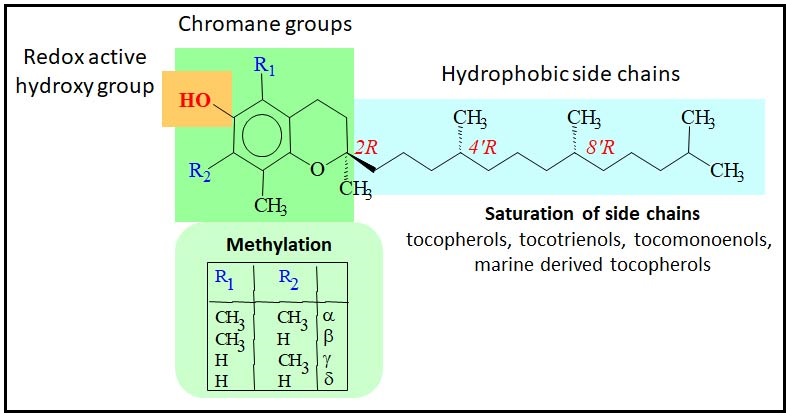
Acknowledgments

The author is very grateful to the late Michael Jory who after initiating the HTML design worked tirelessly to direct the transition to this HTML version from MS-Word drafts. James Spyker’s ongoing HTML support is much appreciated.