Book

Skeaff S. and Gibson, R.S.,
Nutritional Assessment,
Iodine

3rd Edition    April, 2026


Abstract

CITE AS:     Skeaff S. and Gibson. R. S.     Principles of Nutritional Assessment: Iodine https://nutritionalassessment.org/iodine/
Email: sheila.skeaff@otago.ac.nz
Licensed under CC-BY-4.0
( PDF ) ( epub )
25a.1 Introduction

The normal adult human body contains about 15‑20mg of iodine, of which 70%‑80% is concentrated in the thyroid gland. In the presence of goiter and a low iodine intake, the amount of iodine in the gland can be as little as 1mg. Iodine occurs in the tissues mainly as organically bound iodine; inorganic iodide is present in very low concentrations.

25a.2 Functions of iodine

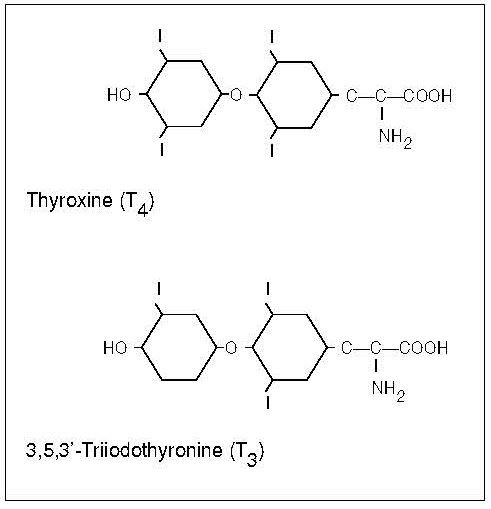
Iodine functions almost exclusively as a component of the thyroid hormones, thyroxine (T4, a pro-hormone), and 3,5,3‑triiodothyronine (T3, the active hormone); their structure is shown in Figure 25a.1.
Figure 25a.1
Figure 25a.1. Structure of the two thyroid hormones, thyroxine (T4) and 3,5,3-triiodothyronine (T3).
These hormones are required for normal human growth and development. Thyroid hormones regulate neurogenesis, myelination, dendrite proliferation and synapse formation, and thus are needed for the development of the brain and central nervous system (Williams, 2008). The thyroid hormones also regulate a variety of metabolic processes, with roles in lipolysis and gluconeogenesis, thereby affecting energy expenditure, body weight, cholesterol levels, and insulin sensitivity (Mullur et al., 2014). The development of the auditory cortex and cochlea require thyroid hormones, but evidence that suboptimal iodine status affects hearing outcomes is limited (Dineva et al., 2023).

25a.3 Absorption and metabolism of iodine

The amount of iodine absorbed from the diet is largely dependent on the level of dietary iodine, rather than on its chemical form or the composition of the diet. Iodine is ingested in several different forms. Before absorption, iodate is reduced to iodide in the gut. Then, absorption of iodide takes place rapidly, mainly from the upper small intestine and stomach, after which it is taken up immediately by the thyroid gland. Once in the thyroid gland, the iodide participates in a complex series of reactions to produce thyroid hormones.

The thyroid hormones are synthesized in the thyroid gland from thyroglobulin, an iodinated glycoprotein contained in the colloid of the thyroid follicles. Once iodinated, the thyroglobulin is exposed to proteolytic enzymes in the thyroid gland which break it down to release mainly T4 and some T3 into the blood.

Production of T3 and T4 in the thyroid is controlled by the level of thyroid-stimulating hormone (TSH) — also known as “thyrotropin” — in the circulation. When the circulating levels of T3 and T4 are adequate, there is a feedback on the pituitary, which regulates the production of TSH. If the level of circulating T4 in the blood falls because of mild iodine deficiency, then the secretion of TSH is increased, which, in turn, promotes iodine uptake by the thyroid and enhances the output of T4 into the circulation. In moderate iodine deficiency, however, the level of circulating T4 will fall, but TSH levels remain elevated. In conditions of very severe iodine deficiency, the level of T3 may also decline.

Once in the circulation, T4 and T3 are rapidly attached to several binding proteins, specifically transthyretin, thyroxine- binding globulin, and albumin. The bound hormone then migrates to target tissues where T4 is deiodinated to T3, the metabolically active form. The iodine that is released returns to the serum iodine pool or is excreted in the urine. Deiodination is controlled by the iodothyronine deiodinases (EC3.8.1.4), enzymes which require selenocysteine at the active site to function (Ashour et al., 1999). Hence, as noted earlier, selenium deficiency may impair conversion of T4 to biologically active T3 and thus hormone action.

25a.4 Iodine deficiency in humans

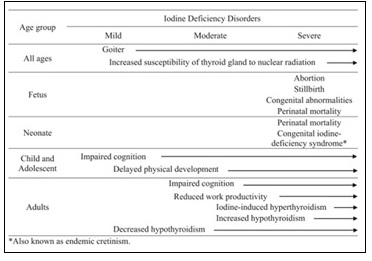
The diverse effects of iodine deficiency on growth and development are termed “iodine deficiency disorders” (IDD) and are itemized in Table 25a.1. They include impaired cognition, hypothyroidism, goiter, congenital iodine-deficiency syndrome (also known as cretinism) and varying degrees of other growth and developmental abnormalities. The IDD can differ by age and severity of iodine deficiency, which is categorized as mild, moderate or severe (Brough & Skeaff, 2024). At all ages, the most common IDD is goiter, a thyroid enlargement, that usually occurs when dietary intakes are <50µg/d. However, the most important consequence of iodine deficiency is on the development of the brain, which primarily occurs during fetal and early postnatal development, but continues throughout childhood. Hence, it is not surprising that an inadequate supply of iodine during these critical periods of brain development has a major effect on the neuro-intellectual development of infants and children (Hetze, 2000). A systematic review of studies undertaken between 1980 and 2011 reported that iodine-sufficient children under 5y of age had a 6.9‑10.2 higher IQ than iodine-deficient children (Bougma et al., 2013).

Figure 7.2
Table 25a.1. Consequences of iodine deficiency by age-group and severity.
Along with iron and vitamin A, iodine is one of the most common micronutrient deficiencies in the world. Since 1986, the Iodine Global Network (IGN, formerly the International Council for the Control of Iodine Deficiency Disorders or ICCIDD), along with partners UNICEF and WHO have progressively worked to eliminate iodine deficiency worldwide. The promotion of iodized salt to reduce iodine deficiency has been hailed as one of the most successful global public health strategies, with 88% of the world’s population using iodized salt, and an almost doubling of the number of countries with adequate iodine nutrition, from 67 in 2003 to 118 in  2020 (Zimmermann, 2023). IGN publishes the Iodine Global Scoreboard; in 2024, of 194 WHO member states, 20 countries had insufficient iodine status, 122 countries had adequate iodine status, 11 had excess iodine status. However, there was no recent information (i.e., since 2007) for 56 countries (https://ign.org/scorecard/). Although nationally, many countries have adequate iodine status, subgroups of the population are often at risk of moderate to mild iodine deficiency, in particular, women of childbearing age and pregnant women. Consequently, over the last 20 years, there has been a shift in focus, with more attention and research on the effects of mild to moderate iodine deficiency and excess iodine.

Although reports of severe iodine deficiency are now infrequent, it is important to be vigilant as the consequences are profound and often irreversible. Severe iodine deficiency in pregnancy can increase the risk of stillbirth, abortion, and congenital iodine-deficiency syndrome also known as cretinism. Neurological cretinism is more common and caused by maternal hypothyroxinemia in the first half of pregnancy, with the child having severe mental impairment, hearing and speech defects, characteristic disorders of stance and gait, but is euthyroid. Myxedematous cretinism is caused by severe iodine deficiency in the second half of pregnancy, which may be combined with exposure to dietary goitrogens and a lack of selenium; some of the characteristics are similar to neurological cretinism although cognition is less impaired, but growth is stunted, and hypothyroidism is evident (Andersson and Braeggar, 2022). In some areas (e.g., the Himalayas), a mixture of both types has been observed (Lamberg, 1993).

The most common cause of iodine deficiency is an inadequate dietary intake of iodine. Iodine status typically reflects the iodine content of the local environment. Many countries and regions of the world have low levels of iodine in the soil, as a result of glaciation, erosion, leaching, soil age and texture. If the diet consists of plants and animals grown in these soils, then the diet is likely to be low in iodine. In contrast, the iodine content of seafood, including seaweed, is high, thus people with diets that contain a large proportion of fish, shellfish, and seaweed typically have good, if not high, intakes of iodine.

Globally, salt has been used to season food for centuries. In 1830 a French nutritional chemist working in South America noted that goitre occurred in areas where the salt was low in iodine but was absent in areas where the salt was naturally rich in iodine. However, this chemist did not link the cause of goitre with a lack of iodine. Over the next 80 years, a number of further studies were done around the world, including a large trial of schoolgirls living in the “goitre belt” in the USA, which demonstrated that goitre was “cured” when iodine was added to salt. In 1922, Switzerland, where goitre was also very common, became the first country to introduce iodized salt, followed by New Zealand and the USA in 1924.

Prior to 1990, Switzerland, USA, Canada, Australia, New Zealand, Japan, and the Scandinavian countries were among the few iodine sufficient countries in the world. These countries typically had access to iodized salt and consumed enough foods that were good or rich sources of iodine. But a fall in iodine intakes in the 1990s saw the reemergence of mild iodine deficiency in Australia and New Zealand (Eastman, 1999; Skeaff et al., 2002) followed by countries in Europe. A drop in iodine intakes has been attributed to a reduction in the use of iodophors in the dairy industry, decreasing consumption of iodized salt in response to public health recommendations aimed at lowering blood pressure, and changing dietary patterns with some groups, such as women of childbearing age, consuming less dairy and bread. Given this, it is imperative that governments undertake routine surveillance of iodine status, particularly of at-risk groups, such as pregnant women and children.

In addition to iodine, there are other micronutrients needed for the metabolism of thyroid hormones including iron, selenium, zinc, and vitamin A. Human studies have shown that iron deficiency affects thyroid metabolism, although the exact mechanism is not clear (Zimmermann and Köhrle, 2002). There are a number of iron-containing enzymes involved, for example, the heme-dependent thyroid peroxidase needed for the incorporation of iodine into thyroglobulin, an early stage of thyroid hormone synthesis. In many vulnerable groups, iron deficiency anemia and iodine deficiency often co-exist. Data suggests that iron deficiency anemia may reduce the effectiveness of iodized salt programmes, leading to recommendations for the dual fortification of salt with iron and iodine. In a study of children treated with microencapsulated iron and/or iodized salt, there was a greater reduction in the prevalence of hypothyroidism and goiter in the dual fortified salt group compared with those receiving iodized salt alone (Zimmermann et al., 2000). Selenium and zinc are required for the conversion of T4 to T3. The role of selenium in iodine metabolism is discussed more fully in Section 25b.2.

Current evidence suggests that the interaction between vitamin A and thyroid metabolism may involve both inhibition of TSH secretion by the pituitary and thyroid hormone transport, mediated in part through two transport proteins, retinol-binding protein and transthyretin. A detailed review is available in (Hurrell and Hess, 2004). Several studies have reported elevated serum retinol levels in subjects with visible goiters (Wolde-Gebriel et al., 1993a; Wolde-Gebriel et al., 1993b; Florentino et al., 1996). A systematic review examining the effect of different micronutrients on iodine status and concentrations of thyroid hormone noted that a lack of studies made it difficult to draw conclusions about the association between vitamin A, copper, and molybdenum and iodine status (O’Kane et al, 2018).

The thyroid gland can be affected by different chemicals that occur naturally but also arise from human involvement in the environment (Serrano-Nascimento and Nunes, 2022). Perchlorate, nitrate and thiocyanate, in particular, inhibit uptake of iodine by the sodium iodine symporter, thereby disrupting thyroid hormone synthesis. Perchlorate is often found in drinking water, food and milk, while nitrate primarily comes from polluted water, leafy green vegetables and food additives. Thiocyanate, which contains cyanide, primarily comes from cigarette smoking in smokers, and from cruciferous vegetables (e.g., cabbage, broccoli, cauliflower, turnips, bok choy), cassava, and milk in non-smokers. Concern has been expressed that long-term exposure to these, often ubiquitous chemicals can exacerbate mild to moderate iodine deficiency, particularly in pregnant women and young infants (Serrano-Nascimento and Nunes, 2022). A study of iodine sufficient Chinese adults also reported an inverse association between high intakes of all three chemicals and lower thyroid hormone (King et al, 2023).

Secondary iodine deficiency may develop in the presence of a number of diseases of the thyroid gland, or pituitary or hypothalamic failure. Under certain conditions, iodide in large doses may block the synthesis of thyroid hormone, usually temporarily, after which hormone synthesis resumes. This phenomenon is known as the Wolff-Chaikoff effect (Wolff and Chaikoff, 1948). Sometimes, in 3%‑4% of otherwise healthy individuals, the block persists and a goiter may develop.

25a.5 Food sources and dietary intakes

Iodine is present in foods largely as inorganic iodide. Foods of marine origin — sea fish, shell fish, and seaweeds — are excellent food sources of iodine but are eaten in small amounts in many countries, although there are exceptions such as Japan (Inoue and Leung, 2022). In many countries, dairy products, bread made with iodized salt, and eggs are good sources of iodine (Wilson et al., 1999; Ershow et al, 2022). The iodine content of meat, milk, and eggs varies markedly with region, season, and the amount of iodine in the animal feed (Hemken, 1979). Vegetable and fruit products are generally low in iodine (Fisher and Carr, 1974). Losses of iodine during cooking occur, the extent depending on the temperature, nature of the food, and length of the cooking time (Wang et al., 1999). However, adding iodized salt to water, for example when cooking pasta, does increase the iodine content of the food (Ershow et al, 2022). Freezing and freeze drying can also reduce the iodine content of foods by up to 20%‑25% (Lee et al., 1994).

Adventitious sources of iodine may contribute to the iodine content of foods. These include iodates used as dough conditioners, iodoform used in water as a disinfectant, iodine- containing food colors (e.g., erythrosine and rose bengal), and iodophors used in the dairy industry (Vought et al., 1972; Dunsmore and Wheeler, 1977; Delange, 1985). However, use of iodophors has decreased in some regions, for example, New Zealand and Australia, which has led to a reduction in the iodine levels in milk in these countries (Knowles et al., 1997; Eastman, 1999) and, in turn, to lower iodine intakes and lower urinary iodide excretion (Eastman, 1999; Thomson et al., 2001).

As stated previously, the recommended method for preventing iodine deficiency is the use of iodized salt, using potassium iodide or potassium iodate as the fortificant. WHO recommends that all food-grade salt (i.e., salt used at the table, in cooking, and in food processing) be iodized (WHO, 2014). The concentration of iodine in salt is based on an iodine intake in adults of 150µg/day and the consumption of iodized salt from all food sources, with WHO suggesting 14 to 65mg I/kg of salt, the high end reflecting a diet that meets the WHO guideline that people consume less than 5g of salt/day. Some countries have voluntary salt iodization while other countries have mandatory salt iodization, which may or may not include the use of iodized salt in processed foods. China is one of less than 10 countries that introduced mandatory salt iodization for both table salt and salt used in processed foods in 1995. Australia, New Zealand and the Netherlands have voluntary salt iodization but mandate the use of iodized salt in commercial bread.

Dietary supplements such as vitamin and mineral tablets typically contain iodine. The use of kelp tablets, which can have very high and variable amounts of iodine, are not recommended. Dietary supplements with additional iodine are often recommended for pregnant and breastfeeding women, and in some countries, for example New Zealand, are government subsidized. Iodinated oil provides a high and sustained release of iodine and can be given either orally (1y) intramuscularly (2‑3y)

Iodinated oil was once used, particularly in pregnant women, in places where the production, distribution, and monitoring of iodized salt was difficult (e.g., Papua New Guinea, Argentina, Democratic Republic of Congo), but is now rarely used for this purpose.

In the United States, the Dietary Reference Intakes (DRIs) are set by the Institute of Medicine (IOM, 2002). The U.S Estimated Average Requirements (EARs) for iodine are 95µg/day for both male and female adults (19 to >70years). The corresponding level for the U.S Recommended Dietary Allowance (RDA) is 150 µg/day for both male and female adults. In contrast, the European Food Safety Authority (EFSA, 2014) did not set levels corresponding to the U.S EAR and RDA levels, but instead recommended a daily Adequate Intake (AI) of iodine for adults (18+y) of 150µg/day, with increased needs for pregnant (200µg/day) and lactating women (200µg/day). For details of the levels for other age and life-stage groups set by these agencies, see relevant publications.

25a.6 Effects of high intakes of iodine

An excess intake of iodine can result in either hypothyroidism or hyperthyroidism in susceptible groups such as the fetus, neonate, individuals with kidney disease, and those with thyroid disease (Sohn et al., 2024). Most individuals with normal thyroids can tolerate high intakes of iodine from the diet that might result from the consumption of iodine-rich foods, high iodine water, or iodine-containing supplements (Sohn et al., 2024). When exposed to an excessive amount of iodine, the thyroid gland has an intrinsic regulatory mechanism, the acute Wolff-Chaikoff effect, whereby iodine uptake by the gland is reduced and less thyroid hormone is secreted. Normal thyroid function typically resumes within 24 to 48 hours, referred to as the escape from the Wolff- Chaikoff effect. In people with autoimmune thyroid disease (e.g., Graves disease, Hashimoto thyroiditis) there can be a failure to escape the Wolff-Chaikoff effect which can lead to hypothyroidism. Similarly, in the fetus and neonate, because their thyroid gland is not yet fully developed, a failure to escape the Wolff-Chaikoff effect can result in hypothyroidism (Sohn et al., 2024). In 2010, neonatal hypothyroidism was reported in three Australian neonates who were breastfed by two mothers with very high iodine intakes from the ingestion of soymilk containing seaweed and one mother eating seaweed soup (Crawford et al, 2010).

Hyperthyroidism can occur when there is a failure of the Wolff-Chaikoff effect, whereby the thyroid gland takes up the additional iodine and synthesizes excess thyroid hormone. This response, called the Jod-Basedow phenomenon or iodine-induced thyrotoxicosis, tends to occur in individuals with autonomous thyroid nodules. The hyperthyroidism is generally mild and can be treated readily. This condition has been observed in individuals residing in areas with long-standing iodine deficiency and who are exposed to an excess of iodine. Tasmania has a long history of iodine deficiency with an increase in thyrotoxicosis first documented in 1964, following the introduction of iodophors in the dairy industry, in 1966‑67 when iodate was added to bread, and again in 1971 when iodophors were also used in milk processing; patients tended to be female over the age of 40y. The replacement of iodophors with chlorine-containing disinfectants in the dairy industry and the removal of iodates in bread resulted in a decline in cases by the late 1980s (Richards, 2021).

The U.S Food and Nutrition Board Tolerable Upper Intake Level (UL) for the iodine intake of adults >19y and pregnant and lactating women is 1100µg/d. Levels for children and adolescents are also given in (IOM, 2002). This UL is almost double the Upper Level for adults derived by the European Food Safety Authority of 600µg/d (EFSA, 2014). Although both the US and EFSA use the same data in deriving the UL, the US used an uncertainty factor of 1.5 while EFSA used an uncertainty factor of 3.

25a.7 Indices of iodine status

The most widely used biochemical method of assessing iodine status is to determine urinary iodine excretion either in 24h urine samples or casual urine specimens; this method is described below. Measurement of thyroid stimulating hormone (TSH) in serum is used as a screening test for detecting congenital hypothyroidism in neonates but is not widely used to assess iodine status. Levels of T3 or T4 in serum are sometimes also used, although they are relatively insensitive, generally only falling below the normal range when iodine deficiency is very severe. Thyroglobulin (Tg) is a thyroid specific glycoprotein released into the blood in small quantities that is correlated with thyroid volume in children and adults and shows promise as a biomarker of iodine status.

Methods for assessing the volume of the thyroid gland are also described. Determination of cognitive function in children has sometimes been used as a noninvasive functional measure of iodine status. Several other micronutrients influence cognitive function (e.g., iron, zinc, folate, and vitamin B12), so this test is not very specific and is most useful during double-blind placebo-controlled iodine intervention trials.

25a.7.1 Thyroid size by neck palpation

In iodine deficiency, the thyroid gland, which lies in front of the larynx and upper trachea, is enlarged. This thyroid enlargement is known as goiter and is the most obvious visible clinical consequence of iodine deficiency. Because the thyroid gland may not return to a normal size for months or even years after the correction of iodine deficiency, care must be taken when interpreting the prevalence of goiter in a population with a history of suboptimal iodine status (Delange et al., 2001).

Goiter usually occurs when dietary intakes of iodine are <50µg/d, unless it is also associated with goitrogens in the diet. Goitrogens may cause the thyroid to enlarge more than that expected based on iodine intakes alone. Goiter reflects an attempt by the thyroid to compensate for a lack of production of thyroid hormones, induced by iodine deficiency. With the reduced output from the thyroid, the level of T4 falls, which leads to an increase in TSH secretion by the pituitary. This in turn, increases the uptake of iodide by the thyroid, with increased turnover of iodine associated with hyperplasia of the cells of the thyroid follicles. As a result, the thyroid enlarges.

Initially, the thyroid gland is diffusely and symmetrically enlarged, but as the severity of the iodine deficiency increases and as the subject ages, the gland increases in size and palpable nodules occur. In some circumstances, gross enlargement of the thyroid can cause obstructive symptoms with compression of the trachea or esophagus.

The traditional method of measuring the size of the thyroid is to use neck palpation. Several studies have compared the use of neck palpation with that of ultrasound (Section 25a.7.2) for estimating the prevalence of goiter. Results suggest that in areas of mild IDD where the prevalence of visible goiters is low, sensitivity and specificity of palpation are poor, resulting in high rates of misclassification (WHO/UNICEF/ICCIDD, 2007). However, in areas of moderate to severe IDD, goiter palpation using the WHO/UNICEF/ICCIDD (2007) criteria (Table 25a.2) generally provides a relatively accurate estimate of goiter prevalence, especially for children 6–12y and pregnant and lactating women.

Table 25a.2. Simplified classification of goiter. From WHO/UNICEF/ICCIDD (1994),
Grade Clinical signs
Grade 0 No palpable or visible goiter
Grade 1 A mass in the neck that is consistent
with an enlarged thyroid that is pal-
pablebut not visible
when the neck
is in a normal position. It moves
upward in the neck when the subject
swallows. Nodular alteration(s)
can occur even when the thyroid is
not visibly enlarged.
Grade 2 A swelling in the neck that is visible
when the neck is in a normal position
and is consistent with an enlarged
thyroid when the neck is palpated.
There is some evidence that thyroid volume varies with sex. Several (Delange et al., 1997; Foo et al., 1999) but not all (Vitti et al., 1994; Xu et al., 1999) reports suggest that girls have larger thyroid volumes than boys.

Interpretive criteria

A simplified classification of goiter based on three grades has been developed by WHO/UNICEF/ICCIDD (2007) and is reproduced in Table 25a.2. Neck palpation is especially suitable for children 6‑12y and pregnant and lactating women, but it is not recommended for infants and younger children who have small thyroids. Thyroid volume increases with age, reaching a plateau at about 15y.

Estimates of grade 1 goiter using neck palpation are not very accurate, as noted earlier. Further, specificity and sensitivity of palpation in grades 0 and 1 are low because of high between-examiner variation. Hence, it is always preferable to confirm low goiter rates by ultrasonography and urinary iodine excretion levels (Section 25a.3).

Table 25a.3. Epidemiological criteria for assessing the severity of IDD based on goiter prevalence in school-age children. TGR = total goiter rate. From WHO/UNICEF/ICCIDD (1994).
Severity of IDD Prevalence
of goitre (TGR (%))
Mild 5.0 - 19.9
Moderate 20-29.9
Severe ≥30
Table 25a.3 provides epidemiological criteria set by WHO/UNICEF/ICCIDD (2007) for assessing the severity of IDD based on the prevalence of goiter in school-age children. The total goiter rate (TGR) represents the sum of grade 1 and grade 2 goiter rates.

Measurement by neck palpation

Inspection followed by neck palpation is the conventional method for measuring the size of the thyroid. The subject is asked to look up to fully extend the neck, which pushes the thyroid forward. A thyroid gland is considered goitrous when each lateral lobe has a volume greater than the terminal phalanx (tip) of the thumb of the subject being examined. In grade 1 goiter, the thyroid lobe is larger than the ends of the thumb and is palpable but not visible when the neck is in the normal position. In grade 2 goiter, the thyroid is enlarged and visible when the neck is in a normal position (WHO/UNICEF/ICCIDD, 2007).

Neck palpation is cheap and easy to perform, requiring only the cost of the examination. Personnel can be trained in the technique. In some settings, particularly when iodine deficiency is moderate to severe, palpation may be more affordable than thyroid ultrasonography, described below (Foo et al., 1999; Zimmermann et al., 2000).

25a.7.2 Thyroid volume by ultrasonography

Ultrasonography measures thyroid volume (Tvol) more precisely and objectively than inspection and neck palpation, especially if the visible goiter is small (i.e., grade 1). The method employs sound frequencies in the megahertz range, well above the frequency of audible sound. The impulse is applied to the neck by a small handheld device that both transmits the signal and receives the reflections. The ultrasound penetrates the skin surface and passes through the underlying tissues, with a certain portion of the sound being reflected back. Tissues containing interfaces of different acoustic densities generate dense echoes. Transmission of sound from the transducer to the skin is facilitated by a water- soluble gel, with the transducer held at a 90-degree angle to the measurement site, using minimal pressure.

Ultrasonography is safe, noninvasive, relatively quick (2-3 minutes), and feasible even in remote areas because of the availability of portable, rugged, ultrasound equipment. The latter does require electricity but can be operated from a car battery. Well-trained experienced ultrasonographers and care must be used when taking the measurements of thyroid volume, because of the irregular shape of the thyroid gland.

Interpretive criteria

To interpret thyroid ultrasonography correctly for the assessment of the prevalence of goiter, valid reference criteria from relatively long-standing iodine-sufficient populations (i.e., the median urinary iodine concentration of the population is >100µg/L) are required.

In 2004, a WHO report from the Nutrition for Health and Development Iodine Deficiency Study Group proposed normative values for thyroid volume in children aged 6–12y based on the data for 3529 iodine sufficient children from six countries (Switzerland, Bahrain, South Africa, Peru, the USA, and Japan). Two examiners performed all ultrasonography using validated techniques (Zimmermann et al., 2004).

These reference values for the median and the upper limit of normal (97th percentile) of thyroid volume by age and body surface area (BSA) are given in Table 25a.4.
Table 25a.4: WHO reference data for the median and upper limit of normal (97th percentile) for thyroid volume (mL) by age and body surface area (BSA) measured by ultrasonography in iodine replete children. From Zimmermann et al., (2004).
Boys
Med. (p97)
Girls
Med. (p97)
Age (years)
6 1.60 (2.91) 1.57 (2.84)
7 1.80 (3.29) 1.81 (3.26)
8 2.03 (3.71) 2.08 (3.76)
9 2.30 (4.19) 2.40 (4.32)
10 2.59 (4.73) 2.76 (4.98)
11 2.92 (5.34) 3.17 {5.73)
12 3.30 (6.03) 3.65 {6.59)
BSA (m2)
0.7 1.47 (2.62) 1.46 (2.56)
0.8 1.66 (2.95) 1.67 (2.91)
0.9 1.86 (3.32) 1.90 (3.32)
1.0 2.10 (3.73) 2.17 (3.79)
1.1 2.36 (4.20) 2.47 (4.32)
1.2 2.65 (4.73) 2.82 (4.92)
1.3 2.99 (5.32) 3.21 (5.61)
1.4 3.36 (5.98) 3.66 (6.40)
1.5 3.78 (6.73) 4.17 (7.29)
1.6 4.25 (7.57) 4.76 (8.32)
At ages ≥8y and BSAs ≥1.0m2, girls had significantly higher median and 97th percentile (p.97) values for thyroid volume than boys (p<0.001). A child is defined as having goiter, when the sex-specific thyroid volume, expressed as a function of age or BSA is >97th percentile value shown in Table 25a.4.

The thyroid volume data are given as a function of BSA because in countries where there is a high prevalence of growth retardation, children weigh less and are shorter than the reference children of a similar age. Such data are also useful when the age of children is uncertain.

Body surface area (BSA) (m2) can be calculated using the following formula of Du Bois and Du Bois (1916):

(W0.425 × H0.725) × 0.007184

where W is the weight in kg and H is the height in cm.

The effectiveness of this WHO international reference range has been queried by some, who suggest that population- or country-specific thyroid volumes may be more appropriate (Johnson et al., 2019). For example, new reference values for thyroid volume obtained from German children aged 6‑17y have been published, with the 97th percentile about 30% higher than the 2004 WHO reference values (Hirtz et al, 2024). There are also numerous Chinese studies that report reference values for different regions of China (Cui et al., 2023; Fei et al., 2025).

Although there is no are internationally accepted reference values that exist for adults, some countries, for example China (Lin et al., 2023), have proposed reference ranges.

Measurement of thyroid volume by ultrasonography

All measurements of thyroid volume by ultrasonography should be performed by well-trained operators who have participated in a calibration exercise with an experienced team, prior to any survey. WHO/UNICEF/ICCIDD (2007), provides a detailed method (in Annex 2) for determining thyroid volume by ultrasonography. An ultrasound machine with a 7.5MHz transducer is required, although machines with a higher frequency (eg., >10MHz) can achieve more accurate measurements than older machines with lower frequency transducers. Measurement of Tvol can be taken on children in the supine position with hyperextended neck or when subjects are sitting up in a straight- backed chair with their neck extended. An experienced operator can complete up to 100 examinations or more of thyroid volume per day.

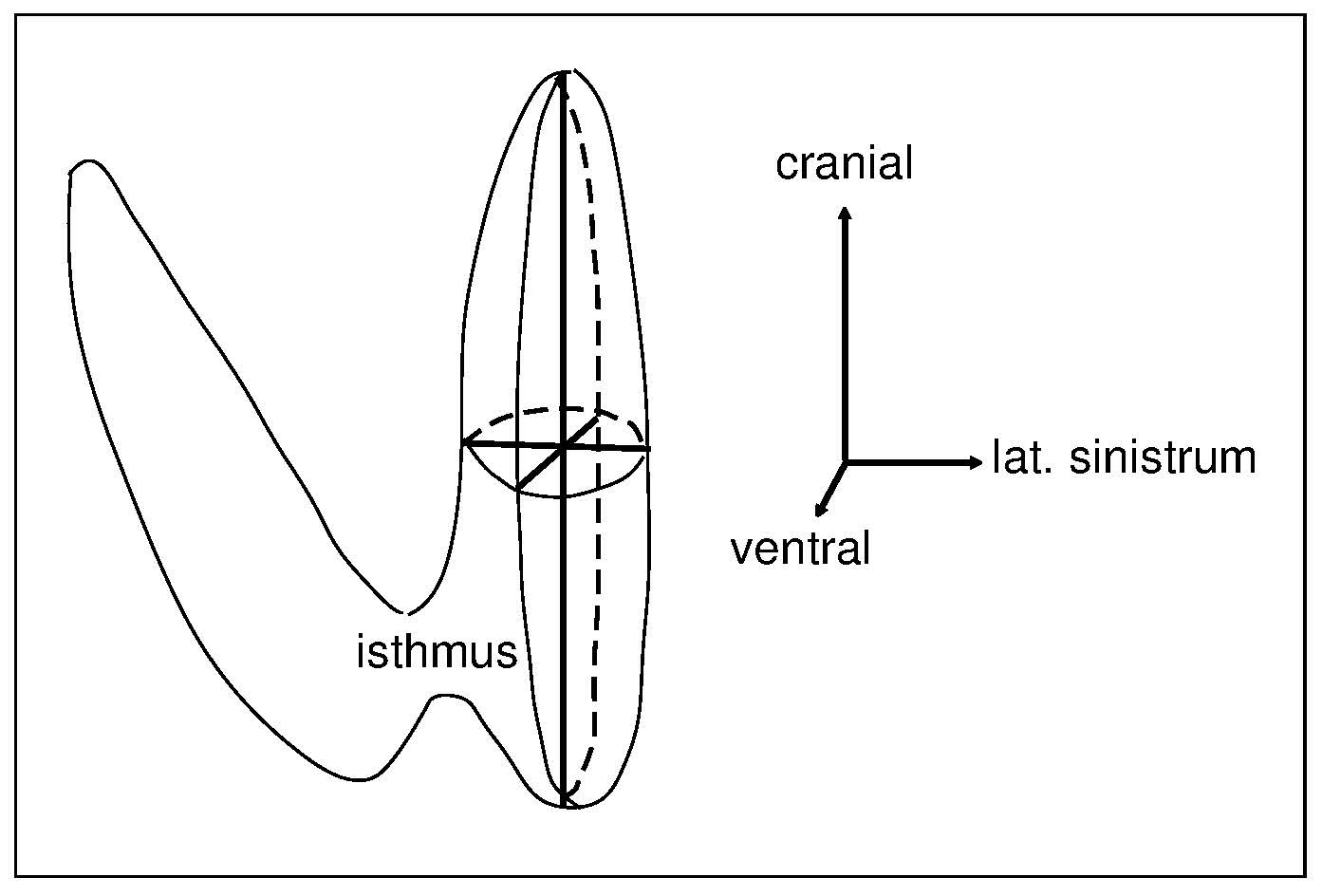
A diagram of the thyroid gland showing the two elongate lobes connected across the midline by the isthmus is shown in Figure 25a.2.
Figure 25a.2
Figure 25a.2. Diagram of the thyroid gland, showing a cross-sectional view of the right thyroid lobe.
A three-dimensional view is shown for one of the lobes to illustrate that each lobe approximates an ellipsoid. Consequently, lobe volume can be estimated from the measurements of the lengths of the three main axes.

Tvol is usually calculated using the equation of Brunn et al. (1981), where the volume of each lobe (mL) = anteroposterior diameter (a) × mediolateral diameter (m) × craniocaudal diameter (c) × 0.479, All measurements are in cm. The lobe volumes are summed. The volume of the isthmus is not included.

V (mL) = a × m × c × 0.479

Ultrasonography has been used in large-scale surveys in Europe, China, South America, and Australia, with the use of a mobile van- based laboratory. Because thyroid volume is not an indicator of current iodine status, neither ultrasonography nor palpation should be used to monitor the efficacy of a salt iodization program: it takes time for the thyroid volume to return to normal after restoration of available iodine levels. Instead, urinary iodine is more suitable and is discussed below.

25a.7.3 Urinary iodine excretion

Daily urinary excretion of iodine closely reflects current iodine intake because most (>90%) dietary iodine is excreted in the urine within 24h of consumption (Nath et al., 1992). Given this, the iodine status of a group or population is typically assessed in cross-sectional studies by measuring the urinary iodine concentration (UIC) expressed as µgI/L from either casual or spot urine samples or 24h urine collections.

Spot or casual urine samples are relatively easy to obtain from all subjects, including children. Some studies have examined the most appropriate timing for the collection of casual urine samples because urinary iodine excretion exhibits diurnal variation — the lowest values occur in the morning, with peaks occurring 4‑5h after a meal — and day-to-day (circadian) variation (Als et al., 2000). However, there is no currently accepted protocol for the collection of spot urine samples for iodine, other than the sample is typically obtained during the day after the first void in the morning. Another limitation with spot samples is dilution and the hydration state of the individual when the urine sample is obtained. Consumption and excretion of large volumes of fluid will decrease UIC and could underestimate iodine intake while consumption and excretion of smaller volumes of urine could increase UIC and overestimate iodine intake, possibly masking iodine deficiency.

Although not recommended by WHO/UNICEF/ICCIDD (2007), some investigators advocate the additional measurement of creatinine in causal urinary iodine samples, to allow adjustment for factors that may affect the concentrations of iodine such as urine volume (Knudsen et al., 2000), assuming that daily creatinine excretion is constant in a given individual. However, creatinine varies with age and is influenced by several other factors including protein intake, as discussed in Section 16.1.1. If creatinine has been measured, it is best to report both UIC and the ratio of UIC to creatinine excretion (i.e., µgI/mg of creatinine), as the WHO/UNICEF/ICCIDD (2007) cut-offs are provided for UIC only.

Compared to spot samples, there are advantages to the collection of 24h urine samples. Firstly, actual rather than estimated 24h urine volume can be determined for each subject. Secondly, a 24h urine sample is the gold standard for measuring sodium intake, thus linking surveillance of sodium intake with iodine status is cost-effective in national surveys. The PAHO/WHO protocol (https://www3.paho.org/hq/dmdocuments/2013/24h-urine-Protocol- eng.pdf) is recommended for collecting a 24h sample for sodium, and this protocol can also be used for iodine. The collection of a complete 24h urine sample is associated with a large respondent burden which requires conscientious and compliant subjects (Section 25a.7.3) and is not practical for young children. Another important consideration for 24h urine is the collection of a complete sample, where no voids are missed. Several strategies can be used to ascertain if a 24h sample is complete, such as asking subjects to report on any missed voids (more than two missed voids in 24h), total urine volume (i.e., >500ml over 24h), creatinine concentration that falls within the recommended range for age and sex, and >80% recovery of para-aminobenzoic acid (PABA).

UIC has both high intra- and inter-variability, so the UIC of single urine sample cannot be used to diagnose the iodine status of an individual. In a carefully conducted longitudinal study of 22 healthy Swiss women, Konig et al. (2011) demonstrated that 10 spot or 24h urine samples were needed to assess individual iodine status with 20% precision. Although it is common for studies to report the percentage of iodine-deficient subjects if UIC falls below the cut-off, if only a single urine sample has been obtained, this is a misinterpretation of UIC data (WHO, 2024). Iodine intake can be determined from UIC measured in spot urine samples. Assuming a median 24h urine volume of about 0.0009 L/h/kg, and an average bioavailability of iodine in the diet of 92%, daily iodine intake (Iintake) in g can be calculated from UIC as follows

Iodine intake = (0.0009 × 24 / 0.92) × Wt × UIC

where Wt is the body weight (kg) and UIC is the urinary iodine (µg/L). Details are given in IOM (2002). Other researchers have assumed a 24h urine volume of 1.5L and an average iodine bioavailability of 90% (Zimmermann and Delange, 2004). If a 24h urine sample has been collected, then Iodine intake (µg)

= (UIC (g/L) × V (L/day)) /0.92 (WHO, 2024)

The prevalence of inadequate iodine intakes can be determined using the EAR cut-point method, but only if a repeat urine sample has been collected from a subsample (~25%) of the population and used to adjust for intra-individual variability (Haldimann et al., 2015). WHO (2024) suggest that if >3‑10% of the population have an iodine intake below the EAR, iodine deficiency may be a concern.

Interpretive criteria

Urinary iodine values are not usually normally distributed, so the median value should always be reported. Cutoff points for median UIC based on casual urine samples have been proposed by WHO/UNICEF/ICCIDD (2007) to assess the severity of iodine deficiency among school aged children; they are shown in Table 25a.5. WHO/UNICEF/ICCIDD (2007) state that no more than 50% of the population should have a UIC below 100µg/L and no more than 20% of the population should have a UIC below 50µg/L. It is of interest that WHO (2024) notes that the thresholds for severity of iodine deficiency in adults has yet to be defined. The validity of the threshold for urinary iodine levels indicative of iodine sufficiency (e.g., 100‑199µg/L) in Table 25a.5 was reviewed by Delange et al (2002). WHO is currently evaluating these cut-offs.

The current threshold for iodine adequacy of a median UIC≥100µg/L was derived for children based on the association of UIC and goitre, a recommended iodine intake of 120µg/day, and an assumed urine volume of 1L. In adults with a recommended intake of 150µg/day, and an assumed urine volume of 1.5L, the threshold of ≥100µg/L still aligns. However, for higher volumes of urine often reported in adults, for example, of 2L/day, a UIC of 70g/L would still provide 150µg/day. The threshold of 150µg/L for pregnant women, reflects the higher recommended dietary intake in pregnancy of 250µg/day. The extrapolation of the recommended nutrient intake or RDA, set to meet the nutrient needs of 97.5% of the population, in determining UIC cutoffs has been questioned, with suggestions that it would be more appropriate to use the EAR.

Table 25a.5: Epidemiological criteria for assessment of iodine nutrition in a population based on median or range of median UIC (µg/L). UIC thresholds for the severity of iodine deficiency have not been defined. From WHO/UNICEF/ICCIDD (2007)
Iodine nutrition School-age
children
Adults Pregnant
women
Severe iodine
deficiency
<20µg/LNot definedNot defined
Moderate iodine
deficiency
20-49µg/LNot definedNot defined
Mild iodine
deficiency
50-99µg/L<100µg/L<150µg/L
Adequate /
Optimum
100-299µg/L≥100µg/L150-249µg/L
Excessive, with risk of
adverse consequences
≥300µg/LNot defined≥500µg/L

WHO recommends the collection of at least 300 casual urine specimens from any given population to diagnose endemic IDD or to monitor the effectiveness of an intervention. This figure is based on the assumption of a prevalence of abnormal results of 50%, 95% confidence intervals, a design effect of 2, and a relative precision of 16%. Further justification for this sample size is given in WHO/UNICEF/ICCIDD (2007).

Measurement of urinary iodine

For the measurement of urinary iodine, care must be taken to avoid adventitious sources of contamination. Urine specimens can be collected in special polyethylene tubes, tightly sealed with screw tops. Only a small amount of urine (0.5‑1.0mL) is usually required, although the exact volume depends on the analytical method. Samples do not require the addition of a preservative or refrigeration during collection and transport to the laboratory. Samples can be stored refrigerated for several months prior to analysis, provided the samples are tightly sealed to avoid evaporation. Frozen urine samples can be kept indefinitely. It is important to use tubes with labels for the samples, as leaked urine can dissolve permanent marker pen.

UIC can be measured by the Sandell-Kolthoff method and Inductively Coupled Plasma Mass Spectrometry (ICP‑MS). ICP‑MS is the gold standard method for measuring urinary iodine because it is fast, accurate and sensitive; however, it can be costly. Before the widespread use of ICPMS, urinary iodine was measured using the Sandell-Kolthoff method, which is more labour intensive but the materials are relatively inexpensive and only requires simple equipment. In the Sandell-Kolthoff reaction, iodine catalyzes the reduction of ceric ammonium sulfate (yellow color) to the cerous form (colorless) using arsenous acid; extinction is measured in a spectrophotometer at 405nm (Aumont and Tressol, 1986). Laboratories should have both internal and external quality control procedures in place, for example the use of internal controls to measure precision and certified reference material (eg., Seronorm) to measure accuracy. External auditing, for example, by participation in the Ensuring the Quality of Iodine Procedures (EQUIP) program run by the Centre for Disease Control in the USA is also encouraged.

25a.7.4 Thyroid stimulating hormone

Levels of thyroid stimulating hormone (TSH) in serum or whole blood reflect the availability and adequacy of thyroid hormone and, hence, are an indicator of thyroid function. Iodine deficiency results in a lower level of circulating thyroxine (T4) which results in increased secretion of TSH by the pituitary in an attempt to stimulate thyroid hormone synthesis. In chronic severe iodine deficiency, serum TSH concentrations are markedly elevated; however, in mild to moderate iodine deficiency, serum TSH levels are often within the normal range in adults (Benmiloud et al., 1994; Buchinger et al., 1997; ) Simsek et al., 2003). Given this, WHO/UNICEF/ICCIDD (2007) do not recommend the routine use of TSH in serum or whole blood for assessing iodine status in adults or school children.

In contrast, neonates are more sensitive to iodine deficiency. Exposure to iodine deficiency during pregnancy and/or birth stimulates the production of TSH by the neonatal thyroid, resulting in elevated levels of TSH; TSH levels directly reflect the adequacy of thyroid hormone in the brain. The transient increase in TSH observed up to one month after birth is known as transient hyperthyrotopinemia. A prevalence >3% of neonates with mildly elevated TSH levels (>5mIU/L) can be used as an indicator of iodine deficiency in a population. Prevalence increases with severity of deficiency, and elevated neonatal TSH may be a good indication of moderate or severe iodine deficiency, but is less sensitive to mild iodine deficiency (WHO, 2024).

Low levels of thyroid hormone (i.e., T4) in pregnancy or after birth can affect neurodevelopment, resulting in developmental delay and, if untreated, permanent intellectual disability (formerly called mental retardation). Although rare, congenital hypothyroidism (CH) occurs in approximately 1 out of every 4000 neonates, and most countries include a test for CH as part of a routine neonatal screening program. Typically, these screening programs collect a heel-prick blood sample spotted onto filter paper. A bloodspot TSH ≥2 mIU/L is suggestive of CH, and CH should be confirmed by additional blood tests.
Figure 25a.3
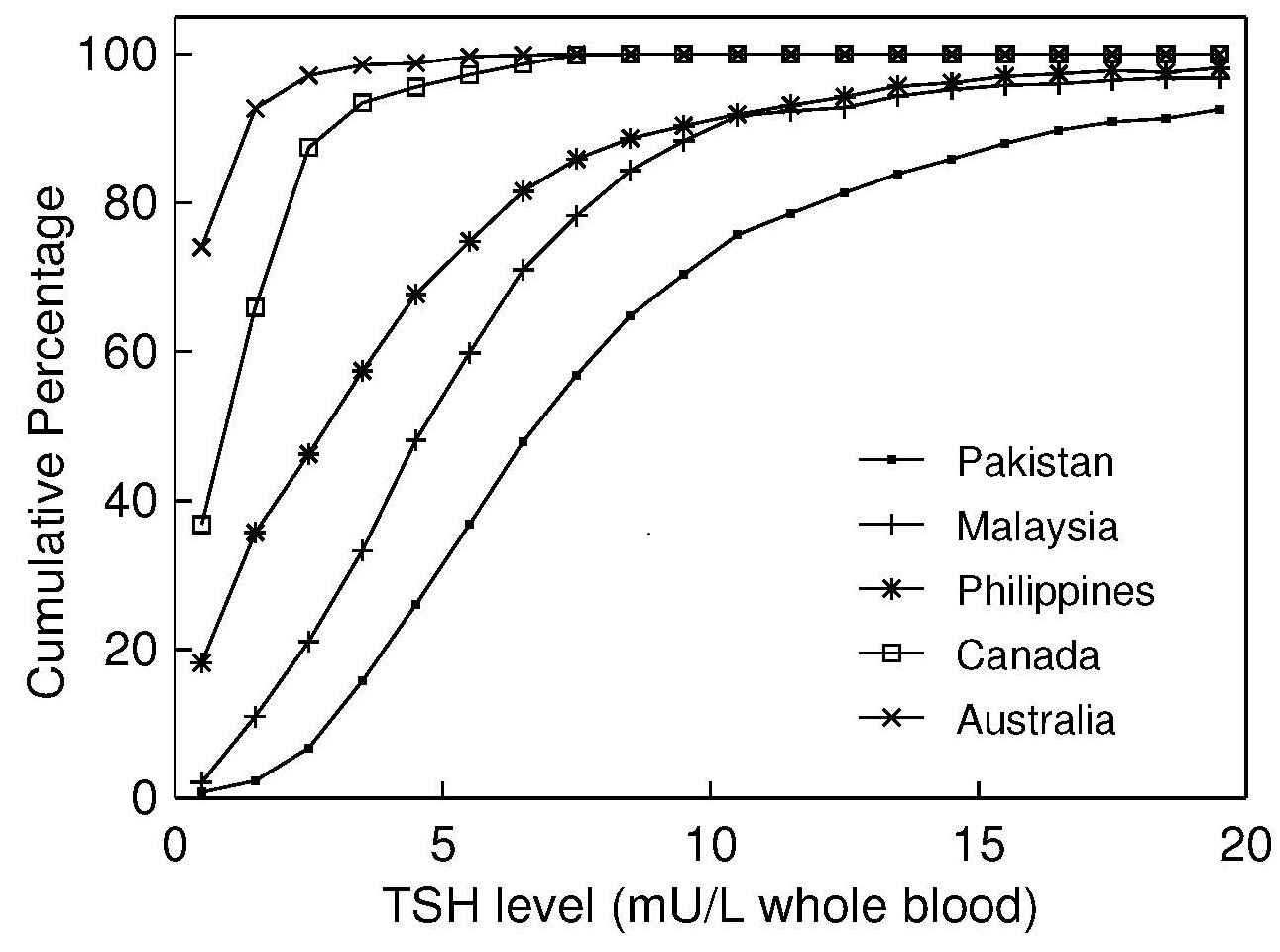
Figure 25a.3 shows a cumulative distribution of TSH (in 1.0mIU/L units) measured in dried blood samples taken from neonates, from three developing countries and from two iodine-sufficient areas in Australia and Canada (Sullivan et al., 1997).
Note the shift to the right in the cumulative TSH distributions for the neonates from all three developing countries (the Philippines, Malaysia, and Pakistan) when compared with the iodine sufficient areas (Canada and Australia). In addition, in this study the TSH results were consistent with those of other indicators of IDD (e.g., urinary iodine concentrations) in these areas, although in other studies some discrepancies have been reported (Copeland et al., 2002).

Factors affecting neonatal TSH levels

Maternal iodine deficiency is associated with an elevated TSH level (>5mIU/L) in the newborn.

Stress during the birthing process can lead to a surge in TSH during the first few days of life (Copeland et al., 2002).

Site of blood collection can vary but in screening programs is more often a heel-prick rather than cord blood sample.

Time of blood collection may affect neonatal TSH levels. WHO/UNICEF/ICCIDD (2007) have recommended that blood specimens be collected 3‑4 days after birth, however, many neonatal screening programs collect blood spots within 48‑72 hours of birth. In research studies, it is useful to note how many hours after birth the neonatal blood spot was collected.

Table 25a.6: Thyroid-stimulating hormone (TSH) results from newborns; comparison of cord blood and whole blood from heel-prick specimens, Crawford Long Hospital, Atlanta, GA, 1996–1997.
a24 samples were collected on days 3 to 7, and the remainder on days 8 to 34. From Copeland et al., (2002)
Specimen (n) Median
TSH (mU/L)
% with TSH
>5mU/L (95%CI)
Cord blood (243) 8.3 82.3 (77.1, 86.7)
Heel blood day 1 (14) 8.5 85.7 (60.3, 97.5)
Heel blood day 2 (48) 7.5 79.2 (66.0, 88.9)
Heel blood day 3a (28) 4.7 42.9 (25.7, 61.4)
In a study by Copeland et al. (2002) both cord blood and heel-prick specimens collected on day one appear to have higher levels than those collected thereafter, as shown in Table 25a.6 (Copeland et al., 2002). Such trends have not been consistent, however, and the relationship between cord blood TSH and heel-prick collected >72h after birth remains uncertain.

Congenital hypothyroidism induces very high TSH levels (i.e., ≥20mIU/L) in affected infants.

Exposure to iodine-containing antiseptics (eg., beta-iodine) and X‑ray contrast media by mothers or neonates can cause increases in TSH levels for 1 month or longer after birth. Beta-iodine increases TSH levels in both cord blood and heel-prick blood samples.

Neonatal exposure to antithyroid medications may elevate TSH levels.

Assay method, manufacturer of the commercial kit, and the type and grade of blood collection paper may all influence the TSH concentrations, and thus comparisons among populations. A microplate ELISA assay that employs monoclonal antibodies is the recommended method because it is more sensitive than the polyclonal test kits and hence can discriminate at low TSH concentrations (i.e., about 2mIU/L) (Sullivan et al., 1997; Copeland et al., 2002).

Interpretive criteria

Cutoff points for whole blood or serum TSH concentrations in neonates have been defined by WHO/UNICEF/ICCIDD (2007). A bloodspot TSH ≥20mIU/L is the cut-off used for congenital hypothyroidism.

Sometimes, TSH testing in newborns is used as an indicator for assessing the prevalence of IDD in epidemiological studies (Figure 25a.3). In such cases, TSH levels may be only mildly elevated, and WHO/UNICEF/ICCIDD (2007) suggest a prevalence <3% of blood TSH values >5mUI/L indicates iodine sufficiency.

Measurement of TSH

Cord blood or heel-prick blood specimens can be collected onto filter paper cards (Grade 903; Schelicher and Schuell) for the assay. Details of the standardized procedures for the collection and storage of heel-prick (and finger-prick) whole blood specimens onto filter paper are summarized in Mei et al (2001). Note that dried blood spots can be stored at −20°C for many weeks or years, provided these recommended procedures are used. As an alternative, serum from heel-prick samples can be used.

The recommended assay method for TSH is an enzyme-linked immunosorbent assay (ELISA) using monoclonal antibodies. This monoclonal TSH assay does not show the cross-reactions experienced using the earlier polyclonal TSH assays (Sullivan et al., 1997). It also has a high sensitivity (<2mU/L), permitting the determination of mild-to-moderate IDD associated with whole blood TSH levels of <20mU/L. Further, the reagents have a long shelf life (6mo) (Miyai et al., 1981). Both internal and external quality control specimens should be used. (CDC;. Mei et al., 2001).

25a.7.5 Thyroglobulin

Thyroglobulin (Tg) is a thyroid-specific glycoprotein and a precursor in the synthesis of thyroid hormones. When iodine intake is low, thyroid cells proliferate, causing hyperplasia and hypertrophy. In turn, this results in an enhanced turnover of thyroid cells, which release Tg into the blood. Levels of Tg are low when intakes of iodine are adequate but increase with iodine deficiency and iodine excess (Zimmmermann et al., 2013). Tg is positively correlated with thyroid volume. Although the most common reason for elevated Tg levels is iodine deficiency, other factors, for example Graves disease and smoking, can affect Tg concentration (Citterio et al., 2019). In contrast to urinary iodine which reflects recent iodine intake (i.e., days), Tg reflects iodine nutrition over a time frame of weeks or months. Tg has also been shown to be useful to assess short-term changes in thyroid function, for example in response to salt iodization or iodine supplementation and is more sensitive than TSH or T4 (Zimmermann et al., 2003; Ma et al., 2016),

Because it is relatively non-invasive, inexpensive, easily analyzed, UIC has been the mostly commonly used index of iodine status for almost 100y, but is limited because it does not directly measure thyroid function. Given this, since the 1990 s there has been a focus on evaluating Tg as a functional biomarker of iodine status. Tg can be determined in serum, plasma or dried bloodspots (DBS). In 2006 Zimmermann et al. undertook a cross-sectional study of 700 children aged 5‑14y from 5 countries and proposed an international reference range for Tg in iodine-sufficient children (Zimmermann et al., 2006; Zimmermann et al., 2003; WHO/UNICEF/ICCIDD, 2007). In 2013, Zimmermann et al. led another cross-sectional study of children aged 6‑12y from 12 countries with a range of iodine intakes, reporting a U-shaped curve, with higher Tg concentrations in children with iodine deficiency and iodine excess. For adults, Tg reference ranges are available, but these are typically used in a clinical setting to ascertain the effectiveness of treatments for thyroid cancer. When evaluating iodine nutrition in a population, reference ranges for adults and pregnant women have yet to be endorsed by WHO. The use of Tg to assess iodine status is regarded as good adjunct to UIC but should not be the sole index of iodine status.

Interpretive criteria

Based on a DBS method, the Tg reference range for iodine-sufficient children aged 5‑14y is 4‑40µg/L (WHO/UNICEF/ICCIDD, 2007). No more than 3% of children should have a Tg concentration >40µg/L. The differences in Tg across ages and sex in children were minimal, hence a single reference range was proposed. As with UIC, the median Tg concentration should be reported. Currently there are no cutoffs of Tg to categorise the severity of iodine deficiency in children. If using the DBS‑Tg method outlined by Zimmermann et al., (2006), the Tg reference range for adults is similar to children. However, if Tg is measured in serum or plasma in a laboratory, the reference range utilised for that method and laboratory should be considered. Because the UIC cutoffs for pregnant women have not been validated, the development of a Tg reference range to assess iodine status in pregnant women would be helpful. Stinca et al. (2017) used the same DBS‑Tg method of Zimmermann for conducting multiple cross-sectional studies of 3870 pregnant women in all trimesters living in 11 countries. Stinca et al. (2017) proposed a reference range of 0.3‑43.5µg/L to indicate adequate iodine status in pregnant women, with <3% of women having a Tg≥44µg/L. There were no differences in Tg across trimesters.

Measurement of thyroglobulin

There are several methods that can be used to measure serum or plasma Tg, including radioimmunoassay, now used less frequently, and immunoassays. Tg antibodies, which occur in 15% of healthy adult populations, can interfere with assay binding, resulting in under or overestimation of Tg. Liquid chromatography tandem mass spectrometry (LCMS) is a highly specific, non-immunoassay that eliminates Tg antibody interference. However, this method is not widely used due to instrumentation costs and the need for skilled technical staff.

Dried blood spot assays are also available for the assessment of thyroglobulin and use an adaptation of the sandwich fluorescence immunoassay technique (Zimmermann et al., 2003). For the assay, blood from a finger or heel can be spotted (3mm diameter) onto filter paper (grade 903; Schleicher and Schuell), air‑dried in a horizontal position for 24h and then stored at −20°C using the procedures recommended by Mei et al. (2001).

Dried blood spots provide several advantages over conventional blood samples: a small volume of blood that can be collected with minimal training from either a finger or heel-prick; no requirement for specialized equipment (i.e., tubes, centrifuge, or refrigerator); and, once dried, the ease of storage and shipping.

Given the number of analytical methods available, care must be taken to control the accuracy and precision of these assays by using standardized procedures recommended by the Community Bureau of Reference. The use of Certified Reference Material (CRM) 457 is recommended.

25a.7.6 Breast milk

Lactating women have an increased physiological requirement for iodine due to active transport of iodide into mammary tissue (Andersson and Braegger, 2022). Breast milk iodine concentration (BMIC) has been proposed as index of maternal iodine intake, and a biomarker to assess iodine status during lactation (Dold et al., 2017). Human milk iodine levels closely reflect maternal iodine intake in the hours preceding breastfeeding. Because exclusively breast-fed infants rely solely on breast milk for iodine during early life, BMIC provides an immediate measure of whether a mother is supplying adequate iodine to meet her infant's needs (Dror et al., 2018).

Studies have reported that infant UIC is positively associated with maternal UIC, maternal iodine intake, and BMIC (Næss et al., 2023), illustrating that BMIC captures variations in maternal iodine status and directly influences the infant s iodine exposure. Breastfed infants often display lower urinary iodine levels than formula-fed infants in populations where maternal iodine intake is insufficient, underscoring how BMIC can reveal mild iodine deficiency even when overt clinical signs are absent.

Interpretive criteria

There are no internationally accepted cutoffs for BMIC. A median BMIC >100µg/L has been suggested to reflect adequate iodine status (Andersson and Braegger, 2022), although others have recommended 150µg/L (Dror et al., 2018).

Factors affecting breastmilk iodine

Thiocyanate in some foods (eg cruciferous vegetables, cassava, bamboo shoots) and tobacco smoke can reduce breast milk iodine, by competitively inhibiting the sodium-iodide symporter in the mammary gland (Laurberg and Andersen, 2014).

Perchlorate, a common pollutant that can be found in high levels in drinking water and some foods (eg., leafy green vegetables, milk), has a similar effect to thiocyanate.

Measurement of breastmilk iodine

BMIC in spot breast milk samples in cross-sectional studies is a reliable biomarker of iodine status. Like UIC, BMIC has high intra-individual variability so should not be used as marker of individual iodine status, unless repeated samples have been obtained.

Some studies have reported variation in BMIC across a feed, while others have found minimal differences; foremilk is more commonly accepted. Given this, it is helpful to report on the methodology used to collect the breast milk sample. Because breast milk is a complex matrix, samples must undergo an alkali digestion before analysis. Following this, determination of iodine can be undertaken using the Sandell-Kolthoff colorimetric method or ICPMs (Andersson and Braegger, 2022). Standardization using an external quality control should be undertaken.

25a.7.7 Thyroxine and triiodothyronine in serum

Usually 99.8% of the thyroxine (T4) and 99.5% of the triiodothyronine (T3) are bound in serum to thyroxine-binding globulin, transthyretin, and albumin. The levels of these circulating thyroid hormones are used as a measure of thyroid function, although they are not as sensitive as TSH.

Concentrations of both T4 and T3 are controlled by the level of TSH. When levels are adequate, there is a feedback on the pituitary which regulates the production of TSH. When supplies of iodine in the diet are moderately limited, stimulation of the thyroid gland by increased serum TSH is often sufficient to maintain circulating T4 and T3 concentrations within the normal range. It is only when iodine deficiency becomes more severe that T4 levels begin to decline, and only in very severe iodine deficiency states (i.e., when median urinary iodine excretion <20<µg/L) that a fall in serum T3 concentrations occurs. However, even in cases of severe iodine deficiency, levels of T3 and T4 often remain within the normal range.

Concentrations of T3 and T4 are therefore relatively insensitive and unreliable indicators for assessing iodine status. Nevertheless, serum T4, in particular, is used in clinical medicine to evaluate thyroid function.

Measurement of thyroxine and triiodothyronine

Serum T4 and T3 hormones can be accurately and precisely measured (CV 5%‑8%) by very sensitive and highly specific competitive radioimmunoassay methods available as commercial kits. However, these methods are expensive and cumbersome, and the assay of serum T4 and T3 is not recommended for use in developing countries. It is also possible to measure free T4 and T3 which give a measure of the active hormone, whereas total T4 and T3 includes both bound and free forms. Reference ranges for T4 and T3 can easily be obtained from clinical laboratories, who routinely measure these hormones. The reference range for Total T4 is 40‑110µg/L and for Total T3 is 750‑1750ng/L, while Free T4 ranges from 7‑21ngl/L and Free T3 from 2‑5ng/L (Stockigt, 2000).

25a.7.8 Multiple indices

The choice of the most appropriate indicators to assess iodine status depends on several factors, including their performance, the resources available, the age or life stage of the subjects, dietary conditions, the iodine status of the study group, and the study objectives. WHO/ICCIDD/UNICEF (2007) recommends surveillance of school-age children, pregnant women and adults before other groups, using at least two indicators of which one should be UIC. All of the recommended methods currently used (i.e., UIC, neonatal TSH, TV, or Tg) have limitations and are unable to categorize severity of iodine deficienc

Currently, to assess the prevalence of IDD at the population level, the most widely used indicator is the measurement of urinary iodine excretion in a causal or spot urine sample, although with more countries measuring sodium intake which requires 24h samples, combining monitoring sodium intake with iodine intake is more cost- effective. Likewise, routine neonatal screening programs can provide information on newborn TSH, and another index of population iodine status, provided a sensitive analytical assay is used and data are collected about factors that influence neonatal TSH such as site of collection, day after birth of collection, and use of iodine-containing disinfectants during delivery. If iodine deficiency is suspected, determining the prevalence of goiter, preferably by ultrasonography, on a representative sample of the population should be considered. In reality, the cost and resources to include thyroid volume is often prohibitive, and the use of DBS- Tg is now recommended. Not only does Tg provide a more recent measure of thyroid function than thyroid volume, but the collection of dried blood spots is simpler.

Acknowledgments

The author is very grateful to the late Michael Jory who after initiating the HTML design worked tirelessly to direct the transition to this HTML version from MS-Word drafts. James Spyker’s ongoing HTML support is much appreciated.